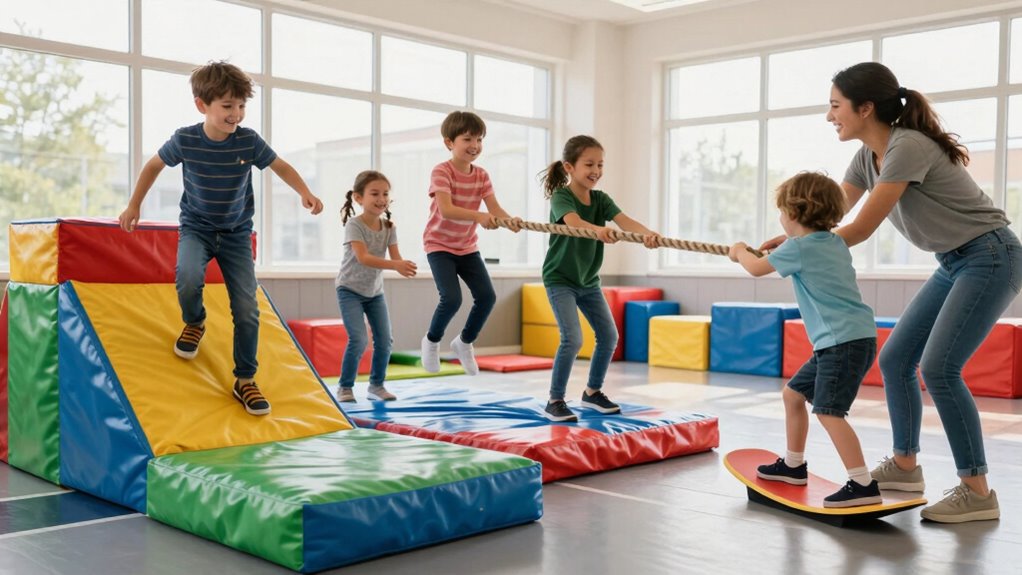

To add more whole-body play indoors, use household items to create obstacle courses that encourage climbing, balancing, and jumping. Play movement games like dance parties, freeze dance, or simple yoga routines to boost coordination and flexibility. Incorporate sports-like activities with soft balls or pretend play that involves crawling, reaching, and jumping to stimulate multiple muscle groups. Keep challenging your child with varied textures and movements—if you keep exploring, you’ll discover even more ways to make indoor play active and fun.

Get health and wellness essentials delivered free with Prime
- Fast, free delivery on millions of items
- Prime Video, Amazon Music and more included
- Member-only deals all year
Key Takeaways
- Incorporate indoor obstacle courses with climbing, crawling, and balancing activities using household items.
- Engage in movement games like dance parties, freeze dance, and yoga to promote full-body activity.
- Set up pretend sports and active play with soft balls, mini hoops, and tactile crawling tunnels.
- Use textured and sensory-rich materials to encourage crawling, reaching, and body awareness during play.
- Include stretching, balancing, and jumping exercises to strengthen muscles and improve coordination indoors.
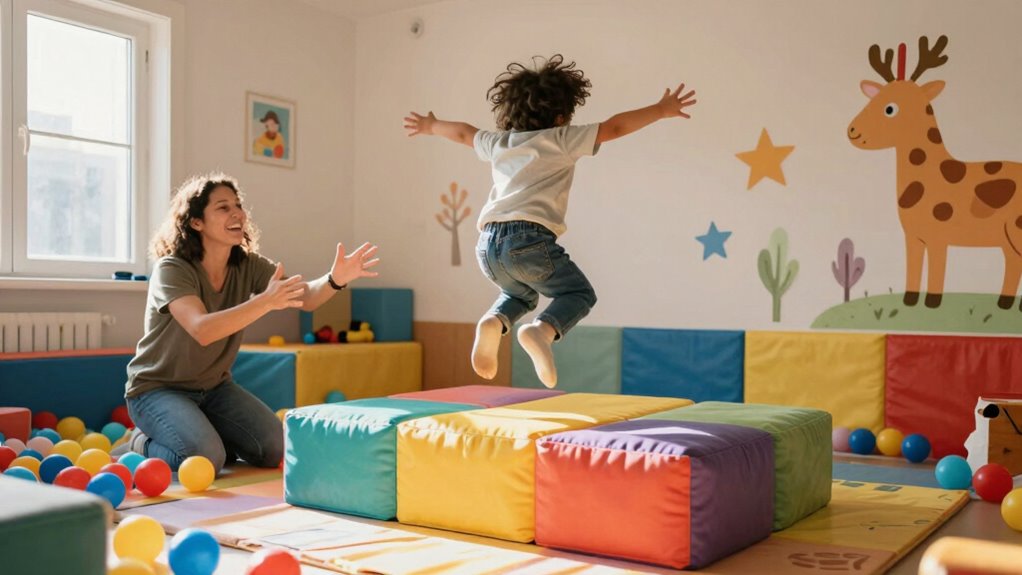
When the weather keeps you indoors, it’s easy for children to become sedentary and lose out on essential physical activity. But you can turn indoor days into opportunities for whole-body play that promotes both sensory integration and muscle strengthening. Engaging your child in activities that require movement in multiple directions helps develop their sensory processing skills and enhances muscle tone, all while keeping things fun and lively.
Start by creating obstacle courses using everyday household items. Use cushions, chairs, and blankets to craft tunnels, balance beams, and climbing stations. As your child navigates through the course, they’re not just having fun—they’re also improving sensory integration by experiencing different textures, depths, and movements. Plus, climbing and balancing activities strengthen their muscles, especially core and leg muscles, which are crucial for stability and coordination. Keep the challenge level appropriate, encouraging them to stretch, reach, and jump, which further boosts muscle development. Incorporating multisensory activities can further enhance sensory processing and integration skills.
Incorporate energetic movement games like dance parties or freeze dance. Playing music and encouraging your child to dance freely engages their entire body. Freeze dance, where they must hold a position when the music stops, enhances proprioception—the sense of body position—and helps with muscle control. You can also introduce simple yoga poses or stretching routines that require holding positions. These activities support muscle strengthening, improve flexibility, and promote body awareness, which is a key component of sensory integration. Incorporating activities that stimulate the sensory system can further enhance overall development and coordination. Including body awareness exercises can help children better understand their movements and spatial orientation, further supporting their sensory integration skills.
Another effective way is to simulate sports or active pretend play indoors. Set up mini basketball hoops, kickballs, or soft foam balls for throwing and catching. This kind of play develops hand-eye coordination and engages multiple muscle groups. For sensory integration, focus on activities that involve different textures and tactile input, such as crawling through a tunnel filled with textured fabrics or playing with kinetic sand. These activities stimulate the sensory system while also requiring muscle engagement to move, reach, or dig.
As an affiliate, we earn on qualifying purchases.
Frequently Asked Questions
How Can I Modify Activities for Different Age Groups?
To modify activities for different age groups, you should focus on age appropriate modifications and inclusive activity adaptations. For younger kids, simplify rules and use softer equipment, while older children can handle more complex tasks and faster-paced games. Incorporate diverse options so everyone’s engaged, adjusting intensity and rules to suit each age group. This approach guarantees all kids enjoy safe, inclusive, and active indoor play, promoting healthy development across age ranges.
What Safety Precautions Should I Take Indoors?
Think of your home as a safe harbor. You should always have safety gear like helmets and pads ready to protect little adventurers. Keep emergency plans visible and practiced, like a lighthouse guiding the way in storms. Clear clutter, secure furniture, and supervise activities closely. These steps create a shield, ensuring indoor play stays fun and safe, letting your kids explore their world with confidence and security.
How Much Space Is Needed for Effective Play?
You’ll need a clear space of at least 4×4 feet for basic activities, but more space enhances movement and activity adaptations. If possible, aim for a dedicated area of about 6×6 feet or larger to comfortably perform jumping, crawling, or stretching exercises. Keep the space free of clutter and furniture to prevent accidents. Adjust activities based on your available space, ensuring safety while encouraging active, whole-body play.
Are There Recommended Durations for Indoor Physical Activities?
Think of indoor exercise routines like a lively dance—variety keeps it fun and effective. Typically, aim for at least 30 minutes of moderate activity daily, breaking it into shorter sessions if needed. Incorporate activity variety to prevent boredom and target different muscle groups. Remember, consistency matters more than duration, so find routines that fit your schedule and keep you moving, making indoor days just as lively as outdoor adventures.
How Can I Encourage Shy or Reluctant Children to Join In?
To help shy or reluctant children join in, focus on building their confidence gradually. Start with low-pressure activities that they can do at their own pace, making sure they feel safe and supported. Use positive reinforcement to boost their comfort level. Overcoming reluctance takes patience—encourage participation without forcing, and celebrate small successes. As their shyness diminishes, they’ll become more enthusiastic to engage in whole-body play indoors.
As an affiliate, we earn on qualifying purchases.
Conclusion
Incorporating more whole-body play during indoor days isn’t just fun—it’s essential. Did you know kids who engage in active play are 50% more likely to develop stronger motor skills? So, next time the weather keeps you indoors, remember that a quick dance session or obstacle course can boost energy, improve coordination, and lift everyone’s mood. Get creative, stay active, and turn indoor time into a lively, healthy adventure for the whole family.
As an affiliate, we earn on qualifying purchases.
As an affiliate, we earn on qualifying purchases.
Fall Picks
fall essentials
As an affiliate, we earn on qualifying purchases.