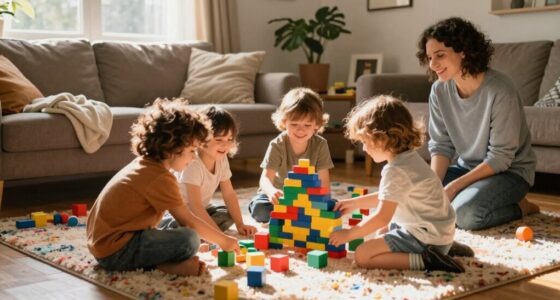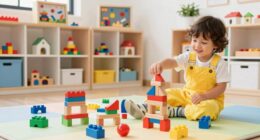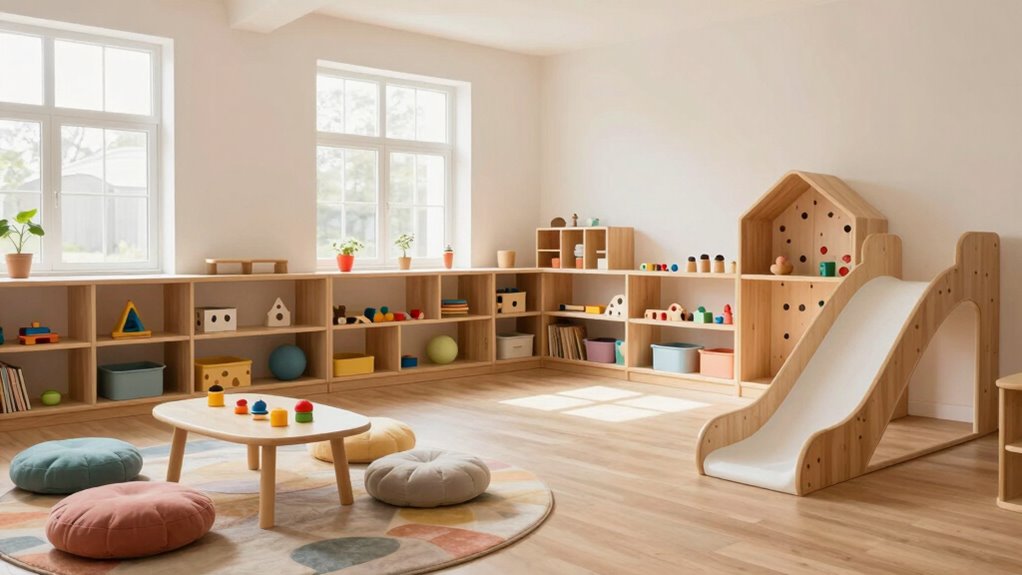

To create a better playroom flow with fewer zones, keep the space open by placing the main play area centrally and lining storage along the walls. Use rugs or mats to subtly define activity zones without physical barriers, and choose versatile furniture that can serve multiple purposes. Keep pathways clear and avoid clutter, making it easy for kids to move freely and engage naturally. For more tips, continue exploring ways to optimize your play space.
Key Takeaways
- Centralize the main play area to ensure easy access and smooth movement throughout the room.
- Minimize physical barriers by limiting zone divisions, using rugs or mats to subtly define activity spaces.
- Position storage along walls at child height for quick cleanup and to maintain open pathways.
- Use multi-purpose furniture to maximize space and reduce the need for additional zones.
- Keep layout simple and flexible to accommodate evolving interests and promote seamless activity transitions.
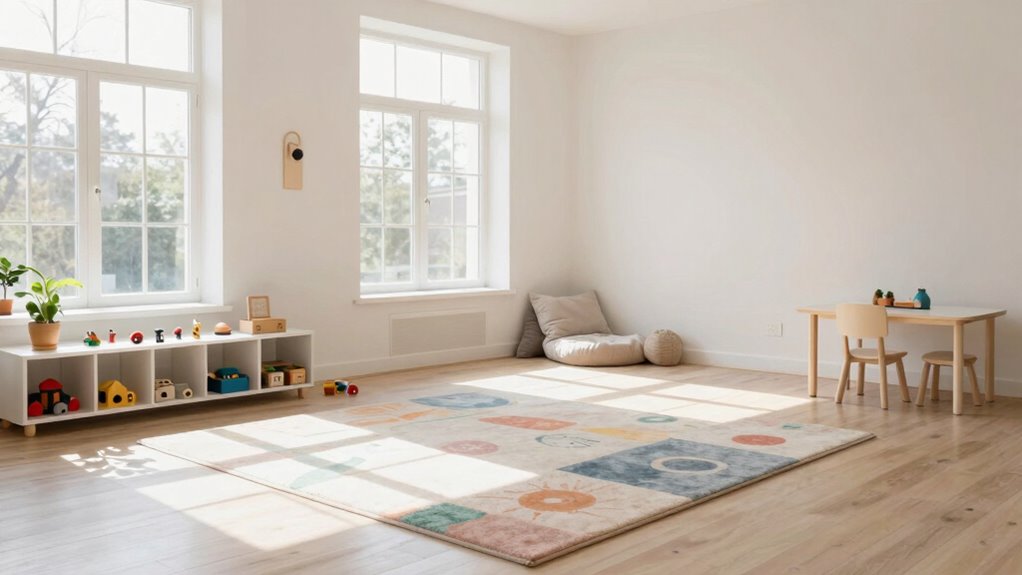
Creating an engaging playroom doesn’t mean you need to divide the space into numerous zones that can feel cluttered or overwhelming. Instead, focus on designing a flow that encourages easy movement and keeps the room feeling open. The key is to use strategic storage solutions and a cohesive color scheme that ties everything together. When you keep these elements in mind, your playroom can be both functional and inviting, without the chaos of too many separated areas.
Start by selecting versatile storage solutions that fit the room’s size and your child’s needs. Baskets, bins, and shelves that are accessible at your child’s height make cleanup quick and teach responsibility. Opt for furniture that doubles as storage—like ottomans or benches with hidden compartments—so that toys and art supplies are neatly tucked away yet easy to access. Keep the storage organized by grouping similar items together, which minimizes clutter and makes it easier for your child to find what they want without rummaging through a jumble of toys.
Next, consider your color scheme carefully. Choosing a palette that is consistent throughout the room creates a visual flow that naturally guides the eye from one area to another. Soft, neutral backgrounds with pops of bright, playful colors can make the space feel lively yet calming. Incorporate these colors into storage bins, wall art, and furniture accents. This approach not only makes the room look cohesive but also helps define different zones without creating visual clutter. When the color scheme is harmonious, your playroom feels spacious and organized, even if it isn’t divided into many separate zones. Additionally, using a unified color palette can enhance the overall sense of order and tranquility in the space. Incorporating thoughtful color choices can also influence your child’s mood and engagement levels in the room, especially when combined with harmony in design.
To improve the flow, keep the layout simple. Place the primary play area in the center of the room, leaving ample space around it for movement. Position storage solutions along the walls, avoiding placing furniture in the middle of the room that could block pathways. Use rugs or mats to delineate different activity zones subtly without physical barriers. This way, your child can shift seamlessly from reading to playing or crafting without feeling confined or overwhelmed by too many boundaries. Additionally, choosing multi-purpose furniture can enhance flexibility and reduce clutter, making the space more adaptable over time. Incorporating smart storage solutions can also help maximize space efficiency and keep the room tidy as your child’s needs change.
Finally, maintain flexibility in your design. As your child’s interests evolve, so can the room’s layout and storage. Keep the design adaptable by choosing pieces that can serve multiple functions and by regularly decluttering. A playroom with fewer zones, organized with smart storage and a unified color scheme, promotes free movement, sparks creativity, and makes tidying up less of a chore. With these strategies, your playroom becomes a space that encourages exploration while maintaining a sense of calm and order.
multi-purpose storage ottoman for kids' playroom
As an affiliate, we earn on qualifying purchases.
As an affiliate, we earn on qualifying purchases.
Frequently Asked Questions
How Can I Make the Playroom Feel Larger With Fewer Zones?
To make your playroom feel larger with fewer zones, focus on space optimization by choosing multi-purpose furniture and avoiding clutter. Incorporate zone integration by blending activities into one area, like a reading nook that doubles as a craft station. Use light colors and strategic storage to open up the space visually. Keep the layout simple and clear, allowing for easier movement and creating an airy, spacious feel.
What Safety Considerations Should I Keep in Mind?
You should prioritize childproofing essentials, like outlet covers and corner protectors, to prevent accidents. Make certain the flooring is non-slip to reduce falls, especially in high-traffic areas. Keep sharp or small objects out of reach and secure furniture to the wall. Regularly check for hazards and clean surfaces to create a safe environment. These measures help you maintain a safe, fun playroom where your children can explore confidently.
How Do I Choose the Right Storage Solutions?
To choose the right storage solutions, focus on storage organization and space optimization. Opt for multi-functional furniture like storage benches or shelves that maximize vertical space. Use transparent bins for easy identification of toys and keep frequently used items accessible. Incorporate labeled containers to maintain order and reduce clutter. By selecting versatile, space-efficient storage options, you create a more organized, functional playroom that encourages independence and simplifies cleanup.
How Can I Incorporate Different Age Groups in One Space?
Imagine a playroom where every child, from toddler to tween, feels at home. To achieve this, incorporate age-appropriate toys and flexible furniture that adapts to each stage. Use versatile storage and adjustable tables that grow with them. This way, you create a space that welcomes all ages, encouraging independence and shared fun. The secret lies in balancing boundaries and freedom, making the room a magical haven for everyone.
What Are Budget-Friendly Ways to Redesign the Playroom?
You can redesign the playroom on a budget by tackling DIY projects like painting a colorful accent wall or creating custom storage solutions. Use budget decorations such as inexpensive rugs, wall art, and fairy lights to add charm without overspending. Repurpose old furniture or crates for storage and seating, making the space functional and fun. These simple, cost-effective ideas transform your playroom into an inviting space for all ages.
As an affiliate, we earn on qualifying purchases.
Conclusion
By streamlining your playroom into fewer zones, you’re opening the door to a smoother, more inviting space—like a gentle stream that flows effortlessly, guiding your little ones from one adventure to the next. With fewer cluttered corners and more open, inviting areas, playtime becomes a dance rather than a maze. Embrace this simple shift, and watch your playroom transform into a joyful, harmonious haven where imagination can soar freely like a kite in the sky.
playroom rugs and mats for activity zones
As an affiliate, we earn on qualifying purchases.
As an affiliate, we earn on qualifying purchases.
wall-mounted shelving for kids' toys
As an affiliate, we earn on qualifying purchases.
As an affiliate, we earn on qualifying purchases.