To prioritize safety, organization, and fun in your kid-friendly playroom, focus on secure furniture, cushioned floors, and outlet covers. Keep toys easily accessible with colorful baskets and wall shelves, while designating specific zones for arts, reading, and active play. Use adjustable lighting and natural light to create a cheerful atmosphere. Keep pathways clear and furniture age-appropriate with rounded edges. If you keep these tips in mind, you’ll build a space that encourages exploration and growth—there’s more to discover.
Key Takeaways
- Create designated zones for arts, reading, and physical play to organize activities and encourage exploration.
- Ensure pathways are clear and furniture is age-appropriate with rounded edges for safety.
- Incorporate accessible storage solutions like colorful baskets and wall-mounted shelves to promote tidiness.
- Maximize natural light and use adjustable artificial lighting to create a cheerful, well-lit environment.
- Prioritize safety features such as corner protectors, outlet covers, and secure furniture to prevent injuries.
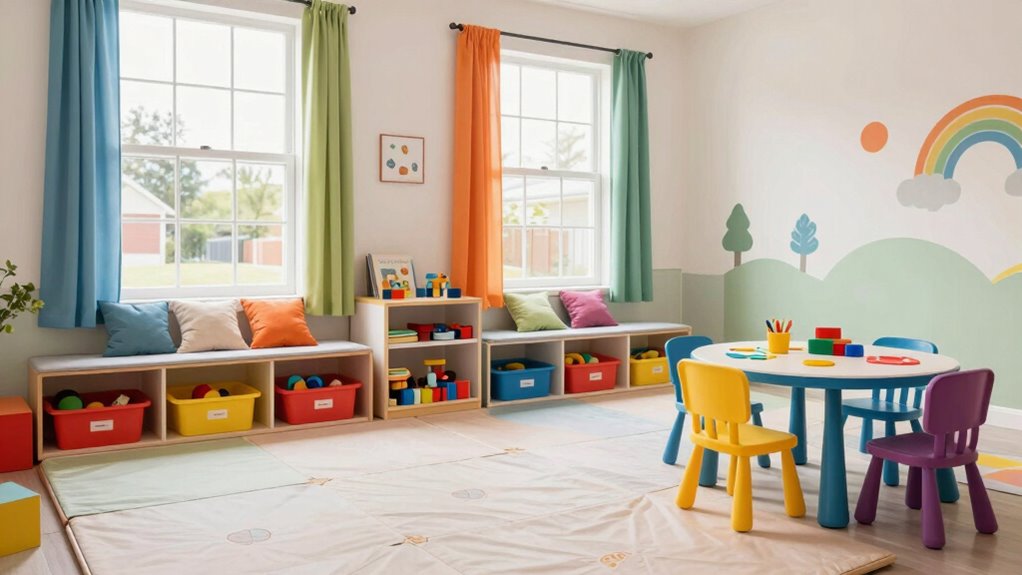
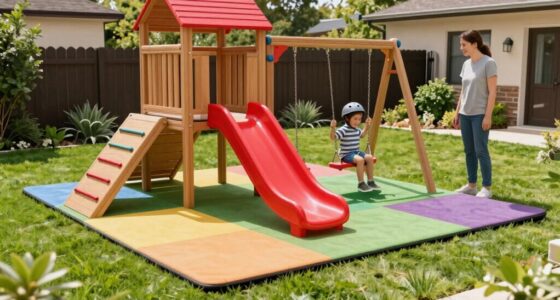
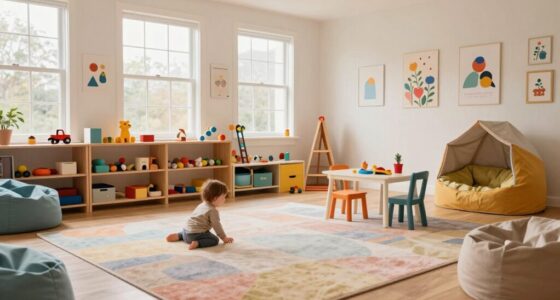
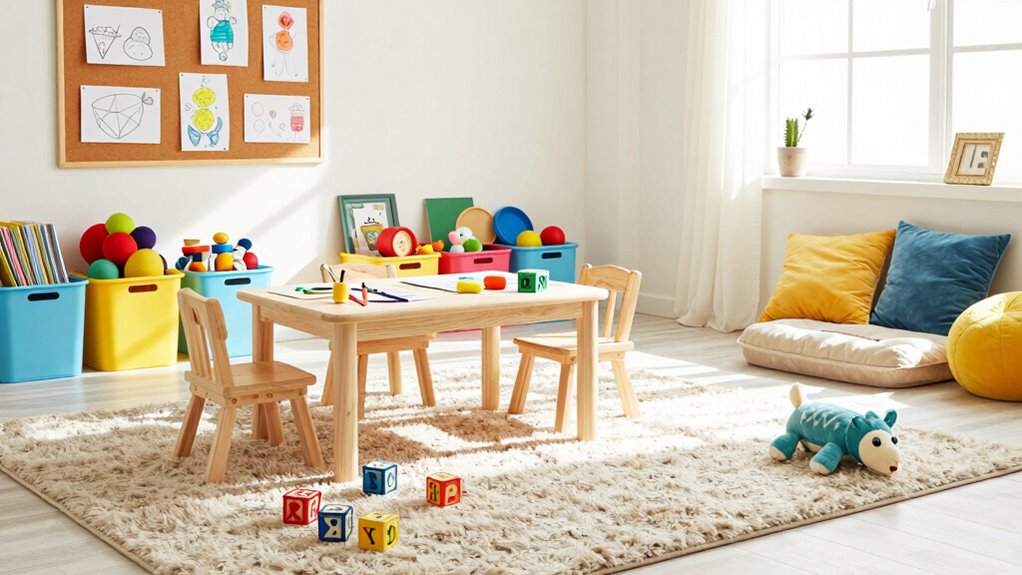
Creating a kid-friendly playroom starts with understanding what priorities matter most to guarantee safety, comfort, and fun. When designing the layout, you want to think about how to keep the space organized and secure while fostering creativity and play. One of the most effective ways to do this is by integrating creative storage solutions. Instead of cluttering the room with open bins or bulky furniture, consider innovative options like wall-mounted shelves, under-seat storage, or colorful baskets that make tidying up easy and fun. These solutions keep toys accessible yet out of the way, helping to maintain a safe environment and encouraging your child to develop good organizational habits. Incorporating storage solutions that are both functional and visually appealing can significantly enhance the overall play experience. Safety zone considerations are equally essential. You need to identify areas where your child can play freely without risk of injury. This means removing sharp objects, securing heavy furniture to the wall, and covering electrical outlets. Make sure there’s enough space for active play, so your child doesn’t feel cramped or tempted to climb on unsafe furniture. Also, think about the flooring—soft, cushioned surfaces like foam mats or rugs can prevent injuries from falls and create a cozy, inviting atmosphere. When planning the layout, leave clear pathways for movement, making it easier for your child to navigate the room safely and independently. Additionally, lighting plays a crucial role in creating a cheerful environment, so incorporating adjustable fixtures can help you control brightness levels as needed. Natural light is another key aspect. Natural light is ideal, but supplement it with bright, evenly distributed artificial lighting to eliminate dark corners. This not only improves visibility but also creates an energetic, cheerful ambiance. You should also consider zones within the playroom: a dedicated area for arts and crafts, a cozy corner for reading, and an active space for physical play. Clearly defined zones help your child understand how to use the room efficiently and prevent conflicts over space. Furniture should be age-appropriate, sturdy, and easy to move if needed. Rounded edges are preferable to avoid bumps and bruises, especially in a space where kids are constantly moving around. Keep the layout flexible to accommodate your growing child’s changing interests and needs. Regularly assessing the playroom’s safety features ensures the environment remains secure as your child develops new skills and activities. Incorporating safety measures such as corner protectors and outlet covers further enhances security. To further support your child’s development, consider adding interactive elements that stimulate learning and curiosity. Remember, the goal is to create a safe, organized, and inspiring environment where your kid can explore, learn, and have fun without constant supervision. By carefully balancing creative storage solutions with safety zone considerations, you’ll craft a playroom that encourages independence, fosters joy, and simplifies your role as a caregiver.
kid-friendly playroom storage baskets
As an affiliate, we earn on qualifying purchases.
As an affiliate, we earn on qualifying purchases.
Frequently Asked Questions
How Can I Make the Playroom Safe for All Age Groups?
To make the playroom safe for all ages, start with child-proofing essentials like outlet covers, corner protectors, and secure storage. Use age-appropriate furniture with rounded edges and sturdy construction to prevent injuries. Keep small objects out of reach for younger kids, and create designated zones for different age groups. Regularly inspect toys and furniture to guarantee safety, and supervise play to minimize accidents.
What Are Affordable Ways to Organize Small Playroom Spaces?
You can organize small playroom spaces affordably by using bright color schemes that make the area feel larger and more inviting. Incorporate DIY solutions like repurposed containers, shelves, and storage bins to keep toys tidy. Utilize vertical space with wall-mounted racks or pegboards for easy access. Also, opt for multi-purpose furniture to maximize every inch, making the room both functional and fun without breaking the bank.
How Much Storage Is Ideal for a Kid-Friendly Playroom?
You’ll want enough storage to keep chaos at bay—think of it as a secret weapon against clutter overload. A good rule of thumb is to have enough storage solutions to hold every toy, craft supply, and random sock in the room, yet not so much that the playroom doubles as a storage unit. The goal? Clutter management that keeps your space fun, organized, and inviting, not a toy tornado zone.
Should I Incorporate Educational Elements Into the Playroom?
Yes, you should incorporate educational tools into the playroom. Creating dedicated learning zones encourages exploration and skill development. Use educational tools like puzzles, books, and art supplies to foster curiosity. Designate specific areas for reading, building, or creative activities, making it easier for your child to focus and learn. This approach not only makes the space fun but also supports cognitive growth and a love for learning.
How Do I Balance Fun and Functionality in the Layout?
Striking a balance between fun and functionality begins with thoughtful choices like themed decor and flexible furniture. You want the space to inspire imagination yet remain practical for daily use. Arrange items to create distinct zones—play, reading, and storage—that seamlessly flow together. Incorporate versatile furniture that adapts as your child grows. This approach guarantees the room remains lively and efficient, nurturing both joy and order.
As an affiliate, we earn on qualifying purchases.
Conclusion
Prioritizing safety, organization, and open space makes your kid-friendly playroom both fun and functional. Some might worry it’ll feel too sterile or cluttered, but with thoughtful design, you can create a lively yet tidy environment. Remember, a well-planned layout encourages independence and creativity while keeping messes manageable. So, don’t shy away from balancing practicality with playfulness—you’ll end up with a space your kids love and that’s easy for you to maintain.
As an affiliate, we earn on qualifying purchases.
age-appropriate playroom furniture with rounded edges
As an affiliate, we earn on qualifying purchases.
As an affiliate, we earn on qualifying purchases.