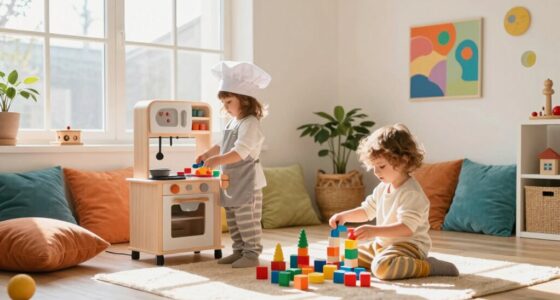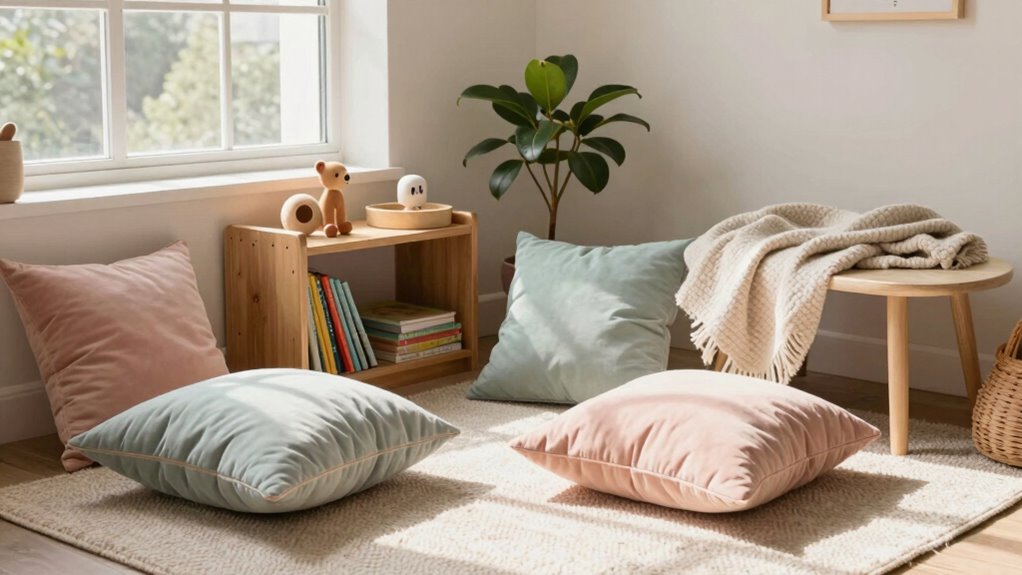

A good calm-down corner for kids is a quiet, cozy space designed to help them feel safe and supported. It should include sensory tools like stress balls, fidget toys, and tactile fabrics, along with visual prompts for calming strategies. Keep it simple, accessible, and inviting so children can use it independently. Consistent routines and adult modeling make this space effective. If you keep exploring, you’ll discover more ways to create a comforting and effective calm-down spot.
Key Takeaways
- Create a quiet, inviting space with soft furnishings and accessible sensory tools to promote comfort and independence.
- Include a variety of sensory items like stress balls and textured fabrics to aid self-soothing.
- Use visual prompts and clear instructions to teach and reinforce calming strategies.
- Ensure the area fosters autonomy by encouraging children to choose and use tools independently.
- Maintain a consistent routine and environment that provide predictability and emotional security.
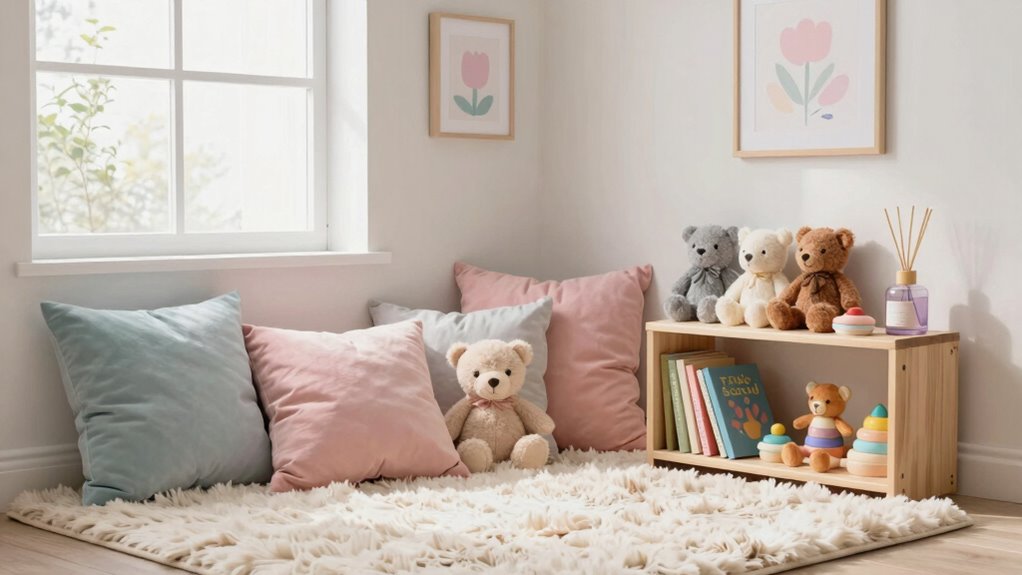
When children feel overwhelmed or upset, having a designated calm-down corner can make a big difference. It provides a safe space where they can regulate their emotions and regain control. To create an effective calm-down corner, you want to focus on comfort, accessibility, and offering the right tools to support emotional regulation. The key is to include thoughtful behavior strategies paired with sensory tools that help children self-soothe and develop independence in managing their feelings.
Start by choosing a quiet, cozy spot that feels inviting and free from distractions. The environment should be comforting, perhaps with soft cushions, a small chair, or a bean bag. The goal is to create a space where kids want to spend time when they’re upset, not somewhere that feels punitive or restrictive. It’s also important that the corner is easily accessible, so children can go there on their own or with minimal assistance when they notice they’re starting to feel overwhelmed.
Incorporating sensory tools is essential to making the calm-down corner effective. These tools can include items like stress balls, textured fabrics, fidget toys, or sensory bins filled with rice or beans. Such items provide tactile input that can help children focus their energy and calm their nervous system. Visual aids, like calming pictures or a mirror, can also be helpful in teaching kids to recognize and manage their emotions. When children have access to sensory tools, they learn proactive coping skills, which are reinforced through behavior strategies like deep breathing, counting, or gentle stretching. These strategies can be displayed as simple visual cues or charts nearby, giving children clear guidance on how to use their tools effectively. Additionally, incorporating elements like calming environments can further enhance their comfort and emotional regulation. Creating a consistent routine around the use of the calm-down corner can also help children feel more secure and understand what to expect during moments of emotional distress.
You want to make sure the calm-down corner encourages autonomy. Use simple language and visual prompts that kids can understand and follow independently. This empowers them to take ownership of their emotional health and develop self-regulation skills. It’s also beneficial to model calm behavior yourself, demonstrating how to use the tools and strategies effectively during moments of calm. Over time, children will begin to associate the corner with a safe, supportive space where they can regain their composure, learn to identify their feelings, and develop healthy behavior strategies that extend beyond the corner.

Super Z Outlet Liquid Motion Bubbler for Sensory Play, Fidget Toy, Children Activity, Desk Top, Assorted Colors (1 Piece)
The descending bubbles have a soothing and mesmerizing effect that will keep kids entertained for hours. Gravity will…
As an affiliate, we earn on qualifying purchases.
As an affiliate, we earn on qualifying purchases.
Frequently Asked Questions
How Big Should a Calm-Down Corner Be?
You should allocate about 3 to 4 square feet for a calm-down corner, enough for a child to sit comfortably and engage in sensory activities. This size allows for effective behavior management, giving children a dedicated space to regulate emotions. Make certain there’s enough room for sensory engagement tools like soft pillows, fidget toys, or calming visuals. Keep it cozy but not cramped, helping kids feel safe and supported during moments of distress.
What Age Is Appropriate for a Calm-Down Corner?
A calm-down corner is appropriate for children of all ages, especially preschoolers and early elementary students, as it helps with behavior management and emotional regulation. Younger kids benefit from a dedicated space to calm down, while older children learn to manage their emotions independently. You should tailor the corner’s design and activities to suit their developmental stage, ensuring it’s inviting and effective for helping them regain control and feel secure.
How Do I Introduce the Calm-Down Corner to My Child?
You introduce the calm-down corner by explaining its purpose, emphasizing it’s a safe space for emotional regulation. Set clear parental boundaries, so your child understands when and how to use it. Encourage them to visit when overwhelmed, and reassure them that it’s okay to take a break. Use simple language, and stay supportive, helping your child feel comfortable and empowered to manage their emotions effectively.
Should I Include Toys or Only Sensory Items?
Including both toys and sensory items in your calm-down corner is ideal, as studies show sensory integration helps children regulate emotions more effectively. Your involvement is key—guide them to choose calming toys or tactile tools that suit their needs. By providing a variety of items, you support their self-soothing skills and encourage independence. This balanced approach creates a welcoming space where kids feel safe to unwind and regain control.
How Often Should I Update or Change the Items?
You should update or change items in the calm-down corner every few months to keep it engaging. Regular parent involvement helps you observe your child’s preferences and sensory activity responses, guiding you to refresh or rotate items accordingly. Incorporate new sensory tools or calming toys to prevent boredom and promote ongoing interest. This ongoing update guarantees the corner remains a supportive, effective space where your child feels comfortable and understood.

Fidget Toys Stress Ball for Kids Adult: 3 Pack Double Sided Textured Sensory Toys for Autism Kids Calming – Quiet Stress Fidget Ball for Student Classroom, Adult Office – Easter Basket for Kid
Fidget Toys for nervousness & Stress Relief: Each sensory stress ball is perfectly sized to fit in your…
As an affiliate, we earn on qualifying purchases.
As an affiliate, we earn on qualifying purchases.
Conclusion
Creating a calm-down corner is all about providing a safe, inviting space where your child can regain their composure. Remember, a well-thought-out corner isn’t just about the soft cushions and soothing colors; it’s about offering a refuge where little ones feel understood and supported. When you set up this space thoughtfully, you’re helping them learn to manage their emotions—truly, it’s a win-win. After all, a calm child is a happy child, and patience pays off in the long run.

9-Piece Calm Down Corner Supplies for Kids | Anxiety Relief Tools Kit| ADHD Tools for Kids Emotional Support Regulation Items, Fidgets for Autism, Versatile Therapy Sensory Toys for Classroom and Home
Create a Complete Calm Down Corner at Home or School: This all-in-one set includes essential calm down corner…
As an affiliate, we earn on qualifying purchases.
As an affiliate, we earn on qualifying purchases.

Chuckle & Roar – Sensory Bin – Tactile Learning for Toddlers – Montessori Preschool Activities – Plastic Storage Bin for Travel – Kids Activity Set
Ages 3-6+.
As an affiliate, we earn on qualifying purchases.
As an affiliate, we earn on qualifying purchases.