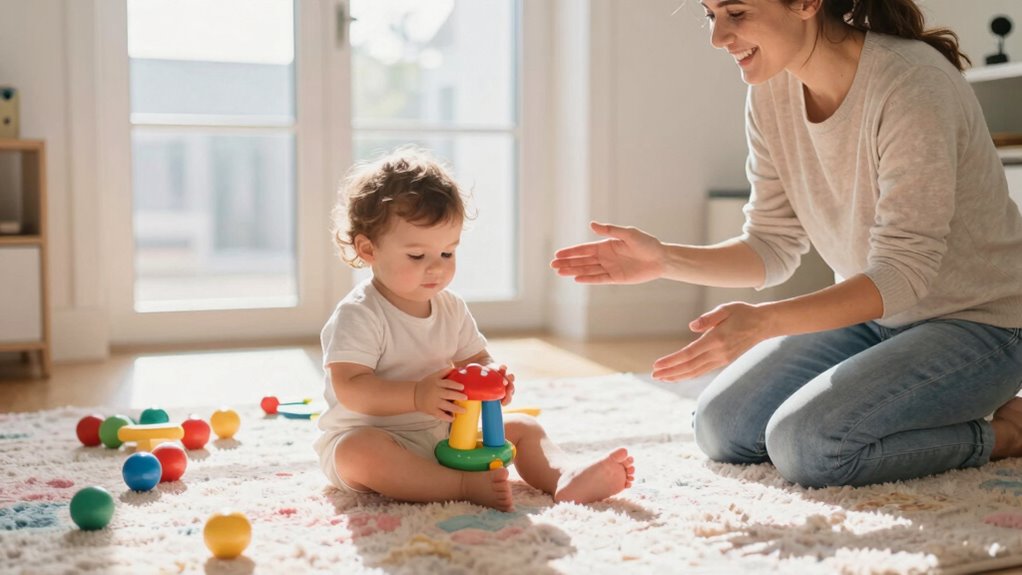
To support a child who struggles to start playing, focus on offering positive reinforcement and creating a predictable routine. Praise their efforts and celebrate small successes to boost confidence, while avoiding pressure. Establish a safe, inviting environment with clear rules and designated play areas. Invite trusted friends or siblings to join gradually, initiating one-on-one interactions to build social skills. With consistent encouragement and support, you’ll help your child feel more comfortable engaging in play—more strategies like these await you.
Key Takeaways
- Use positive reinforcement to praise even small efforts and build confidence in initiating play.
- Establish structured routines and predictable environments to reduce anxiety and encourage starting activities.
- Create a safe, inviting space that responds positively to cues, making the child feel secure to begin playing.
- Introduce social interactions gradually, starting with trusted individuals to boost confidence in social play.
- Support emotional development by fostering trust, reducing social anxiety, and encouraging positive social experiences.
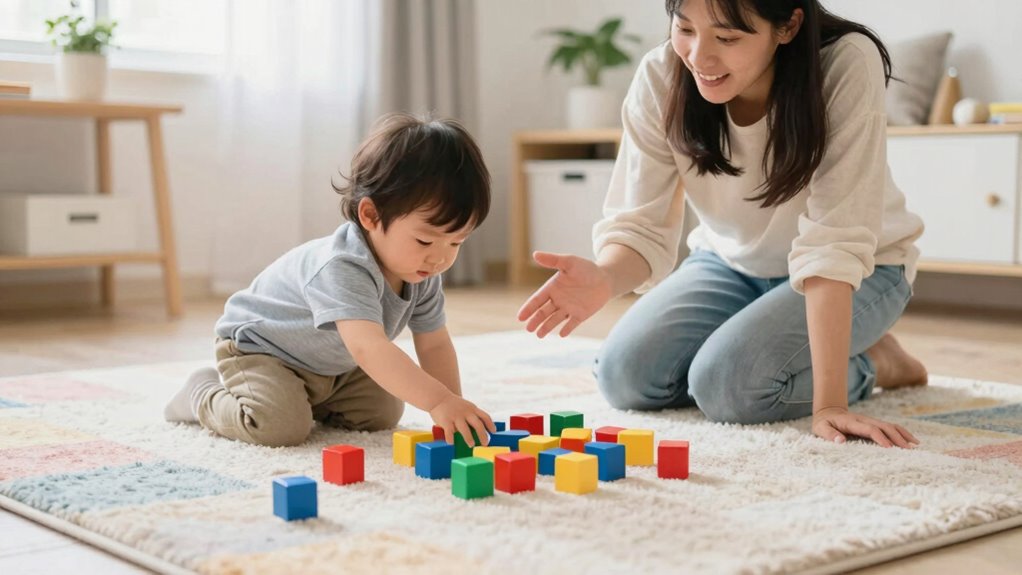
Starting to play can be challenging for some children, and as a caregiver, you play a crucial role in helping them overcome these hurdles. When a child hesitates or struggles to engage in play, your support can make a significant difference. One effective strategy is to use positive reinforcement. When your child makes an effort to join in or shows interest, praise their actions and encourage them. Celebrating small successes builds confidence and helps your child associate play with positive feelings. Avoid pressuring them; instead, focus on highlighting their efforts, no matter how minor, to foster a sense of achievement.
Celebrating small efforts builds confidence and encourages children to enjoy play without pressure.
Implementing structured routines can also help children feel more secure and prepared for playtime. Consistent daily schedules create predictability, reducing anxiety about unfamiliar activities. For example, establishing a specific time for play and sticking to it gives your child a clear expectation. This predictability encourages them to participate more willingly because they know what to expect. Structured routines also include setting up designated play areas and clear rules, which can make the environment less overwhelming and more inviting for a hesitant child. When routines are predictable, your child gradually learns to anticipate playtime, making the *changeover* smoother. Incorporating digital content into play routines can also support children, especially in developing emerging skills and interests. Understanding child development stages can help tailor activities that are appropriate for their age and abilities, making the transition into play more natural and enjoyable. Additionally, creating a consistent environment can help reinforce these routines and make the experience feel safe and familiar for your child.
Building a nurturing environment that responds positively to your child’s cues can foster a sense of safety and trust, which is essential for their willingness to engage in new activities. Encouraging social interactions can also help your child feel more engaged. Invite a trusted friend or sibling to join in, making playtime more fun and less intimidating. If your child is shy or cautious around others, start with one-on-one interactions in familiar settings. Over time, these experiences can boost their confidence and help them enjoy the social aspect of play.
positive reinforcement toys for children
As an affiliate, we earn on qualifying purchases.
As an affiliate, we earn on qualifying purchases.
Frequently Asked Questions
How Can I Tell if My Child’s Hesitation Is Developmentally Normal?
You can tell if your child’s hesitation is developmentally normal by observing their behavior during play and comparing it to typical developmental milestones. If they show patience and gradually warm up, it’s usually normal. Trust your parental reassurance—most children need time to explore. However, if their hesitations persist or seem extreme, consult a professional to guarantee they’re on track, as developmental milestones vary but should progress steadily.
When Should I Seek Professional Help for My Child’s Play Issues?
If your child’s play struggles persist beyond a few months or considerably impact their social skills, it’s time to seek professional help—don’t wait for the next full moon! Consider play therapy, which can help them express feelings and develop social skills. If you notice persistent withdrawal, difficulty making friends, or frustration during play, consulting a child psychologist is essential to guarantee they get the support they need early on.
Are There Specific Toys or Activities That Encourage Reluctant Children?
You can encourage reluctant children by offering interactive toys that invite participation, such as puzzles or building blocks, which make play engaging and rewarding. Creative activities like drawing, painting, or crafting also help spark interest and self-expression. By providing a variety of these toys and activities, you create a playful environment that gently motivates your child to join in and develop their confidence in play.
How Can I Involve Siblings or Peers to Motivate a Hesitant Child?
Imagine a garden where siblings and peers are the nourishing rain, encouraging a hesitant plant to bloom. You can foster sibling bonding and peer encouragement by arranging playdates, sharing interests, and praising small efforts. When children see others enjoying activities, they’re more likely to join in. Your role is to create a warm environment where positive peer interactions serve as sunlight, helping your child feel safe and motivated to start playing.
What Are Signs That My Child’s Play Struggles Are Linked to Emotional Issues?
You might notice your child’s play struggles are linked to emotional issues if they show signs of emotional triggers like sudden withdrawal or excessive fear during play. Play anxiety can cause them to avoid new activities or become distressed easily. Watch for persistent sadness, irritability, or physical complaints like stomachaches when it’s time to play, which may indicate underlying emotional concerns affecting their willingness to engage.
children's playroom organization set
As an affiliate, we earn on qualifying purchases.
As an affiliate, we earn on qualifying purchases.
Conclusion
Remember, your encouragement can make a big difference. Nearly 60% of children who receive positive support feel more confident to initiate play on their own. By offering gentle guidance, patience, and praise, you help build their confidence and independence. Keep in mind that every small step counts, and your consistent presence reassures them they’re safe to explore. With your help, they’ll gradually discover the joy of starting play on their own, fostering their growth and happiness.
interactive social play toys for kids
As an affiliate, we earn on qualifying purchases.
As an affiliate, we earn on qualifying purchases.
children's routine chart and schedule
As an affiliate, we earn on qualifying purchases.
As an affiliate, we earn on qualifying purchases.