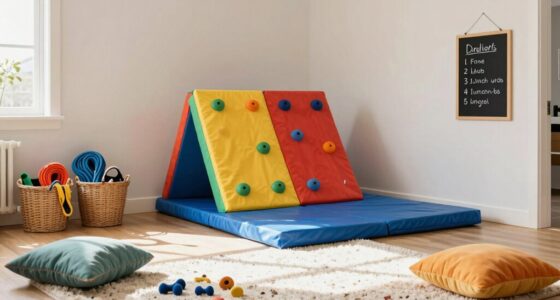
To talk less and observe more during playtime, focus on giving your full attention without rushing to ask questions or interrupt. Watch your child’s actions and expressions closely, noticing how they handle challenges or excitement. Use silent cues like smiles or nods to connect emotionally and encourage their exploration. By being present and attentive, you’ll foster trust and help your child develop confidence and independence. Keep exploring these strategies to improve your connection even further.

Get health and wellness essentials delivered free with Prime
- Fast, free delivery on millions of items
- Prime Video, Amazon Music and more included
- Member-only deals all year
Key Takeaways
- Practice mindful listening by giving full attention without interrupting or rushing to speak.
- Use silent observation to notice children’s cues, emotions, and problem-solving strategies.
- Foster trust by being present, offering subtle cues like nods or smiles rather than constant comments.
- Create a safe, child-led environment that encourages exploration without controlling play actions.
- Respond thoughtfully and minimally to support independence, allowing children to express themselves freely.

Playtime is a golden opportunity to truly connect with your child and understand their world, but it can be easy to dominate the conversation with comments and questions. Instead of constantly interrupting their play, try practicing mindful listening. This means giving your full attention without rushing to fill every silence or offer advice. When you listen mindfully, you’re showing your child that their feelings and ideas matter, which encourages them to express themselves more openly. It’s tempting to jump in with questions or comments to keep the conversation flowing, but often, the most meaningful moments come when you simply listen and observe silently. Silent observation allows you to notice subtle cues—how they handle a challenge, what excites them, or how they work through frustration. This kind of attentive presence helps you understand their interests, strengths, and struggles without any agenda or interruption. Engaging in mindful observation can also foster a sense of patience and respect for your child’s unique development process.
Being present during play is also a form of mindful engagement that fosters emotional connection and trust. During play, resist the urge to constantly direct or steer your child’s actions. Instead, focus on being a quiet, supportive observer. Watch how they manipulate toys, build, or pretend. Your silence can be incredibly powerful; it creates space for your child to lead and explore at their own pace. When you observe silently, you pick up on details that might otherwise go unnoticed, like their problem-solving skills or emotional responses. This not only deepens your understanding but also builds their confidence, knowing you’re genuinely interested in their world. Practicing attentive listening can also help you become more attuned to your child’s emotional needs and responses, fostering a stronger emotional bond. Moreover, understanding emotional cues can help you better interpret your child’s feelings and reactions during play, leading to more empathetic interactions.
Remember, your role isn’t to control the play but to facilitate a safe space for exploration. By talking less, you allow your child to develop independence and creativity. If they do seek your input, listen carefully and respond thoughtfully, rather than dominating the interaction. Sometimes, a simple nod or a quiet smile can communicate your support better than words. This approach encourages your child to become more self-aware and confident in their abilities. Incorporating this mindful approach can also help nurture their innate curiosity and problem-solving skills. Developing these skills relies on a foundation of focused observation, which helps you better understand their individual learning style and interests.
Incorporating mindful listening and silent observation into playtime may feel unfamiliar at first, but over time, it transforms your interactions. You’ll discover that you don’t need to fill every moment with words. Instead, you create an environment where your child feels truly seen and heard, fostering a deeper bond and promoting healthy emotional development. Playtime then becomes not just about entertainment but a meaningful exchange of trust and understanding.
silent observation toys for children
As an affiliate, we earn on qualifying purchases.
As an affiliate, we earn on qualifying purchases.
Frequently Asked Questions
How Can I Encourage Independent Play Without Interrupting?
You can encourage independent play by practicing mindful listening and patient waiting. Give your child space to explore without interrupting, showing you’re attentive through gentle gestures and eye contact. When they seek your attention, respond calmly and positively. This approach builds their confidence to play independently, knowing you’re present but not intrusive. Over time, they’ll develop autonomy and enjoy creative, self-directed play, all while feeling supported and understood.
What Are Signs My Child Prefers Observation Over Interaction?
You’ll notice signs like your child calmly watching others without joining in, showing child patience, and often focusing on observation cues like eye contact or body language. They may prefer exploring quietly or observing longer before engaging. If your child seems content observing rather than actively participating, it indicates they’re comfortable with their pace and learning style. Respect their space, and you’ll support their natural curiosity and confidence.
How Do I Balance Talking and Observing During Play?
You should balance talking and observing by practicing silent communication and mindful listening. Let your child lead the play, offering gentle prompts without overwhelming them with words. Use pauses to absorb their cues and understand their interests. When you do speak, be intentional and supportive, showing genuine curiosity. This approach fosters trust and encourages your child’s independence, making playtime more meaningful for both of you.
Are There Specific Toys That Promote Observation Skills?
Certain toys promote silent observation by encouraging your child to focus and explore independently. Look for open-ended toys like building blocks, puzzles, or sensory bins, which foster curiosity and detailed observation. Thoughtful toy selection helps your child develop observation skills naturally, without constant verbal prompts. As you choose these toys, you’ll notice your child’s ability to quietly analyze, compare, and understand their environment, enhancing their overall cognitive development during play.
How Can I Build Trust While Observing Quietly?
You build trust through consistent, silent connection by simply being present and attentive. To foster trust while observing quietly, avoid interrupting and give your full focus. Use gentle, reassuring body language and maintain eye contact to show you’re engaged. Over time, your child will feel safe and understood without words, strengthening your bond. Trust building happens naturally when your child senses your genuine interest and patience during these quiet moments.
As an affiliate, we earn on qualifying purchases.
Conclusion
By embracing silence and keen observation, you open a richer world of play. Instead of constantly talking, let your focus drift like a ship’s anchor, grounding you in the moment. Watch your child’s imagination blossom, like a garden in full bloom after a spring rain. Remember, sometimes the best way to guide is by simply being present—your quiet watchfulness becomes the secret map leading to their discovery and joy.
As an affiliate, we earn on qualifying purchases.
As an affiliate, we earn on qualifying purchases.
Cold & flu season Picks
humidifiers
As an affiliate, we earn on qualifying purchases.