
Creating a reading nook for active kids helps turn their energy into curiosity and engagement. It offers a dedicated space where they can focus and participate actively in stories. Adding interactive elements like textured walls, fold-out storyboards, and sensory bins makes the experience fun and stimulating. By designing a space that invites movement and exploration, you keep their interest alive and foster a love for stories. Keep exploring to discover more ways to make it even more engaging.

Get health and wellness essentials delivered free — and shop member deals
- Fast, free delivery on millions of items
- Access to Prime Big Deal Days deals on October 6–7
- Prime Video, Amazon Music and more included
Key Takeaways
- Reading nooks channel active energy into focused, engaging reading and storytelling activities.
- They provide a dedicated, sensory-rich space that minimizes restlessness and promotes concentration.
- Interactive design elements make reading fun, encouraging active participation and exploration.
- Sensory engagement in the nook enhances learning and deepens children’s connection to stories.
- A stimulating, comfortable environment supports active kids’ development and fosters a love for reading.
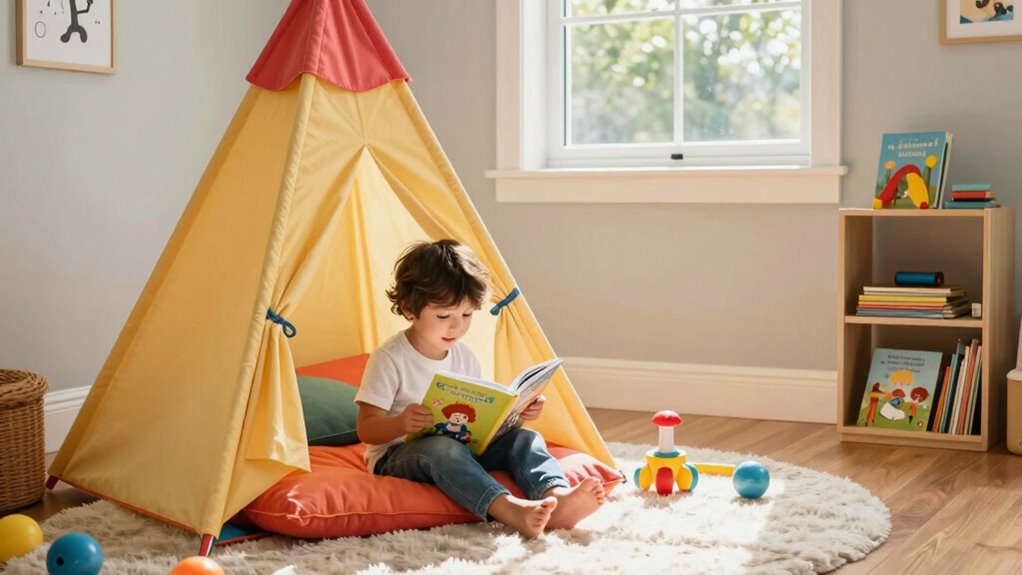
Ever wondered how to turn your child’s energy into a love for reading? Creating a dedicated reading nook can be the perfect solution, especially for active kids who often have trouble sitting still. When designing a space for them, think about incorporating elements of interactive design and sensory engagement. These features do more than just invite your child to read; they actively draw them into the experience, making reading both fun and stimulating.
Interactive design plays a vital role in capturing your child’s attention. Instead of a plain, static corner, you can add elements like textured walls, fold-out storyboards, or movable parts that relate to the stories being read. For example, a mini puppet theater or magnetic story panels can turn reading into an interactive adventure. These features encourage your child to participate, ask questions, and explore stories in a hands-on way. This active involvement helps sustain their interest and turns reading from a passive activity into an exciting exploration. Incorporating interactive elements that promote movement can further enhance their engagement and make the reading experience even more enjoyable. Including multisensory experiences can also deepen their connection to the stories and foster a lifelong love of learning.
Interactive elements like textured walls and story panels make reading fun and engaging for active kids.
Sensory engagement is equally important, especially for active kids who learn best through movement and touch. Incorporate tactile elements like soft cushions, textured rugs, or fabric walls that invite them to touch and feel. You might add sensory bins filled with themed items related to the stories, allowing your child to engage their sense of touch while immersing themselves in the narrative. Bright, contrasting colors and varied textures stimulate their visual and tactile senses, making the space more inviting and dynamic. This sensory engagement keeps their minds and hands busy, reducing restlessness and helping them focus on the story at hand. Creating a sensory-rich environment can significantly enhance their learning experience and enjoyment. Additionally, designing the space with sensory-friendly features ensures that it remains comfortable and stimulating for all active children.
interactive sensory reading nook for kids
As an affiliate, we earn on qualifying purchases.
As an affiliate, we earn on qualifying purchases.
Frequently Asked Questions
How Can Reading Nooks Accommodate Different Age Groups?
You can make reading nooks suitable for different ages by using themed decor that appeals to various interests, creating an inviting atmosphere. Incorporate adjustable furniture, like desks and chairs, so kids can customize their space as they grow. This flexibility keeps the nook engaging and comfortable, encouraging kids of all ages to explore books and develop a love for reading in a space tailored to their needs.
What Safety Features Should Be Included in a Kid’s Reading Nook?
You should include safety features like child-proofing tips, such as outlet covers and corner protectors, to keep your kid safe. Opt for ergonomic seating that supports proper posture and prevents discomfort. Secure furniture to the wall to prevent tipping, and choose non-toxic, washable materials for easy cleanup. These measures create a secure, comfortable space where kids can enjoy reading without worries, fostering a lifelong love of books.
How Do Reading Nooks Promote Physical Activity Alongside Reading?
Imagine a reading nook as your child’s personal adventure portal, where quiet zones and sensory elements inspire movement. You encourage active engagement by adding cozy cushions, textured rugs, or wall-mounted activities that prompt stretching or reaching. This blend of calm and stimulation promotes physical activity alongside reading. Kids stay energized, exploring their environment physically while immersing themselves in stories, making reading a dynamic, healthy experience rather than a sedentary task.
Can a Reading Nook Be Easily Portable for Active Kids on the Move?
Yes, a reading nook can be easily portable for active kids. Look for furniture with a compact design, like foldable or lightweight options, that can be moved effortlessly. Portable furniture makes it simple for kids to create their cozy space anywhere, whether indoors or outdoors. This flexibility encourages reading and active play, letting kids switch locations easily and keep their favorite nook close, wherever their adventures take them.
What Are Cost-Effective Ways to Create a Reading Nook for Active Kids?
You can create a cozy reading nook without breaking the bank using budget options and DIY designs. Start by repurposing furniture or using inexpensive fabrics to craft a comfy corner. Add cushions, blankets, or even string lights for charm. With a little creativity, you’ll craft a special space that invites your active kid to settle down, discover stories, and feel the thrill of their own little retreat—without overspending.
kids textured wall panels for reading corner
As an affiliate, we earn on qualifying purchases.
As an affiliate, we earn on qualifying purchases.
Conclusion
Creating a cozy reading nook isn’t just about quiet moments—it’s about planting a seed of calm amidst the lively energy. When your kids step into their little sanctuary, they find a gentle haven where imagination blooms and dreams quietly take root. Even the most energetic children can discover a peaceful corner to unwind and explore worlds beyond the everyday. In these quiet retreats, vibrant spirits can rest and grow, quietly nurturing their love for reading and discovery.
children's sensory bins for storytime
As an affiliate, we earn on qualifying purchases.
As an affiliate, we earn on qualifying purchases.
kids fold-out storyboards and magnetic story panels
As an affiliate, we earn on qualifying purchases.
As an affiliate, we earn on qualifying purchases.
Fall Picks
fall essentials
As an affiliate, we earn on qualifying purchases.