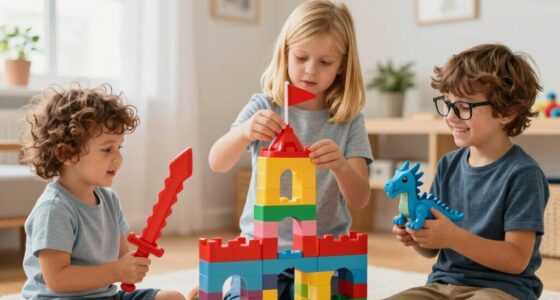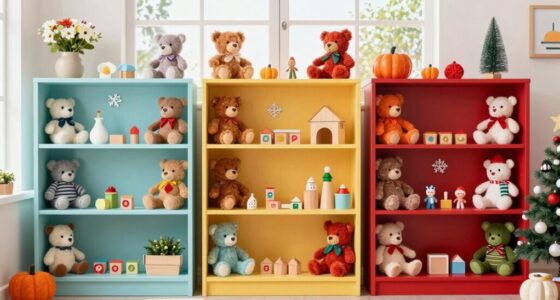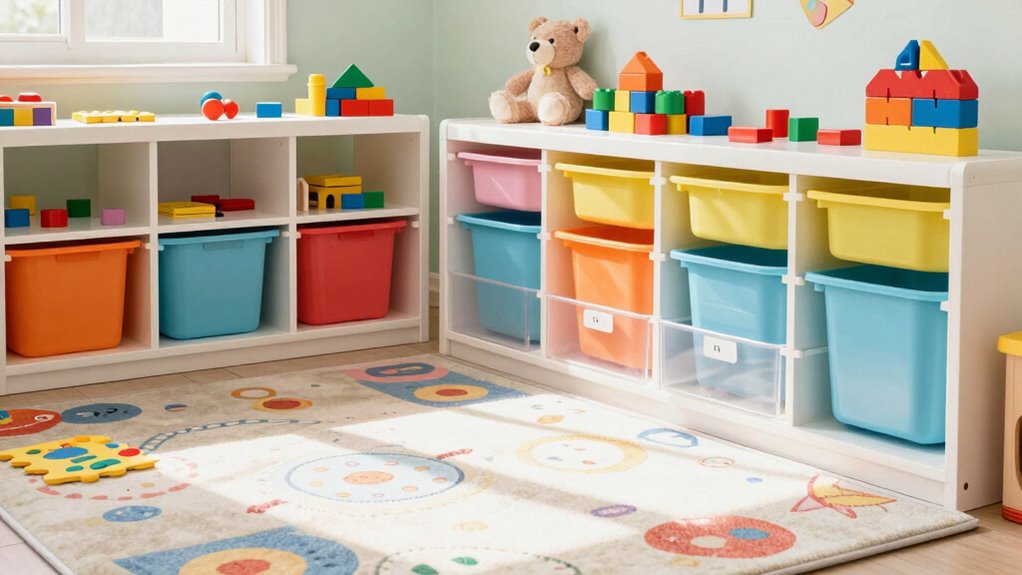

To make toy storage easier for preschoolers, use visual labels with pictures and words on low shelves or bins, so they can easily identify where toys go. Choose durable, colorful bins at eye level, encouraging independence and routine. Incorporate fun cleanup songs or timers, and involve your child in setting up the storage system. Consistently praise their efforts, and organize toys by category. Keep exploring ways to simplify storage and foster your child’s independence even further.

Get health and wellness essentials delivered free — and shop member deals
- Fast, free delivery on millions of items
- Access to Prime Big Deal Days deals on October 6–7
- Prime Video, Amazon Music and more included
Key Takeaways
- Use visual labels with pictures and words on storage bins to help preschoolers identify and find toys easily.
- Choose low, open shelves and colorful bins within children’s reach to promote independence.
- Establish consistent cleanup routines with visual cues, songs, or timers to make tidying fun.
- Organize toys by categories in dedicated spaces to simplify cleanup and teach sorting skills.
- Praise and reinforce daily habits of returning toys to their designated spots to encourage lasting organization.
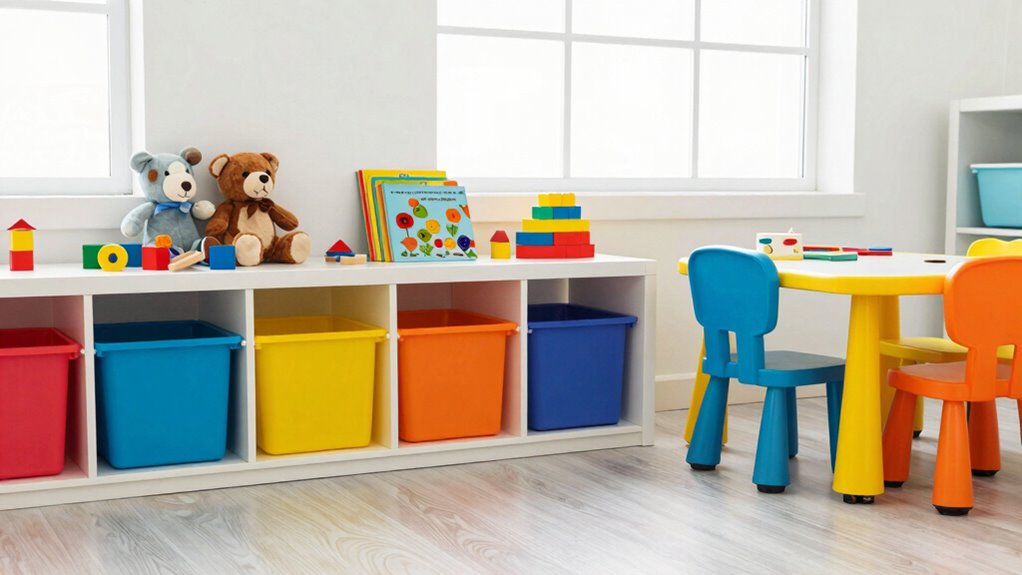
Ever struggle with your preschooler’s toy clutter? If so, you’re not alone. Kids at this age are naturally curious and eager to explore, but their toys often end up scattered all over the place, making cleanup a constant chore. The key to managing this chaos is creating a storage system that your child can understand and use independently. One effective way is through creative labeling—using pictures, colors, or simple words to identify where each toy belongs. For example, a bin with a picture of blocks on it clearly signals that it’s for building toys. This visual cue helps your preschooler recognize where to put things without needing constant guidance. Pairing creative labeling with accessible shelving makes a significant difference. You want to choose low, open shelves or bins that your child can reach easily, so they can clean up without constantly asking for help. When toys are stored at their eye level, your preschooler feels empowered to put things away, fostering independence and responsibility.
To make this system work, consider using colorful bins or baskets that are sturdy and easy to handle. Label each with both words and images, so your child can quickly associate the label with the toy type. For example, a bin with a picture of a stuffed animal and the word “Animals” helps reinforce vocabulary while guiding tidy-up time. Keep frequently used toys in accessible spots, so your preschooler is more likely to put things back where they belong. Less-played-with items can go on higher shelves or in storage bins that require a little more effort to access, teaching your child about prioritizing and organizing. Incorporating visual cues into your storage system can greatly enhance your child’s ability to identify and return toys correctly. Additionally, establishing consistent routines around cleanup time further supports developing good habits and makes tidying up feel more natural for your preschooler. It’s also beneficial to establish a clean-up song or timer to make the process fun and to help your child understand the importance of routine. Creating a dedicated space for different categories of toys can also help your preschooler learn categorization skills and make cleanup more intuitive. Involving your preschooler in the setup process can make a big difference. Let them choose some labels or decide where certain toys should go. This involvement makes them more invested in maintaining order. Additionally, ensuring your storage solutions are durable and child-friendly can prevent frustration and make cleanup more appealing. When their toys are stored in a way that feels inviting and understandable, cleanup becomes less of a battle and more of a routine. Remember, consistency is key. Make it a daily habit to return toys to their designated spots, and praise your child when they do so. Over time, they’ll learn to recognize their labeled storage areas and develop good habits that last. With creative labeling and accessible shelving, you turn toy organization into a fun and manageable part of your child’s day, reducing stress and encouraging independence.
visual label storage bins for kids
As an affiliate, we earn on qualifying purchases.
As an affiliate, we earn on qualifying purchases.
Frequently Asked Questions
How Can I Encourage My Preschooler to Clean up Independently?
You can encourage your preschooler to clean up independently by turning it into a fun activity and setting clear, simple routines. Praise their efforts to foster encouraging responsibility, and use visual cues or labeled bins to guide them. Make cleanup time a regular part of the day, and offer gentle reminders. Your consistent support helps them develop confidence in their ability to manage their toys and become more independent.
What Are the Safest Storage Options for Small Toys?
Did you know that 80% of toy-related injuries involve small objects? To guarantee toy safety, choose storage materials that are sturdy, non-toxic, and free of sharp edges. Clear plastic bins with secure lids are a great option because they let your preschooler see their toys easily while keeping small parts contained. Avoid open containers that could tip or break, and always check that storage solutions meet safety standards.
How Often Should Toy Storage Be Reorganized?
You should reorganize toy storage every few months to keep it manageable and engaging for your preschooler. Incorporate toy rotation during these times, swapping out toys to maintain interest and reduce clutter. Consistent storage maintenance helps you spot broken or unused toys, making cleanup easier. Regular reorganization encourages your child to develop good habits, keeps their space tidy, and guarantees they can easily find and enjoy their favorite toys.
How Do I Prevent Toy Clutter From Returning Quickly?
To prevent toy clutter from returning quickly, try implementing toy rotation and using storage furniture wisely. Regularly swap out toys to keep things fresh and manageable, reducing overwhelm for your preschooler. Invest in storage furniture with compartments or bins—label them for easy access and cleanup. Encourage your child to put toys back in their designated spots, making tidying up a routine part of playtime. This keeps clutter under control and promotes responsibility.
What Are Creative Ways to Label Toy Storage for Preschoolers?
Imagine a colorful world where labels transform toy storage. You can use vibrant color-coded labels that catch your child’s eye and make sorting simple. Picture labels with familiar images—like a teddy bear or a car—that instantly guide them. These creative labels turn cleanup into a fun game, helping your preschooler learn where each toy belongs. With visual cues and bright labels, tidying up becomes easier and more engaging.
low open shelves for preschool toys
As an affiliate, we earn on qualifying purchases.
As an affiliate, we earn on qualifying purchases.
Conclusion
Making toy storage simple and accessible encourages independence and keeps your preschooler engaged in tidying up. Use clear bins, label them, and involve your child in organizing. Did you know that children who participate in chores like tidying up develop better responsibility and self-control? By creating an easy-to-navigate storage system, you not only teach valuable skills but also foster a clutter-free environment that supports your child’s growth and learning.
As an affiliate, we earn on qualifying purchases.
As an affiliate, we earn on qualifying purchases.
Fall Picks
fall essentials
As an affiliate, we earn on qualifying purchases.