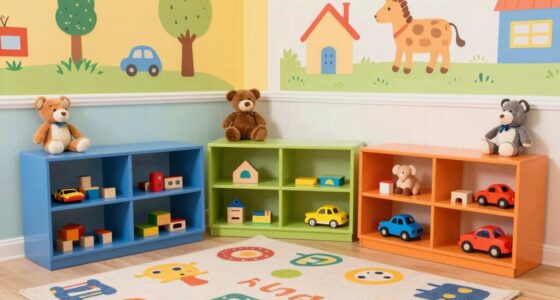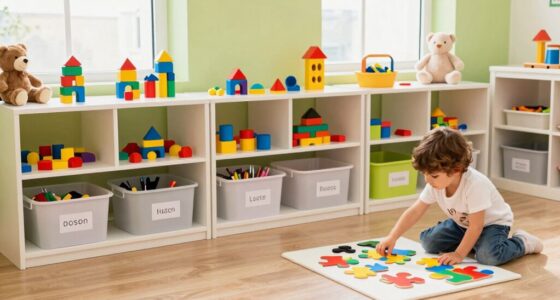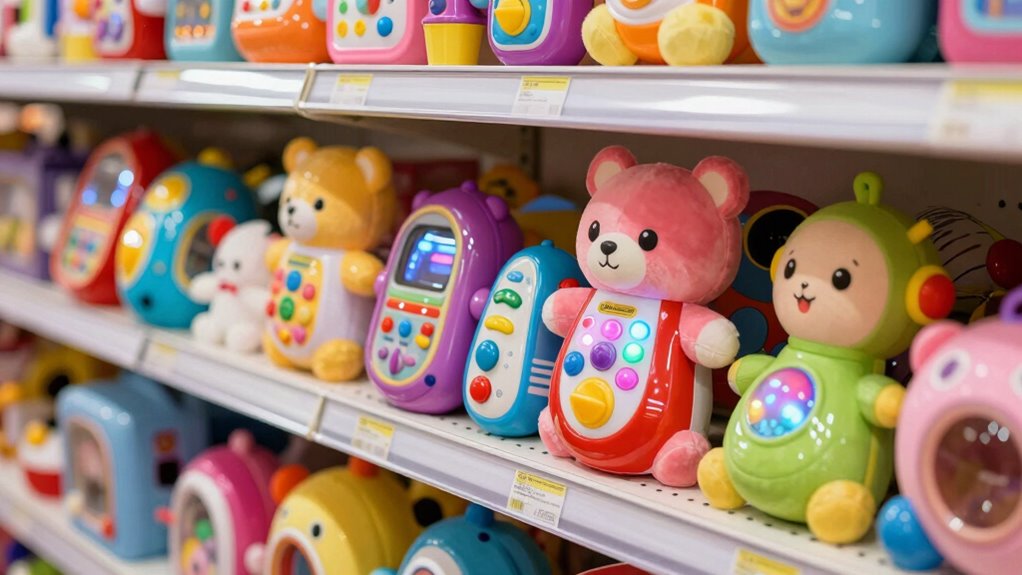

To spot overstimulating toys before you buy, look for flashing lights, loud sounds, and multiple textures all at once, which can cause fussiness or fatigue. Check for toys with too many moving parts, bright colors, or features that can’t be turned off. Always examine small parts, sharp edges, or complex assembly that may be unsafe. Pay attention to how your child responds during play, and if you’re curious about more tips, you’ll find helpful insights ahead.

Get health and wellness essentials delivered free — and shop member deals
- Fast, free delivery on millions of items
- Access to Prime Big Deal Days deals on October 6–7
- Prime Video, Amazon Music and more included
Key Takeaways
- Check for excessive flashing lights, loud sounds, or multiple textures that can overwhelm a child.
- Avoid toys with many moving parts, bright colors, or features that cannot be turned off or adjusted.
- Look for safety labels, age recommendations, and secure electronic components to prevent hazards.
- Observe if the toy’s features may cause fatigue or overstimulation during prolonged play.
- Test or observe the toy’s interaction to ensure it promotes calm, creative, and manageable play experiences.
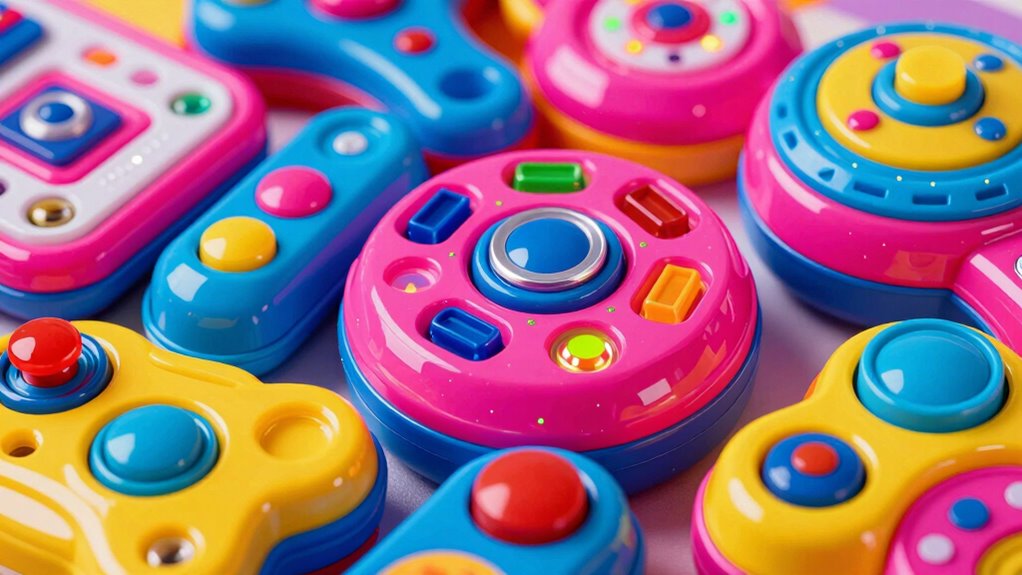
Overstimulating toys can quickly overwhelm your child, leading to fussiness, fatigue, or difficulty focusing. Recognizing the signs of sensory overload before you make a purchase helps guarantee your child’s playtime remains enjoyable and safe. When shopping, pay attention to the toy’s design—does it have too many flashing lights, loud sounds, or a multitude of textures all at once? These features can easily cause sensory overload, especially for children who are sensitive to stimuli. A toy that bombards the senses may seem exciting in the store but can become a source of stress for your child once they’re immersed in play.
Safety concerns also play a vital role in selecting the right toy. Overstimulating toys often incorporate small parts, sharp edges, or materials that could pose choking hazards or cause injuries. Always check for age-appropriate labels and confirm the toy complies with safety standards. If a toy contains batteries or electronic components, verify that they’re securely enclosed to prevent accidental access, which can be dangerous. Avoid toys with loose parts or those that require complex assembly, as these can become choking or swallowing hazards if not properly handled.
When inspecting a toy, consider how your child might respond to it over time. Does it have a lot of moving parts, bright colors, or sounds? While these features can be engaging initially, they might become overwhelming after extended use. Look for simple, well-designed toys that encourage creative play without overstimulating the senses. If a toy has multiple features, see if they can be turned off or adjusted to control the sensory input, giving your child a way to regulate their experience. Additionally, understanding sensory processing can help you choose toys that align with your child’s individual sensitivities. Recognizing the importance of safe and appropriate toy features ensures that play remains both fun and beneficial for your child’s development. Being aware of vetted toys that meet safety and quality standards further supports making informed choices. Testing the toy yourself or observing your child playing with similar items can provide valuable insights into its suitability. If they seem agitated, overwhelmed, or distracted by the toy’s features, it’s a clear sign that it might not be suitable for them. Considering age recommendations can also help ensure the toy is appropriate for your child’s developmental stage and sensory needs. Additionally, paying attention to material safety can prevent exposure to harmful chemicals or allergens that some overstimulating toys might contain.
overstimulating toys for children
As an affiliate, we earn on qualifying purchases.
As an affiliate, we earn on qualifying purchases.
Frequently Asked Questions
Can Overstimulation Cause Long-Term Developmental Issues in Children?
Overstimulation can indeed cause long-term developmental issues in children, especially if they frequently experience sensory overload. This can lead to sensory processing difficulties, making it harder for your child to focus or regulate emotions. Over time, constant overstimulation may contribute to developmental delays, affecting social skills, communication, and learning. To support healthy development, choose toys that balance sensory input and avoid overwhelming your child with overly stimulating options.
Are There Specific Toys Suitable for Children With Sensory Processing Disorders?
Think of sensory-friendly toys as gentle whispers in a noisy room—they soothe rather than overwhelm. For children with sensory processing disorders, choose toys designed for calming sensory activities, like soft textures or simple lights. These toys act as safe harbors amid chaos, helping kids feel secure while exploring. Look for items that promote focus and relaxation, turning playtime into a nurturing experience that respects their unique sensory needs.
How Can I Test a Toy’s Overstimulation Potential at Home?
To test a toy’s overstimulation potential at home, observe how your child reacts during play. Watch for signs of sensory overload, like fussiness or covering their ears. Gently introduce the toy and see if it overwhelms them quickly. Also, check the toy’s durability to make certain it can withstand active play without breaking, which could cause frustration. This approach helps you find toys that are stimulating yet safe and manageable for your child.
What Age Groups Are Most Vulnerable to Overstimulating Toys?
You should watch out for the youngest, as they’re more prone to sensory overload from overly complex toys. Infants and toddlers are especially sensitive to toy complexity, which can overwhelm their developing senses. Their limited coping skills mean overstimulation is more likely, leading to fussiness or fatigue. As you select toys, aim for simple, calming options that nurture their curiosity without risking discomfort or sensory overload.
Do Overstimulating Toys Impact a Child’s Attention Span?
Overstimulating toys can negatively impact your child’s attention span by causing sensory overload. When a toy bombards them with lights, sounds, and movements, it becomes harder for your child to focus on one task or toy for long. This constant stimulation can make it challenging for their attention span to develop healthily, leading to difficulties concentrating later. Choosing toys with balanced sensory input helps support their focus and overall development.
As an affiliate, we earn on qualifying purchases.
Conclusion
By carefully inspecting toys for excessive lights, sounds, or moving parts, you can protect your little one from an overstimulation overload that’s almost like trying to tame a wild tornado of noise. Remember, a calm, focused play experience is far more valuable than a toy that turns your child’s world into a sensory circus. With a little vigilance, you’ll find toys that nurture curiosity without turning their playtime into a sensory overload frenzy.
age-appropriate toys with adjustable features
As an affiliate, we earn on qualifying purchases.
As an affiliate, we earn on qualifying purchases.
toys with turn-off lights and sounds
As an affiliate, we earn on qualifying purchases.
As an affiliate, we earn on qualifying purchases.
Fall Picks
fall essentials
As an affiliate, we earn on qualifying purchases.