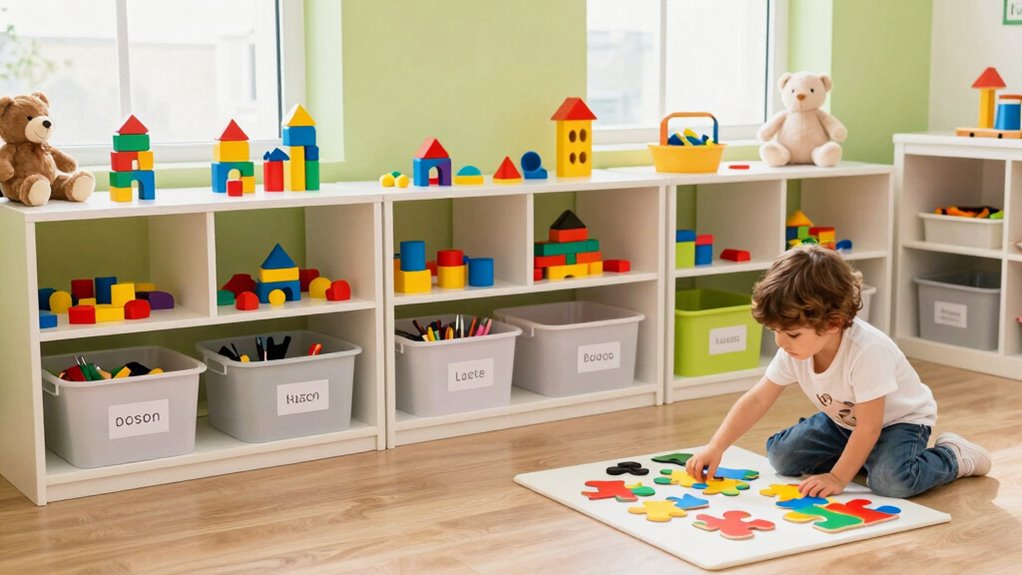

To organize preschool toys by skill area, start by sorting toys into categories like sensory, fine motor, and cognitive play. Use clear containers, label them with pictures or words, and color-code for easy identification. Create dedicated zones for each skill area to promote focus and routine. Keep toys accessible and maintain routines for cleanup. This setup encourages independence and skill development, and if you continue, you’ll find helpful tips to make the process even smoother.
Key Takeaways
- Categorize toys by skill type, such as sensory, fine motor, or cognitive, for targeted development.
- Use labeled, clear containers and visual cues to easily identify and access each skill area.
- Create dedicated zones for each skill category to encourage focus and routine.
- Incorporate color coding or picture labels on storage bins to reinforce organization.
- Establish consistent routines for toy cleanup to promote responsibility and independence.
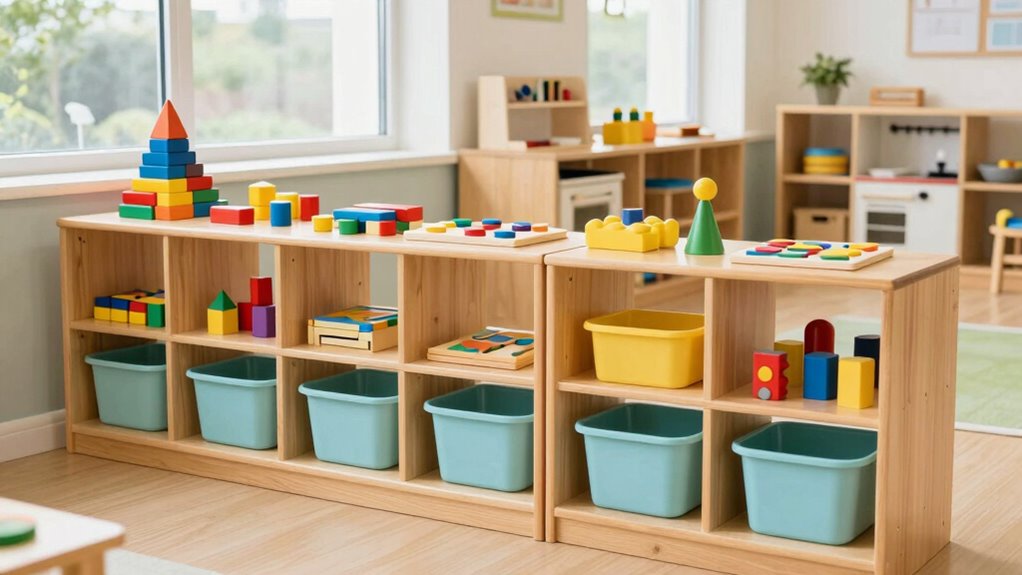
Ever wonder how to keep your preschool toys both accessible and educational? Organizing toys by skill area is a smart way to encourage development while keeping your space tidy. You want your little one to explore different types of play, and arranging toys according to skill helps make that easier. For example, if you focus on sensory play and fine motor skills, you can create designated areas that stimulate these abilities. Sensory play toys—like textured balls, water tables, or sensory bins—are best stored together so your child can easily find them when they’re ready for hands-on exploration. When these toys are grouped, your child learns to associate certain areas with specific activities, fostering independence and curiosity. Plus, it simplifies cleanup, since everything related to sensory development stays in one spot. Incorporating clear storage containers and labels can also help reinforce organizational habits and promote independence. To support fine motor skill development, gather toys that promote grasping, pinching, and hand-eye coordination. Think about puzzles, threading beads, or small building blocks. When these items are stored in clear containers or baskets labeled with pictures or words, your preschooler can quickly identify what they want to play with. Labeling helps reinforce language skills and boosts their ability to select toys independently. If you set up a dedicated space for fine motor activities, your child gets used to switching between different types of play without feeling overwhelmed. It’s all about creating a system where each skill area has its own zone, making it easier for your little one to focus and learn. Using visual cues like color coding or pictures on storage bins can further assist your preschooler in choosing and returning toys. This not only fosters organizational skills but also encourages responsibility and pride in keeping their space neat. When you assign specific bins for sensory toys, fine motor activities, or other skill areas, you’re helping your child develop a routine that emphasizes order and independence. Additionally, understanding emerging trends in digital and educational content can help you integrate technology into your child’s learning environment to complement physical play. Incorporating age-appropriate technology can enhance their learning experience and keep them engaged with new educational tools. Recognizing the importance of proper maintenance of toys and equipment can also extend their lifespan and ensure safety during play. An organized environment tailored to these skill areas can also promote independent decision-making, encouraging your child to choose activities based on their interests and developmental needs. Creating a consistent routine around toy organization and play can further strengthen your child’s understanding of responsibility and help develop lifelong organizational skills. By organizing your preschool toys by skill area, you create a stimulating environment that nurtures growth, supports learning, and keeps your space clutter-free. It’s a simple change that makes a big difference in your child’s development and your daily routine.
preschool toy storage bins with labels
As an affiliate, we earn on qualifying purchases.
As an affiliate, we earn on qualifying purchases.
Frequently Asked Questions
How Often Should I Rotate Preschool Toys?
You should rotate preschool toys every 2 to 4 weeks to keep your child engaged and prevent boredom. Use a toy sorting method to categorize toys by skill area, making it easier to swap them out systematically. Establish a rotation schedule that fits your routine, ensuring fresh toys regularly. This approach helps maintain interest, encourages skill development, and keeps playtime exciting for your little one.
What Storage Solutions Work Best for Small Toy Pieces?
Your small toy pieces can quickly turn into a chaos hurricane, so using clear storage containers is your best bet—they keep everything visible and easy to find. Pair them with a label system to categorize each type of toy, which makes cleanup faster and more organized. Look for stackable bins or divided trays to maximize space, ensuring your play area stays tidy and your little one can find their favorite pieces effortlessly.
How Can I Involve Children in Organizing Their Toys?
You can involve children in organizing their toys by encouraging child participation through simple, fun tasks like sorting toys into labeled bins. Make organizing routines a regular part of your day, turning it into a game or a challenge to keep them engaged. Praise their efforts to foster a sense of responsibility. This approach helps them develop organizational skills while making the process enjoyable and collaborative.
Are There Safety Considerations When Organizing Toys?
Think of organizing toys as building a safe harbor for your little sailor. Toy safety is vital; make sure small parts are kept out of reach to prevent choking, and check for broken or sharp edges regularly. Child supervision remains essential to watch over playtime, especially around potentially hazardous toys. By creating a secure environment, you protect their exploration and growth, letting them navigate their world confidently and safely.
How Do I Maintain Organization Over Time?
To maintain organization over time, regularly do Toy sorting to keep toys in their designated areas. Use Storage labels on bins and shelves to remind your child where each toy belongs, making cleanup easier and more consistent. Establish a routine, such as daily or weekly tidying sessions, so toys stay organized and accessible. Consistent involvement helps your preschooler learn responsibility and keeps the play area neat and inviting.
As an affiliate, we earn on qualifying purchases.
Conclusion
By organizing your preschooler’s toys by skill area, you’re guiding them as thoughtfully as a maestro conducts a symphony. Just like the careful planning behind a great masterpiece, this method nurtures their development and sparks curiosity. When toys are neatly sorted, play becomes purposeful—each activity a brushstroke on their growing canvas. Embrace this approach, and watch your little one flourish, turning everyday play into a harmonious journey of learning and discovery.
As an affiliate, we earn on qualifying purchases.
color-coded toy storage containers
As an affiliate, we earn on qualifying purchases.
As an affiliate, we earn on qualifying purchases.