The best toys for cooperative preschool play encourage your child to interact and work with others. Look for block sets that foster teamwork, sharing, and problem-solving, along with role-playing toys that promote empathy and communication. Combining these toys creates a rich environment for collaboration and creativity. Choose versatile, easy-to-share options that inspire imaginative scenarios and group activities. Keep exploring to discover even more ways to support meaningful social play for your little one.
Key Takeaways
- Choose open-ended toys like building blocks that encourage collaborative creation and problem-solving.
- Select role-playing sets that promote communication, empathy, and social interaction.
- Opt for toys designed for multiple users to facilitate sharing and teamwork.
- Prioritize versatile toys that adapt to various scenarios and group sizes.
- Focus on toys that foster imaginative play and social skills development.

Choosing the right toys for cooperative preschool play can considerably enhance children’s social skills and teamwork. When you pick toys that promote collaboration, you help children learn how to communicate, share, and work together toward common goals. Two of the most effective types of toys for this purpose are block building sets and role-playing items. These toys naturally encourage kids to interact and cooperate, making playtime more meaningful and developmentally beneficial.
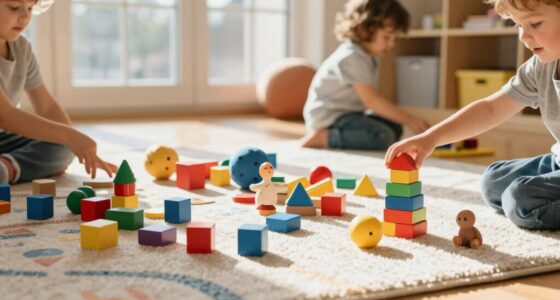
Block building toys are fantastic because they invite children to create together. As they stack, arrange, and build, they learn how to negotiate space, share materials, and plan as a team. You might notice children discussing their ideas, deciding who will build what, or helping each other stabilize structures. These interactions foster patience, turn-taking, and problem-solving skills, all essential for social development. Plus, the open-ended nature of block sets allows endless possibilities for imaginative play, which can lead to longer, more engaged cooperative activities.
Role playing is another powerful category of toys that promotes cooperation. When children step into different characters—whether as doctors, firefighters, or chefs—they practice empathy and perspective-taking. Role-playing encourages them to communicate, negotiate roles, and collaborate within a shared storyline. As they work together to act out scenarios, they learn to listen to each other, compromise, and resolve conflicts naturally. These toys also help children develop language skills and emotional intelligence, which are crucial for social success.
You’ll find that combining block building and role-playing toys creates a well-rounded environment for cooperative play. For example, children might work together to build a pretend city with blocks and then act out stories within that city using role-playing costumes and accessories. Such integration promotes both teamwork and creativity, making the play experience richer and more engaging.
When selecting toys for preschoolers, focus on those that encourage interaction rather than solitary activity. Look for sets that are easy to share, include multiple pieces, and inspire children to collaborate rather than compete. Avoid toys that are overly structured or require only individual effort, as they can limit opportunities for social learning. Instead, choose versatile toys like blocks and role-play kits that adapt to different scenarios and group sizes. With the right toys, your preschoolers will develop essential social skills naturally, all while having fun and exploring their imaginations together.
building block sets for preschool children
As an affiliate, we earn on qualifying purchases.
As an affiliate, we earn on qualifying purchases.
Frequently Asked Questions
How Do Toy Choices Influence Social Skills Development?
Toy choices directly influence your child’s social skills development by promoting emotional intelligence and conflict resolution. When you select collaborative and open-ended toys, your child learns to share, negotiate, and empathize with others. These toys encourage teamwork and patience, helping them understand different perspectives. As your child interacts through play, they build essential social skills that foster healthier relationships and emotional growth, setting a foundation for future cooperation.
Are There Specific Toys That Encourage Sharing More Effectively?
Imagine a box of colorful blocks accidentally spilling onto the floor—this moment sparks sharing strategies naturally. Toys that promote cooperation, like puzzles and role-play sets, encourage kids to take turns and work together. Toy diversity exposes children to different types of play, helping them learn patience and generosity. When you choose toys that require teamwork, you create opportunities for kids to practice sharing more effectively and develop essential social skills.
What Safety Features Should Parents Look for in Preschool Toys?
You should look for preschool toys with safety certifications like ASTM or CE to guarantee they meet safety standards. Check for small parts to prevent choking hazards, especially for younger children. Opt for toys made from non-toxic, durable materials, and avoid sharp edges or loose components. Always read labels and manufacturer instructions, and supervise playtime to keep your child safe while they learn and explore.
How Can Toys Promote Inclusivity Among Diverse Children?
Like a mosaic of vibrant tiles, inclusive toys reflect cultural representation and adaptive design, fostering harmony among diverse children. You can promote inclusivity by choosing toys that showcase various cultures and abilities, encouraging empathy and understanding. These thoughtful selections help children see themselves and others positively, building a foundation of respect. When toys mirror diversity, you create an environment where every child feels valued, safe, and enthusiastic to cooperate.
When Should Parents Introduce New Cooperative Toys?
You should introduce new cooperative toys when your child shows interest or when existing toys no longer inspire sharing and teamwork. Opt for toys with high toy durability and vibrant color variety to keep engagement high and encourage inclusive play. Present new toys gradually, observing how your child interacts with them, and guarantee they promote cooperation, helping your child develop social skills while enjoying colorful, sturdy, and engaging playthings.
role-playing costumes and accessories for kids
As an affiliate, we earn on qualifying purchases.
As an affiliate, we earn on qualifying purchases.
Conclusion
As you choose toys for your preschoolers, think of them as seeds planted in a garden of friendship. With the right toys—like shared building blocks and puppet theaters—you nurture cooperation and spark creativity. These playful tools become bridges connecting little hearts and minds, weaving a vibrant tapestry of teamwork. When you pick thoughtfully, you’re not just filling a space with toys—you’re planting the roots for lifelong bonds and joyful, collaborative adventures.
cooperative play toys for preschoolers
As an affiliate, we earn on qualifying purchases.
As an affiliate, we earn on qualifying purchases.
group activity toys for early childhood
As an affiliate, we earn on qualifying purchases.
As an affiliate, we earn on qualifying purchases.