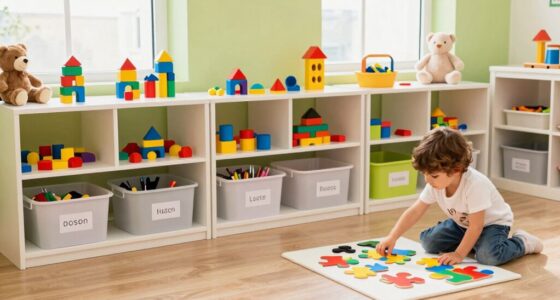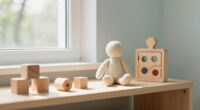
To set up independent toy shelves, choose sturdy, low shelves with rounded edges that preschoolers can easily reach. Use open bins or cubbies labeled with pictures or colorful words to make organization fun and straightforward. Involve your child in choosing where toys go to foster ownership and independence. Make routines for tidying up simple and consistent. Keep the system flexible, rotate toys regularly, and guarantee safety. For more tips, you’ll find helpful strategies to create a safe, engaging play space.
Listen free for 30 days with Audible
Thousands of audiobooks and originals — cancel anytime.
As an affiliate, we earn on qualifying purchases.
Key Takeaways
- Choose low, sturdy shelves with rounded edges for easy access and safety.
- Use clear bins or baskets labeled with pictures and words for visual recognition.
- Involve children in selecting and organizing toys to foster ownership and independence.
- Establish routines for tidying up after play to promote consistent organization habits.
- Incorporate visual cues and simple labels to help children locate and put away toys independently.

Creating independent toy shelves for preschoolers is a great way to foster their sense of responsibility and encourage organization. When you set up a dedicated space for their toys, you give them the opportunity to develop good habits early on. The trick is to choose storage solutions that are accessible and appealing to little hands, making toy organization an engaging part of their daily routine. Start by selecting shelves that are low enough for your preschooler to reach comfortably, ensuring they can independently access and put away their toys. Using open shelving units or cubbies works well because your child can see all the toys at a glance, which simplifies cleanup and encourages them to find specific items.
Labeling each section or bin with pictures or words helps your preschooler identify where each toy belongs, reinforcing their understanding of organization. Keep labels simple and colorful to catch their attention and make the process fun. When designing the storage solutions, consider using clear bins or baskets so your child can easily recognize their contents without needing to open every container. This visual clarity not only supports toy organization but also helps them develop decision-making skills as they choose and put away their toys. Make sure the shelves are sturdy and safe, with rounded edges and secure mounting to prevent accidents. This safety aspect is vital because preschoolers tend to be energetic and curious, so stability in your storage choices keeps everyone safe.
Involving your child in the setup process can make a big difference. Let them help choose their shelves or decide where each toy should go. This involvement creates a sense of ownership and motivates them to maintain the organization system you establish. Additionally, establishing a routine where they put away toys after playtime reinforces the habit and keeps the area tidy. Incorporating store return policies and hours can help you plan shopping trips for new storage solutions efficiently. Understanding child development stages can guide you in selecting age-appropriate storage options that promote independence and learning. Also, considering the role of visual cues in organization can help your preschooler easily locate and put away toys without frustration. Incorporating age-appropriate storage solutions tailored for their size and abilities can further enhance their independence. Recognizing the importance of easy-to-clean materials can save you time and effort in maintaining the organization system. Keep the toy organization system simple and flexible enough to accommodate different types of toys, from blocks and plush animals to art supplies. Rotate toys periodically to keep the space fresh and prevent clutter from accumulating. Remember, the goal is to make tidying up easy and even enjoyable for your preschooler, which ultimately helps develop their independence and respect for their belongings.
As an affiliate, we earn on qualifying purchases.
Frequently Asked Questions
How Tall Should the Shelves Be for Preschoolers?
You should make the shelves about 12 to 24 inches tall for preschoolers, ensuring easy access for toy organization. This height allows little ones to reach their favorite toys without help, promoting independence. Use sturdy shelf materials like solid wood or high-quality plastic to withstand daily use. Keep toys at lower levels so preschoolers can independently select and put away their toys, fostering responsibility and self-esteem.
What Safety Features Are Essential for Toy Shelves?
Think of safety features as the backbone of your setup—you can’t afford to cut corners. To guarantee safety, use rounded edges and secure shelves to the wall to prevent tipping. Opt for sturdy, non-slip bases and avoid sharp corners. Incorporate safety latches on doors or drawers, and choose non-toxic finishes. These safety precautions keep your little ones safe while they explore, making storage organization both fun and secure.
How Often Should I Rotate Toys on the Shelves?
You should rotate toys on the shelves every 1 to 2 weeks to keep your preschooler’s interest high and promote healthy toy organization. Regular rotation prevents clutter and introduces new play options, keeping their environment fresh and engaging. Observe your child’s preferences; if they lose interest sooner, increase the frequency. Consistent toy rotation encourages development, responsibility, and neatness, making cleanup easier and playtime more exciting.
Can DIY Shelves Be as Durable as Store-Bought Ones?
Diving into DIY durability, you can craft shelves that rival store-bought quality with proper planning and sturdy materials. While store-bought shelves often boast tested toughness, custom-made ones can be just as durable if you choose strong wood and reinforce corners. With careful construction, your DIY shelves will hold up to preschool play and last for years, offering both affordability and a personal touch.
How Do I Personalize Shelves to Match Decor?
You can personalize shelves by adding fun decorative accents that match your decor. Consider painting the shelves in your favorite colors or adding stencils or decals with cute patterns. Incorporate personalization ideas like label tags with your child’s name or themed stickers. Using decorative knobs or trims can also enhance the look. These touches make the shelves feel custom and cohesive with your space, creating a charming, inviting area for your preschooler.
As an affiliate, we earn on qualifying purchases.
Conclusion
Setting up independent toy shelves encourages your preschooler to develop organization skills and independence. By making toys accessible and easy to put away, you foster responsibility and confidence. Did you know that children who participate in tidying up are more likely to develop self-regulation and problem-solving skills? With a simple, organized system, you’re not just decluttering your space—you’re helping your child grow into a confident, organized little individual. Start today and watch their independence blossom!
labelled toy storage baskets for preschoolers
As an affiliate, we earn on qualifying purchases.
As an affiliate, we earn on qualifying purchases.
As an affiliate, we earn on qualifying purchases.
Evergreen bestsellers Picks
bestsellers
As an affiliate, we earn on qualifying purchases.