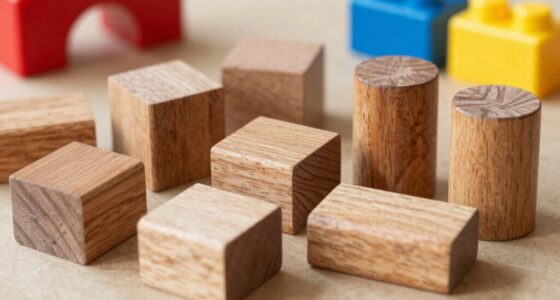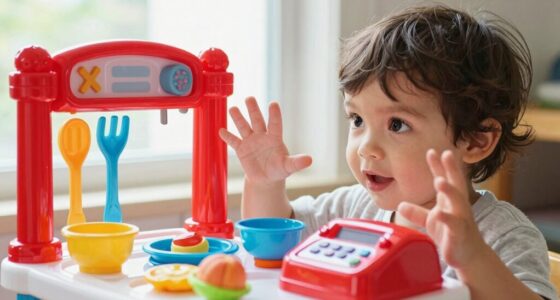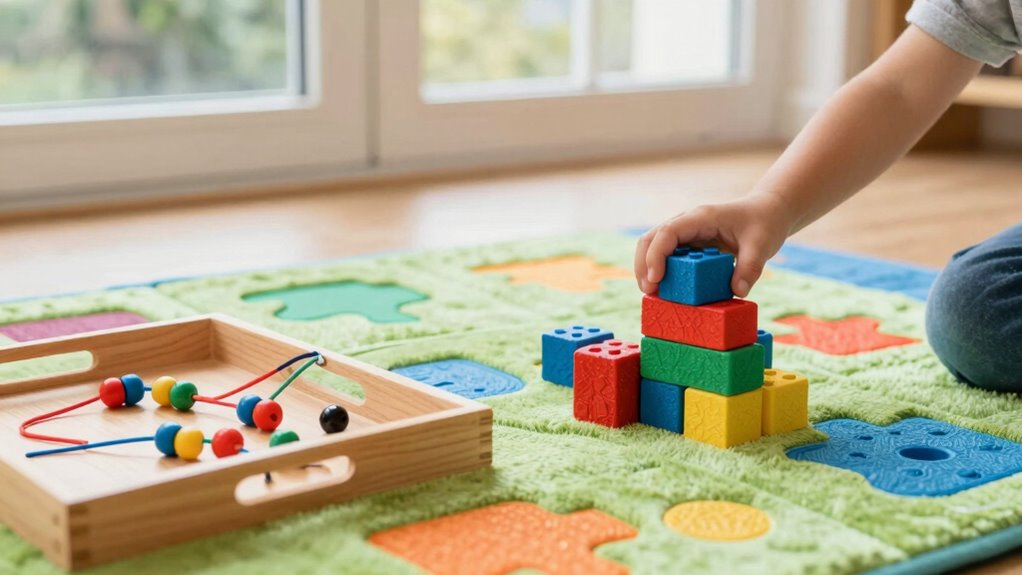

You can boost your preschooler’s fine motor skills with toys like shape sorters, puzzles, and building blocks that encourage grasping, pinching, and hand-eye coordination. Sensory toys such as play dough, water beads, and sand invite exploration and strengthen small muscles naturally. Outdoor options like pushing small objects or threading beads are also excellent. Using a mix of these toys and activities keeps the experience engaging and helps develop essential skills. Keep exploring for more ideas and tips to support their growth.
Key Takeaways
- Puzzles with small pieces promote pincer grasp and hand-eye coordination.
- Building blocks and stacking cups enhance grasping, lifting, and balancing skills.
- Shape sorters challenge fine motor precision through sorting and fitting.
- Repetitive play with threading beads or lacing cards develops finger strength and coordination.
- Outdoor toys like chalk and watering cans encourage controlled movements and pinch grip.
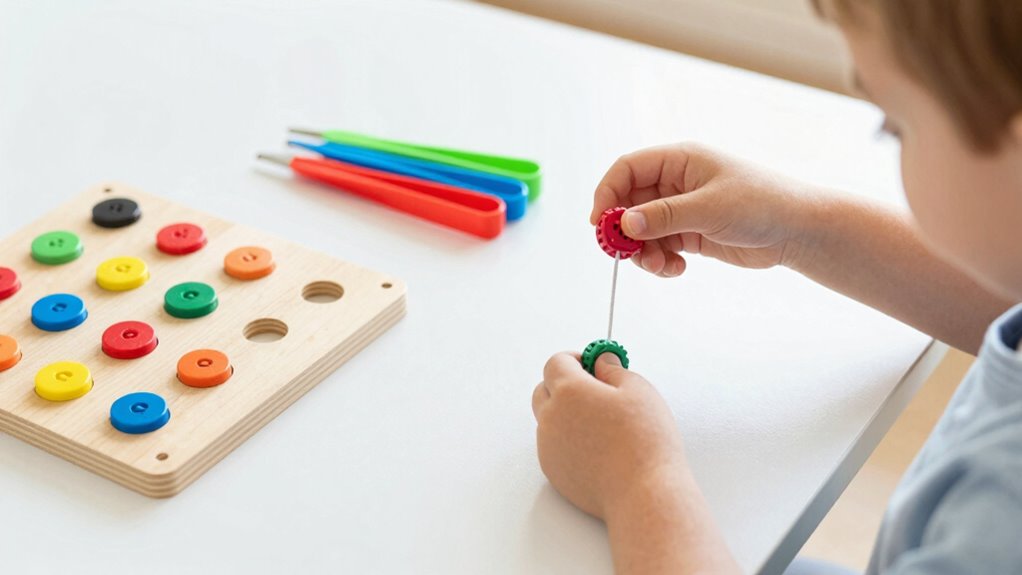
Developing fine motor skills is essential for preschoolers as they prepare for more complex tasks like writing and self-care. These skills involve the small muscles in their hands and fingers, which become stronger through engaging activities. When you choose the right toys, you can help your child build these muscles while having fun. Sensory play is one of the best ways to encourage this development. Toys that involve different textures, such as play dough, sand, or water beads, allow your child to explore and manipulate materials with their fingers. These activities improve hand-eye coordination and finger strength naturally, making them ideal for preschoolers.
Building fine motor skills prepares preschoolers for writing, self-care, and creative tasks through fun, sensory, and engaging activities.
Outdoor activities also play a vital role in building fine motor strength. Think about simple games like picking up small objects, stacking rocks, or threading beads on a string outside. These activities not only promote physical movement but also give children opportunities to practice grasping and pinching in a natural setting. Using outdoor toys like chalk, which requires precise finger movements to draw, or watering cans that demand controlled pouring, encourages your child to refine their hand skills while enjoying fresh air and sunshine. The use of natural environments can further enhance fine motor development by providing diverse textures and materials to explore. Incorporating multisensory experiences can deepen their engagement and support comprehensive development. A variety of sensory-rich toys can stimulate different aspects of fine motor growth, making playtime more effective and engaging.
The combination of sensory play and outdoor activities creates a rich environment where fine motor development happens seamlessly and joyfully. You can also incorporate toys that challenge your preschooler’s dexterity, such as puzzles with small pieces or shape sorters. These toys demand precise pincer grasp and hand coordination, which are critical for writing and self-care tasks like buttoning or tying shoelaces. Building blocks and stacking cups are simple yet effective tools for strengthening finger muscles because they require grasping, lifting, and balancing. As your child manipulates these toys, they develop the control needed for more complex hand movements, setting a solid foundation for future skills. Additionally, repetitive practice with these toys helps reinforce muscle memory and coordination essential for developing fine motor control. Furthermore, encouraging progressive challenges can motivate your child to refine their skills while maintaining fun and interest.
Remember that the key is variety and consistency. Providing different types of toys and activities keeps your child engaged and stimulates multiple fine motor pathways. Regularly involving your preschooler in sensory play and outdoor activities not only makes learning fun but also accelerates their ability to perform everyday tasks with confidence. When you focus on these areas, you’re giving your child the tools they need to succeed in school, self-care, and creative pursuits—all while enjoying the process.
As an affiliate, we earn on qualifying purchases.
Frequently Asked Questions
How Early Can Children Start Developing Fine Motor Skills?
You can start helping children develop fine motor skills early in childhood, even during infancy. As they grow, their motor development accelerates, and you’ll notice them grasping toys, pointing, and exploring textures. Providing age-appropriate activities like stacking blocks or finger paints encourages their hand-eye coordination and dexterity. Early experiences lay a strong foundation for more complex skills later, making it essential to nurture fine motor development from the very beginning.
Are There Any Safety Concerns With Small Toy Parts?
Yes, small toy parts can pose safety concerns, especially choking hazards for young children. You should always check for toy material safety, ensuring the toys are non-toxic and sturdy. Supervise playtime, and select age-appropriate toys that don’t have tiny parts that could come loose. Regularly inspect toys for damage or loose pieces, and choose those made from safe materials to keep your child safe while they develop their fine motor skills.
How Can Parents Encourage Independent Play With These Toys?
Research shows that encouraging independent play boosts creativity and confidence. You can foster this by setting up engaging, age-appropriate toys that invite exploration without constant supervision. Start with simple tasks and gradually step back, allowing your child to problem-solve and experiment. Your involvement should be supportive, not intrusive, so they develop independence. This way, you promote creative play and help your little one build fine motor skills confidently.
What Age Is Appropriate for Specific Fine Motor Toys?
You should choose fine motor toys appropriate for your child’s age to support sensorial play and foster creative expression. For toddlers, simple toys like shape sorters and stacking blocks help develop coordination. For preschoolers, introduce more complex puzzles and art supplies to challenge their fine motor skills. Always guarantee toys are safe, age-appropriate, and encourage exploration, allowing your child to build confidence while engaging in meaningful play.
Can These Toys Help Children With Developmental Delays?
Can these toys support children with developmental delays? Absolutely. They promote sensory integration, helping kids process and respond to sensory information more effectively. Plus, as children engage with these toys, they develop essential social skills like sharing and turn-taking. While every child’s needs differ, these toys can be valuable tools for fostering fine motor strength, sensory awareness, and social development in children with developmental delays.
fine motor skills puzzles for preschoolers
As an affiliate, we earn on qualifying purchases.
As an affiliate, we earn on qualifying purchases.
Conclusion
Incorporating these preschool toy ideas into your child’s playtime can considerably boost their fine motor skills. Did you know that developing strong fine motor skills early on can improve handwriting and daily task coordination later? By choosing toys that encourage grasping, squeezing, and threading, you’re helping your little one build essential skills while having fun. So, get creative with these ideas and watch your child’s confidence and coordination grow every day!
building blocks for small children
As an affiliate, we earn on qualifying purchases.
As an affiliate, we earn on qualifying purchases.
As an affiliate, we earn on qualifying purchases.