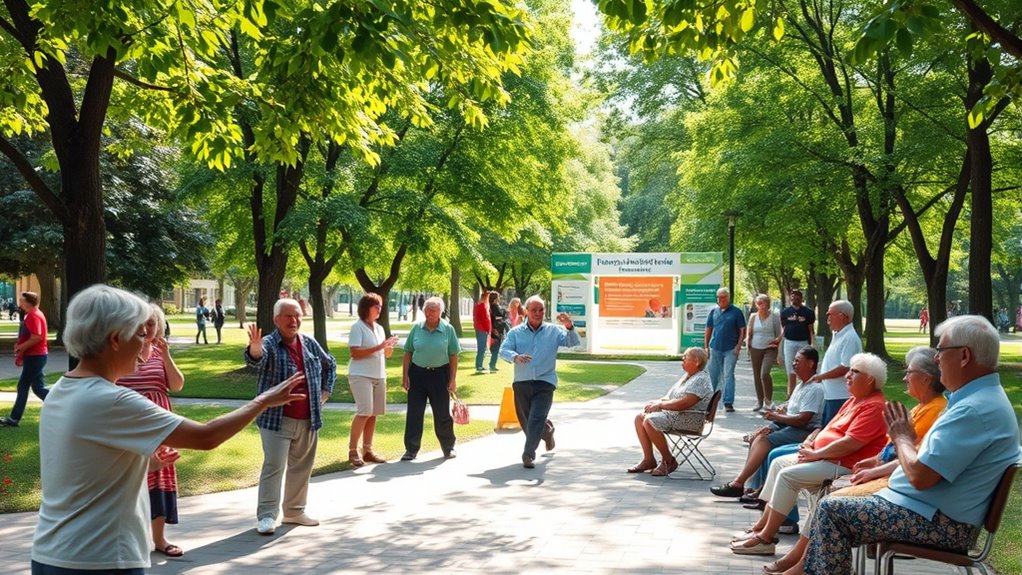

Public health plays a key role in supporting aging populations by promoting disease prevention, healthy lifestyle choices, and social engagement. It helps create age-friendly environments with safe walkways, nutritious food access, and social programs that reduce isolation. Public health campaigns encourage regular checkups and early detection to manage chronic conditions effectively. By integrating community resources and policies, public health helps older adults maintain independence and well-being—continuing efforts that can greatly improve their quality of life.
Key Takeaways
- Public health promotes preventive care, screenings, and health education to manage chronic diseases in older adults.
- It supports the creation of age-friendly environments that facilitate mobility, safety, and social engagement.
- Community-based programs enhance access to resources, social support, and health management for seniors.
- Public health campaigns encourage healthy lifestyles and early detection to improve aging outcomes.
- A coordinated approach integrates clinical care, community resources, and policies to promote healthy aging.

As the global population ages, public health systems face new challenges and opportunities to support older adults’ well-being. One of the most pressing issues is chronic disease management, which affects a significant portion of the elderly population. Conditions like diabetes, heart disease, arthritis, and hypertension require ongoing care, medication, and lifestyle adjustments. Public health initiatives play a essential role in helping older adults manage these diseases effectively, reducing complications and improving quality of life. By promoting preventive care, screening programs, and health education, health systems can empower seniors to take control of their health. Encouraging regular checkups and early detection not only helps in managing existing conditions but also prevents the onset of new health problems.
Effective public health strategies support older adults in managing chronic diseases and enhancing quality of life.
Community support becomes a critical element in addressing these challenges. When public health efforts integrate community-based programs, older adults gain access to resources beyond clinical settings. Community centers, local organizations, and volunteer groups can offer social engagement, health workshops, and transportation services, making healthcare more accessible. These support networks foster a sense of belonging and reduce isolation, which is often overlooked but markedly impacts health outcomes. As you navigate aging, you’ll find that community support can help you adhere to medication schedules, attend appointments, and adopt healthier lifestyles. This holistic approach ensures that health management isn’t confined solely to hospitals or clinics but is embedded within daily life and social interactions.
Public health strategies also focus on creating age-friendly environments that facilitate healthy aging. These include promoting physical activity through community exercise programs, ensuring safe walkways, and providing nutritious food options. When these elements are in place, managing chronic diseases becomes more straightforward because seniors can maintain mobility and independence. Public health campaigns often emphasize the importance of social connections, which are linked to better mental and physical health. By fostering environments where older adults feel supported and empowered, communities can reduce the strain on healthcare systems and improve overall well-being.
Ultimately, addressing the needs of an aging population requires a coordinated effort that combines clinical care, community involvement, and public health policies. You, as an older adult, stand to benefit from these integrated approaches, gaining not just better disease management but also a more fulfilling, socially connected life. The future of public health in aging populations hinges on your community and healthcare systems working together to create a supportive, proactive environment that promotes healthy aging at every stage.
Top picks for "role public health"
Open Amazon search results for this keyword.
As an affiliate, we earn on qualifying purchases.
Frequently Asked Questions
How Does Technology Improve Health Monitoring for Seniors?
Technology improves health monitoring for seniors by using wearable sensors that track essential signs and activity levels in real time. These devices alert you or caregivers to potential issues early, enabling prompt responses. Telehealth consultations let you connect with healthcare providers remotely, reducing trips to the doctor and ensuring continuous care. Together, these tools help seniors stay healthier, safer, and more independent by making health management more accessible and efficient.
What Policies Support Aging-In-Place Programs?
Think of aging-in-place programs as a sturdy bridge supporting you through life’s changing seasons. Policies that bolster these programs focus on community engagement, ensuring local resources and social networks thrive. They also promote housing adaptations, making homes safer and more accessible. These policies empower you to stay connected and independent, fostering an environment where aging gracefully feels like a natural part of your journey.
How Can Public Health Address Social Isolation in Older Adults?
You can address social isolation by promoting community engagement through local events and volunteer programs that connect older adults with others. Improving housing accessibility makes it easier for them to stay active and participate. Public health initiatives can also support transportation services, ensuring seniors can access social activities and healthcare. These efforts foster social connections, reduce loneliness, and create a more inclusive environment for aging populations.
What Are Cost-Effective Strategies for Aging Populations?
Think of aging populations as a garden needing careful tending. You can save resources by prioritizing preventive care, which keeps health issues at bay before they become costly. Encouraging community engagement also acts as a watering can, fostering social connections and support networks that improve quality of life. These strategies are cost-effective because they focus on prevention and social support, reducing long-term healthcare expenses and enhancing well-being for older adults.
How Is Mental Health Prioritized in Aging Public Health Initiatives?
You can prioritize mental health by actively addressing mental health stigma through awareness campaigns and education, making it easier for seniors to seek help. Focus on supporting emotional well-being by providing accessible mental health services, social engagement programs, and community resources. Encouraging open conversations about mental health helps seniors feel less isolated and more comfortable discussing their concerns, ultimately improving their overall quality of life and well-being.
Conclusion
As you consider the future, remember that by 2050, over 1 in 6 people will be aged 65 or older. Public health plays a crucial role in supporting healthy aging through prevention and education. Your involvement can make a difference, whether through advocating for better services or making healthier choices yourself. Together, we can create a society where older adults thrive, ensuring that aging populations are not just a challenge but an opportunity for growth and community.