
To make sensory play less messy, focus on container-based activities using small, covered containers like sensory bins or shallow trays. Choose washable or less messy materials such as water-based paints or homemade slime, and set up designated play zones for easy cleanup. Use clear, labeled storage solutions to keep materials organized and accessible. Establish routines for tidying up afterward, and consider washable mats or tablecloths to protect surfaces. Keep exploring for more tips to create fun yet tidy sensory experiences.
Key Takeaways
- Use contained containers like sensory bins with lids to keep materials organized and prevent spills.
- Choose washable, less messy substances such as homemade slime or water-based activities.
- Implement clear, labeled storage solutions for easy access and quick cleanup.
- Set up designated play areas with washable mats or tablecloths to contain messes.
- Develop a routine for tidying up immediately after play to maintain a tidy environment.
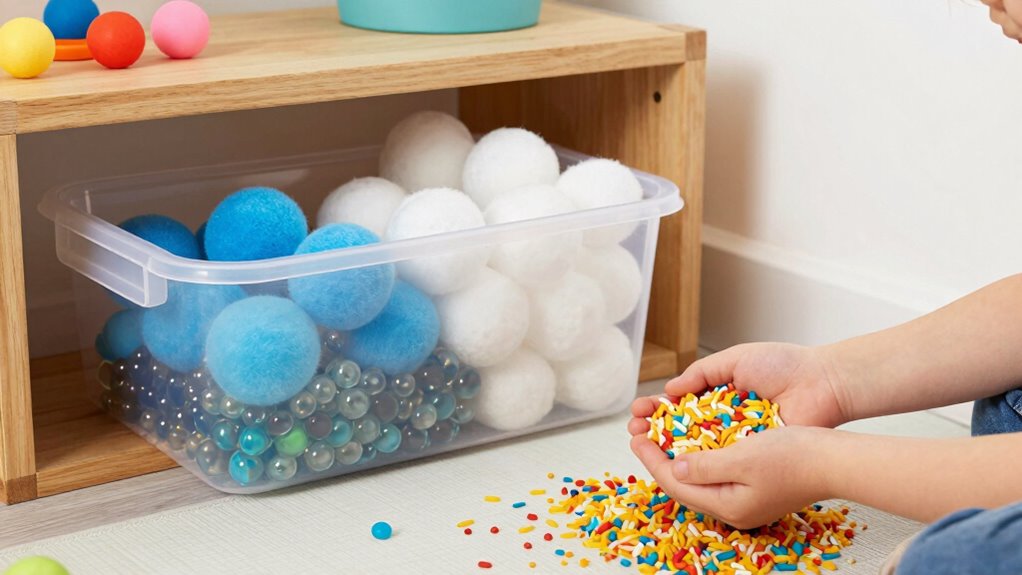
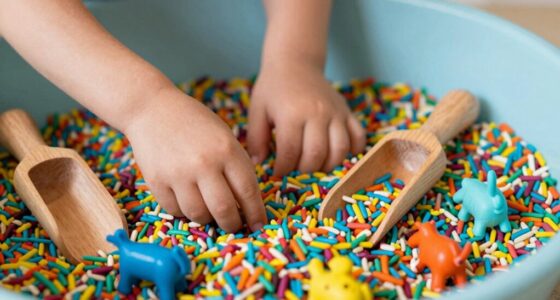
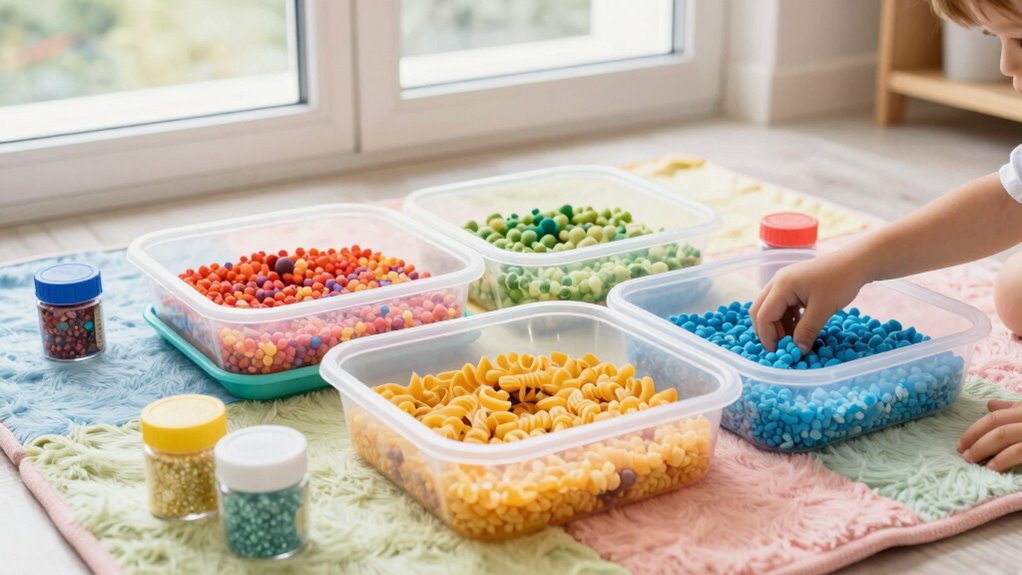
Have you ever felt overwhelmed by the mess that sensory play can create? It’s a common experience, especially when you’re eager to let your child explore freely. But the good news is, you don’t have to sacrifice the fun to keep things tidy. With a few smart strategies, you can make sensory play less messy while still engaging your child’s curiosity. One way is to plan creative activity ideas that naturally minimize cleanup. For example, opt for activities that use dry materials like rice, pasta, or beans in small, contained containers. These can be easily scooped up and shaken back into their storage bins once playtime ends. You might also consider sensory bins with lids or covers, which help contain the materials and prevent spills. Another idea is to introduce activities that use washable or less messy substances, such as homemade slime, finger paints, or water-based play, which are easier to clean and less likely to stain.
Storage and organization tips play a crucial role in making sensory play less chaotic. Invest in clear, stackable storage containers so you can quickly see what’s inside and keep everything neatly separated. Label each container to help your child learn to put things away independently, fostering good habits and reducing clutter. Use shallow bins or trays for smaller activities—these are easier to manage and clean up afterward. Keep frequently used materials within easy reach to encourage your child to play with them responsibly, but store less-used items out of sight to prevent clutter from building up. Consider creating designated sensory play zones where all related materials and activities are stored together, making cleanup more straightforward. Additionally, employing visual labels can further support your child’s independence in tidying up. Incorporating storage solutions specifically designed for small items can also help maintain a cleaner play environment and reduce the time spent on cleanup. Furthermore, organizing your storage areas with efficient organization techniques can make cleanups quicker and less stressful, saving you time and effort. Moreover, incorporating storage organization practices can significantly streamline your cleanup process and make it less overwhelming.
In addition, develop a routine for tidying up after each activity. Encourage your child to help with putting materials back in their designated containers, which teaches responsibility and keeps your space organized. You can also set up a designated play area with a washable mat or tablecloth, which makes cleanup faster and easier—just shake or wipe away the mess when play is over. Combining these storage and organization tips with creative activity ideas tailored to minimize mess lets you enjoy sensory play without feeling overwhelmed. It’s all about creating a balance that keeps the fun alive while maintaining a tidy, manageable space. In the end, a little planning goes a long way toward making sensory play both enjoyable and less stressful for you and your child.

Vtopmart 6 Qt Plastic Storage Bins with Lids, Clear Sensory Bins, Arts Crafts Organizers and Storage, Stackable Containers for Home Office and School Supplies, 4 Pack
【Suitable Size】The size is 14.25 inches x 10.51 inches x 2.83 inches, which is easy to move and…
As an affiliate, we earn on qualifying purchases.
As an affiliate, we earn on qualifying purchases.
Frequently Asked Questions
Can Sensory Play Be Safely Done Indoors?
Yes, sensory play can be safely done indoors. You should focus on indoor safety by choosing non-toxic materials and setting up a designated play area. Parent supervision is essential to guarantee your child remains safe and avoids choking hazards or spills. Keep the play surface protected with mats or washable trays, and regularly clean up to maintain a safe, fun environment. With these precautions, indoor sensory play remains both enjoyable and secure.
What Are the Best Sensory Materials for Young Children?
You should choose sensory materials that are durable and safe for young children, like silicone, water beads, or textured fabrics. These materials withstand rough handling and are easy to clean, reducing mess. Incorporate sensory activity ideas such as finger painting, textured bins, or water play using these sturdy materials. Always supervise to guarantee safe and fun exploration, making sensory play engaging without creating chaos.
How Do I Clean up Sensory Play Materials Easily?
You wonder how to clean up sensory play materials easily, right? Once playtime ends, grab storage solutions like airtight containers or trays to contain messes quickly. Use cleanup tips such as covering surfaces with newspaper or plastic, and have wipes or damp cloths handy for any spills. This way, you prevent chaos from spreading, making cleanup faster and less stressful, so you can enjoy more fun and less fuss with your little one.
Are There Allergen-Free Sensory Play Options?
Yes, there are allergen-free sensory play options. You can choose hypoallergenic alternatives like unscented playdough, natural water beads, or organic finger paints. Always opt for non-toxic supplies to guarantee safety. These options minimize allergy risks and make cleanup easier, so your child can enjoy sensory activities without worries. Look for products labeled as allergy-friendly and free from common allergens, creating a safe, fun environment for everyone.
How Long Should Sensory Play Sessions Last?
Typically, your child’s sensory play sessions should last around 10 to 15 minutes—an ideal session length that keeps their engagement high without overwhelming them. Since sensory play duration varies with age and interest, watch for signs of fatigue or disinterest, and then gently wrap up. Coincidentally, shorter, focused sessions foster better exploration and learning, making play both enjoyable and beneficial while keeping mess manageable.

Creativity for Kids Sensory Pack: Farm, Sensory Toys for Toddlers, Pretend Play Farm Animals for Kids, Toddler Travel Toys & Easter Basket Stuffers (Ages 3+)
FARM TOYS FOR BOYS AND GIRLS: Bring farm fun to life with sensory play! Add magic to a…
As an affiliate, we earn on qualifying purchases.
As an affiliate, we earn on qualifying purchases.
Conclusion
With a few simple tips, you can keep sensory play fun and mess-free, like a well-tuned orchestra. Set up your activities in shallow containers, use washable materials, and cover surfaces with easy-to-clean coverings. These small steps turn chaos into calm, letting your child explore freely without turning your space into a disaster zone. Now, you can enjoy the sensory adventures together, knowing the mess is manageable and the fun is endless.

6-Pack Extra Large Toy Storage Bags with Zippers & Labels, Reusable Clear TPU Waterproof Organizer for Kids Toys, Building Blocks, Puzzles, Dolls, Board Games – Durable, BPA-Free, Travel-Friendly
Premium TPU Material (Non-Toxic & Eco-Friendly) – Made with durable, BPA-free TPU instead of PVC, our storage bags…
As an affiliate, we earn on qualifying purchases.
As an affiliate, we earn on qualifying purchases.

Carolart 3 Pack,Empty Sensory Bin,13.5 Inch Storage Container,Portable Plastic Storage Bins, Stackable Play Tray for toys,arts,crafts and sand.
Versatile Use-This plastic play tray is not only great for sand and sensory play. Also great use for…
As an affiliate, we earn on qualifying purchases.
As an affiliate, we earn on qualifying purchases.