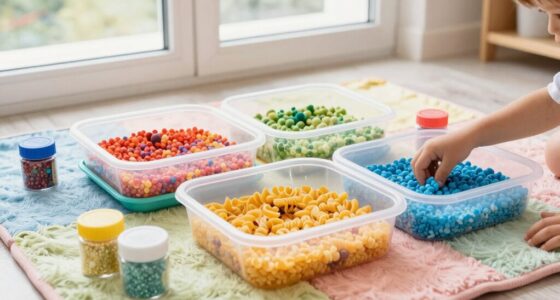
To use dry sensory bins daily, simply choose a sturdy container and fill it with dry, mess-free materials like rice, beans, or pasta. Add themed objects and small tools like scoops or tweezers to make play engaging. Encourage your child to explore textures, practice fine motor skills, and sort objects. Keeping it simple and routine makes sensory play quick and enjoyable. If you keep exploring, you’ll discover even more ways to support your child’s growth through sensory activities.

Get health and wellness essentials delivered free — and shop member deals
- Fast, free delivery on millions of items
- Access to Prime Big Deal Days deals on October 6–7
- Prime Video, Amazon Music and more included
Key Takeaways
- Incorporate themed objects and tools to make daily exploration engaging and educational.
- Keep the setup simple with minimal materials for quick, easy access and cleanup.
- Encourage children to explore textures and manipulate materials to develop sensory and fine motor skills.
- Integrate daily routines by making sensory bin time a consistent, calming activity.
- Observe and guide children’s interactions to support learning and emotional regulation.
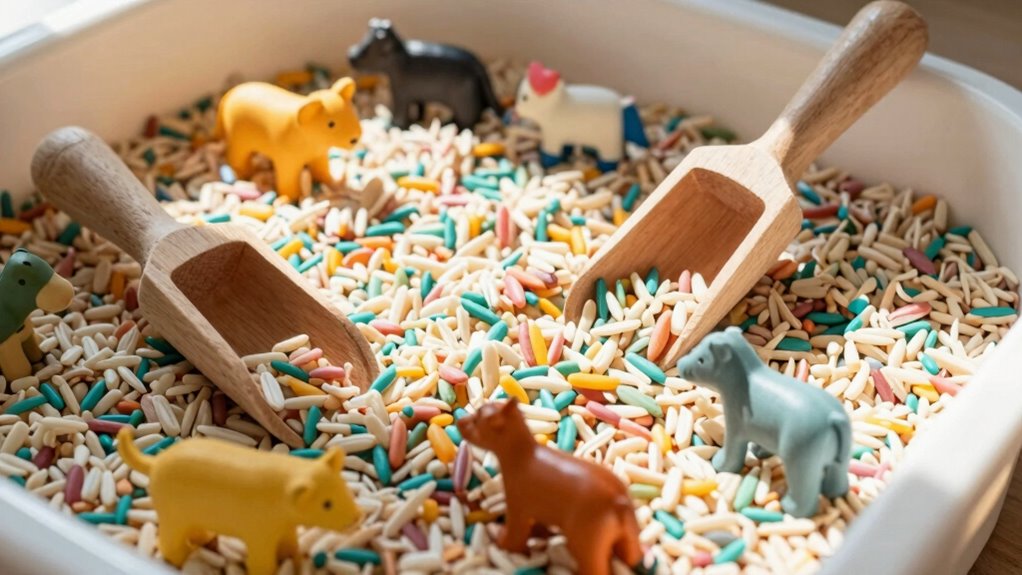
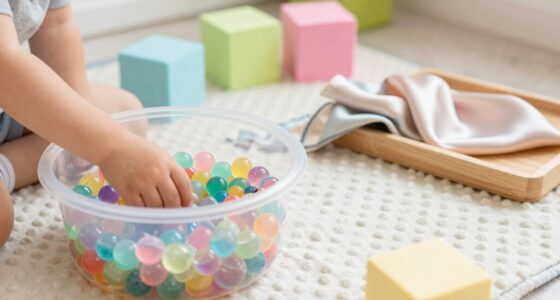
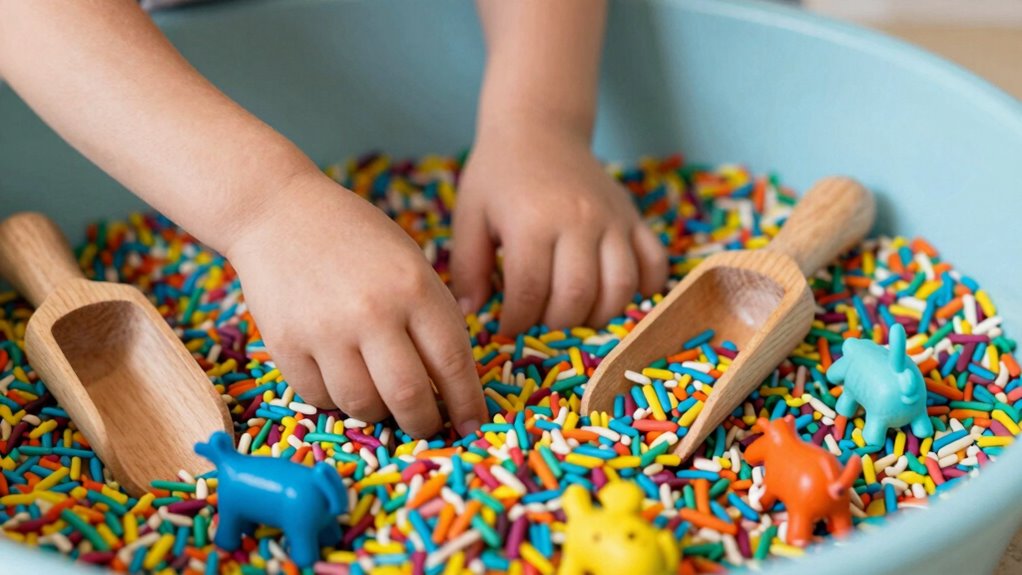
Dry sensory bins are a simple yet effective way to provide engaging, mess-free play for children every day. They serve as a versatile tool for fostering tactile exploration, allowing your child to feel different textures and materials without the worry of spills or stains. As you set up the bin, choose a sturdy container that’s easy for your child to access. Fill it with materials like dried pasta, rice, beans, or small beads—whatever suits your child’s interests and developmental stage. These items are perfect for tactile exploration because they offer a variety of textures that your child can feel, squeeze, and manipulate.
Dry sensory bins offer tactile fun and development with mess-free exploration using simple materials like pasta, rice, and beans.
Encourage your child to dig into the bin with their hands, feeling the different textures and discovering how they compare. This tactile exploration helps develop sensory awareness and can also calm children who need sensory input to regulate their emotions. As they explore, they’re engaging in activities that strengthen their fine motor skills. Picking up small objects, grasping, pinching, and sifting through the materials all require precise hand movements. These actions build strength and coordination in the fingers and hands, which are essential for writing, buttoning, and other daily tasks.
To make the activity more engaging, you can add small tools like scoops, tweezers, or shovels. Using these tools not only makes the play more fun but also challenges your child’s fine motor skills further. You might also incorporate themed elements, such as miniature animals, cars, or letters, to add an educational component to the sensory bin. As your child interacts with these objects, they’re practicing pincer grasp and hand-eye coordination, vital skills for future academic success. Additionally, understanding the importance of sensory development can help you tailor activities that support your child’s overall growth. Incorporating sensory activities like these can also promote mindfulness and emotional regulation, aligning with the principles of Stoic wisdom by encouraging present-moment awareness. Developing fine motor skills through sensory play can also contribute to better handwriting and coordination later on. Recognizing the significance of developmental milestones can guide you in creating activities that are appropriately challenging and rewarding for your child’s growth.
Incorporating a variety of materials and tools can further enhance your child’s sensory exploration, making each session both educational and enjoyable. Keep the setup simple—just a few materials and a clean space—and allow your child to lead the exploration. This promotes independence and confidence in their abilities. Remember, the goal isn’t just play but also sensory development and fine motor skill enhancement. As your child digs, scoops, and sorts, they’re building foundational skills that will support their overall growth. By making sensory bins a daily routine, you create a calming, educational activity that nurtures their tactile senses and fine motor development in a fun, mess-free way.
As an affiliate, we earn on qualifying purchases.
Frequently Asked Questions
Can Dry Sensory Bins Be Used Outdoors Safely?
Yes, dry sensory bins can be used outdoors safely if you consider outdoor safety and material durability. Make certain the bin is sturdy and weather-resistant to withstand outdoor conditions. Keep an eye on the weather, especially rain or strong wind, and supervise children to prevent rough play or spills. Using a durable material ensures the bin lasts longer, making outdoor play both fun and safe for your little ones.
What Age Is Appropriate for Dry Sensory Bin Activities?
You can introduce dry sensory bin activities to children as young as 12 months, focusing on sensory exploration and fine motor skills. Young toddlers enjoy exploring textures and manipulating small objects, but always supervise to guarantee safety. As they grow, they can handle more complex activities. Tailor the contents to their developmental level, encouraging curiosity, improving hand-eye coordination, and fostering engaging, easy daily play.
How Do I Clean and Maintain Dry Sensory Bins?
Did you know that keeping sensory bins clean can reduce germs by up to 80%? To maintain dry sensory bins, focus on sensory safety by cleaning thoroughly after each use. Use gentle cleaning tips like wiping with a damp cloth and mild soap, then let everything air dry. Regular maintenance guarantees a safe, hygienic play environment, making your child’s sensory exploration both fun and safe every day.
Are Dry Sensory Bins Suitable for Children With Allergies?
Dry sensory bins can be suitable for children with allergies if you take allergy precautions. You should choose material alternatives like silicone, plastic, or hypoallergenic fillers to reduce allergy risks. Always check ingredient labels and avoid common allergens. Keep the bins clean and monitor your child during play. With proper precautions and suitable materials, dry sensory bins can be a safe and engaging activity for children with allergies.
How Can I Incorporate Dry Sensory Bins Into Therapy Sessions?
You can incorporate dry sensory bins into therapy sessions by encouraging sensory exploration and fine motor development. Guide children to sift, scoop, and manipulate the materials, fostering tactile skills. Incorporate themed elements or specific tasks to target goals, such as pinching or grasping. Use the bins as a calming activity or a challenge to improve hand-eye coordination. This hands-on approach makes therapy engaging and promotes essential developmental skills.
As an affiliate, we earn on qualifying purchases.
Conclusion
Using dry sensory bins makes daily play simple and mess-free, perfect for busy parents or caregivers. If you think they lack the excitement of wet or messy options, just try adding different textures or small toys to engage your child’s senses. Remember, the goal is to promote exploration and learning without the hassle. Dry bins are versatile and easy to set up, making them a fantastic choice for consistent, stress-free playtime.
As an affiliate, we earn on qualifying purchases.
As an affiliate, we earn on qualifying purchases.
Fall Picks
fall essentials
As an affiliate, we earn on qualifying purchases.