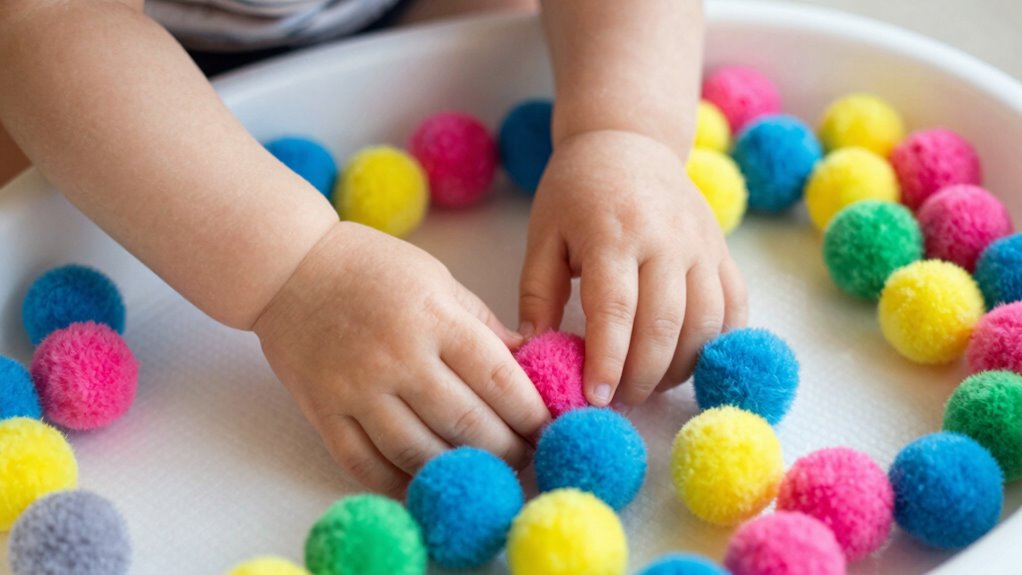

You can easily introduce pom-pom sensory play to your toddler by offering colorful, textured pom-poms for scooping, sorting, and transferring with spoons or tongs. Fill a sensory bin with pom-poms for pouring and sift through them to encourage fine motor skills. Add fun challenges like timed transfers or hiding small objects for problem-solving. These simple activities boost sensory, cognitive, and motor development. Keep exploring to discover more ways to make fun, educational play moments with your little one.

Get health and wellness essentials delivered free — and shop member deals
- Fast, free delivery on millions of items
- Access to Prime Big Deal Days deals on October 6–7
- Prime Video, Amazon Music and more included
Key Takeaways
- Use colorful, varied-sized pom-poms for simple sorting and transferring activities to engage toddlers’ senses and fine motor skills.
- Create sensory bins filled with pom-poms for easy pouring, sifting, and exploration.
- Incorporate spoons or tongs to develop hand-eye coordination during pom-pom transfers.
- Make fun games like pom-pom races to boost focus and coordination in a playful way.
- Combine pom-poms with art projects for creative, safe sensory exploration suitable for toddlers.
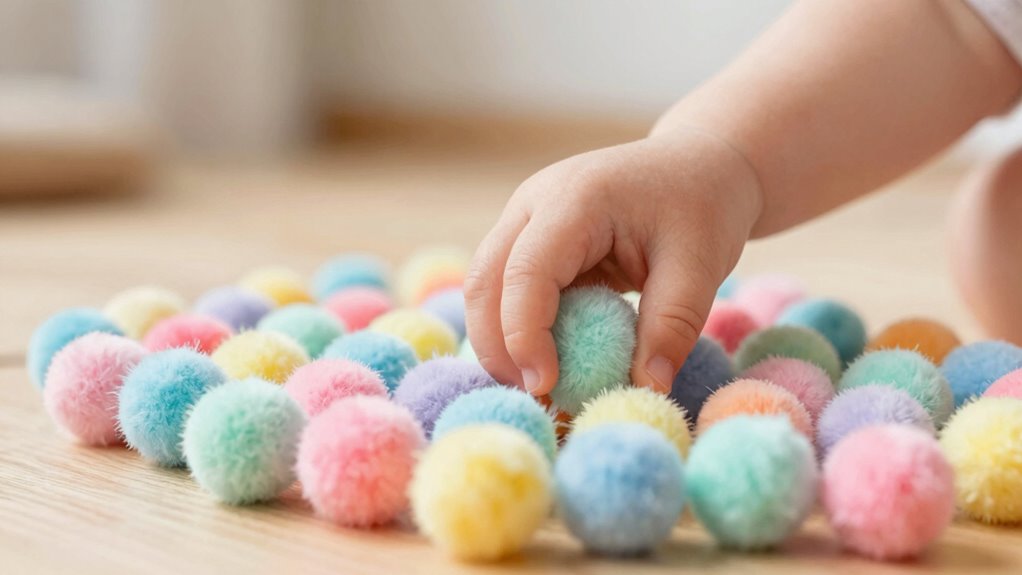
Sensory play is vital for your toddler’s development, and pom-pom activities offer a fun, tactile way to engage their senses. When you introduce creative craft ideas like pom-pom play, you’re not only providing entertainment but also supporting your child’s sensory development advantages. These activities help your little one explore textures, develop fine motor skills, and boost their cognitive growth—all while having a blast.
You can start simple by gathering colorful pom-poms of various sizes. Let your toddler scoop, sort, and transfer them using spoons or tongs. This activity enhances hand-eye coordination and strengthens small muscles in their fingers and hands, which are essential for writing later on. As they pick up the soft, fluffy pom-poms, they experience different textures that stimulate their tactile senses. The bright colors also engage their visual senses and help develop color recognition skills.
Creating a sensory bin filled with pom-poms is another easy idea. Fill a shallow container with pom-poms and provide tools like scoops, funnels, or even their hands for exploration. They can practice pouring, sifting, and sorting, which fosters fine motor control and spatial awareness. To add an extra layer of sensory development benefits, hide small objects or toys among the pom-poms for your toddler to find. This encourages problem-solving, patience, and focus during play. Incorporating creative craft ideas like pom-pom activities can further enrich their sensory experiences and inspire their imagination. Additionally, understanding sensory development can help you tailor activities that support your child’s growth effectively. Engaging in age-appropriate activities ensures that your child remains engaged and safe while exploring new textures and motions. You might also consider making a sensory collage using pom-poms. Provide your child with a piece of paper, glue, and various pom-poms. They can create patterns or pictures by sticking the soft balls onto the paper. This activity promotes creativity while refining fine motor skills and hand-eye coordination. Plus, it introduces your toddler to basic art concepts and encourages self-expression. Engaging in such activities can also boost their confidence as they see their own creations come to life.
Another engaging idea is a pom-pom race. Set up two bowls—one for collecting pom-poms and another as a starting line. Using a spoon or their hands, your toddler can transfer pom-poms from one bowl to the other. This simple game enhances concentration, dexterity, and timing. You can make it more challenging by adding different-sized pom-poms or timed challenges. This activity also reinforces fine motor skills, which are crucial for many everyday tasks. Incorporating neural connections through diverse activities can further support their overall brain development.
Incorporating pom-pom activities into your child’s playtime provides numerous sensory development advantages. They learn through touching, seeing, and moving, which helps build neural connections critical for their overall growth. These activities are easy to set up, inexpensive, and adaptable, so you can keep your toddler engaged while supporting their development in a fun, creative way.
colorful pom-poms for sensory play
As an affiliate, we earn on qualifying purchases.
As an affiliate, we earn on qualifying purchases.
Frequently Asked Questions
What Safety Precautions Should I Take During Pom-Pom Sensory Play?
During pom-pom sensory play, you should supervise your toddler closely to prevent choking hazards from small pom-poms, which have a soft pom-pom texture. Always choose size-appropriate pom-poms and keep the play area clean. Make certain your child understands gentle handling to avoid ingestion or discomfort. Regularly inspect the pom-poms for damage, and encourage sensory exploration in a safe, controlled environment to enhance their tactile experience safely.
How Do I Store Pom-Poms After Playtime?
To store pom-poms after sensory play, gather them in a sealed plastic container or a resealable bag to keep them clean and prevent spills. You can also use small bins with lids for easy access. For sensory play ideas, consider sorting pom-poms by color or size before storing. Keeping your pom-pom storage organized makes setup easier for next time and keeps your play area tidy.
Can Pom-Pom Play Improve Fine Motor Skills?
Yes, pom-pom play can improve your toddler’s fine motor skills. As they grasp, pick up, and place the pom-poms, they enhance hand-eye coordination and develop hand strength. These activities also promote pinching and pincer grasp, essential for writing and other tasks. By encouraging your child to manipulate small objects like pom-poms, you support their overall fine motor development in a fun, engaging way.
What Alternative Materials Can I Use if I Don’t Have Pom-Poms?
Your sensory play can be just as exciting without pom-poms! You can use alternative materials like cotton balls, pasta, buttons, or fabric scraps to create a fun, textured experience. These items stimulate your toddler’s senses and help develop fine motor skills. Just make certain that the materials are safe and appropriate for their age. With a little creativity, you’ll turn everyday objects into a fantastic sensory adventure!
How Do I Clean up Pom-Poms Easily?
To clean up pom-poms easily, use a handheld vacuum or a lint roller to pick them up quickly. For stubborn pieces, gently gather them with your hands or use a damp cloth to collect stray bits. Storage solutions like a clear plastic bin or a small container keep pom-poms organized and prevent messes. Regularly cleaning and proper storage make tidy-up effortless, so your play area stays neat and ready for more fun.
As an affiliate, we earn on qualifying purchases.
Conclusion
Incorporating pom-pom sensory play into your toddler’s routine isn’t just fun—it’s backed by child development theories that emphasize the importance of sensory experiences for cognitive and motor skills. Research shows that engaging multiple senses helps toddlers process information more effectively and fosters creativity. So, next time you set up a playful activity, remember that these simple, colorful pom-poms could be a powerful tool in supporting your child’s growth and curiosity.
kids tongs and spoons for fine motor skills
As an affiliate, we earn on qualifying purchases.
As an affiliate, we earn on qualifying purchases.
pom-pom sorting and transfer toys
As an affiliate, we earn on qualifying purchases.
As an affiliate, we earn on qualifying purchases.
Fall Picks
fall essentials
As an affiliate, we earn on qualifying purchases.