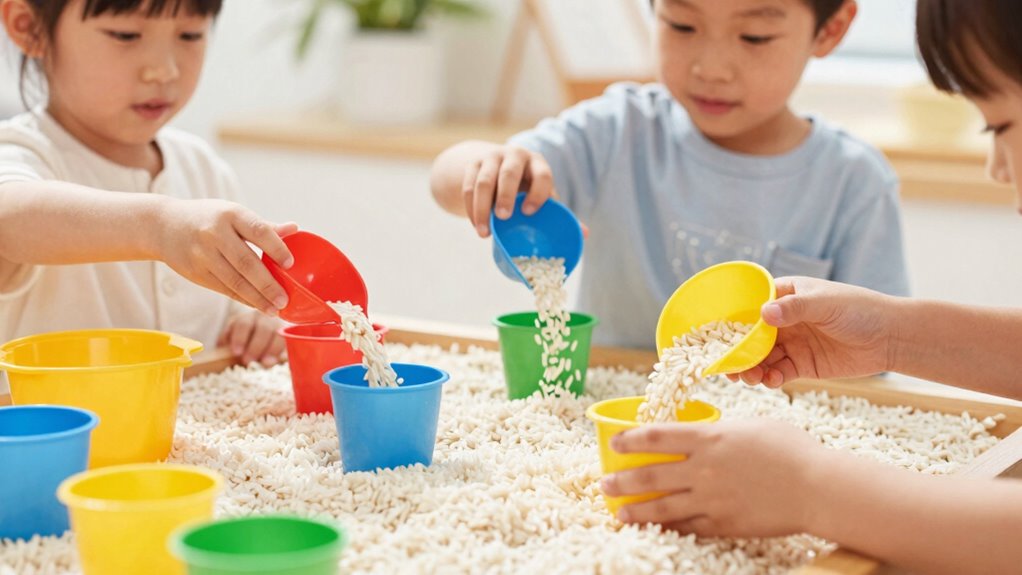
You can help your child build fine motor skills with fun rice bin activities like scooping, pouring, and sifting rice to enhance tactile awareness. Use tools such as scoops, tongs, and cups to encourage precise movements and hand-eye coordination. Incorporate sorting by color or size, threading objects, or transferring rice to challenge their control and strengthen finger muscles. Keep exploring these ideas for more engaging ways to promote their developing skills.
Key Takeaways
- Incorporate tools like tongs and spoons to enhance precise grasping and hand-eye coordination.
- Use activities like threading beads or stringing objects to improve finger stability and concentration.
- Encourage transferring rice between containers using fingers or utensils to build control and muscle strength.
- Include sorting tasks by color or size to develop classification skills and fine motor dexterity.
- Create pretend play scenarios like cooking or building to foster imaginative use of fine motor movements.
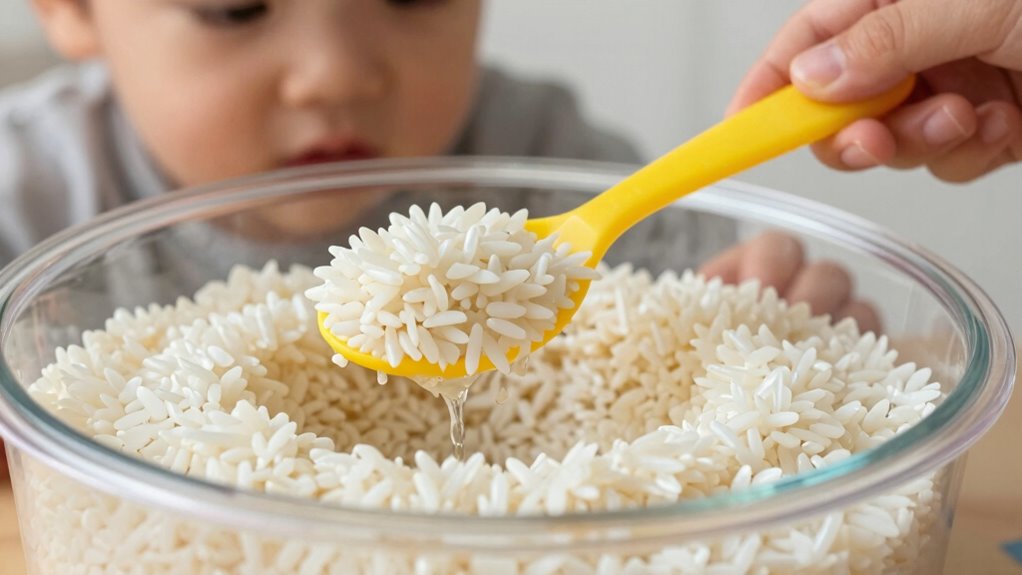
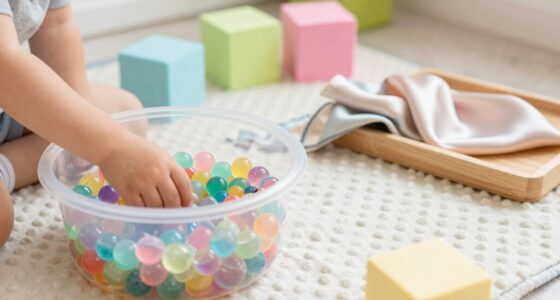
A rice bin offers endless opportunities for sensory play and creative exploration. When you set up a rice bin, you create a space where children can immerse themselves in tactile experiences that stimulate their senses. As they scoop, pour, and sift through the rice, they engage in sensory exploration that helps develop their tactile awareness and fine motor skills. This kind of play encourages children to use their fingers and hands in precise movements, strengthening muscles essential for tasks like writing, buttoning, and tying shoelaces. You’ll notice that as kids manipulate the rice, they’re not just playing—they’re refining their hand-eye coordination and finger dexterity, which are vital for their overall development.
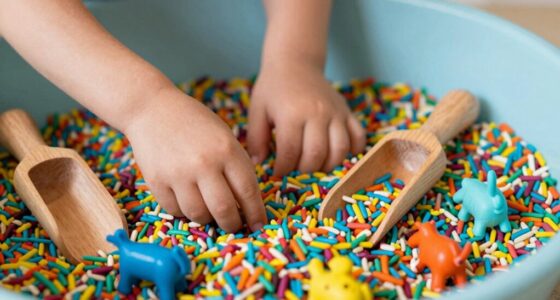
Encouraging creative engagement is another key benefit of rice bin play. You can introduce various tools and objects—like spoons, cups, tweezers, or small toys—to add complexity and fun. These tools challenge children to grasp, pinch, and transfer items, further honing their fine motor control. For example, asking a child to pick up tiny objects with tongs and place them into containers turns a simple activity into an opportunity for precise movements. The open-ended nature of the rice bin means children can create their own games, whether they’re pretending to cook, sorting objects by color or size, or building miniature landscapes. This freedom fosters imaginative thinking and encourages children to experiment with different motions and grips, all while practicing their fine motor skills. Incorporating safety precautions ensures that children can explore freely while minimizing potential risks during play. Additionally, understanding the importance of developmentally appropriate activities helps tailor play to support growth at different ages.
You can also incorporate activities that require more deliberate movements, like threading beads or stringing small objects into the rice. These activities build concentration and hand stability, essential for more complex tasks later on. When children reach into the rice to find hidden items or fill containers, they practice controlled movements that improve their finger strength and coordination. Improving hand-eye coordination is crucial for many daily tasks and academic skills. You might even challenge them to transfer rice from one bowl to another using only their fingers or utensils, which enhances precision and control. Additionally, multi-unit setups can expand these activities by allowing multiple children to play simultaneously, fostering social skills and cooperative play while practicing fine motor control. As they engage in these varied activities, they learn to regulate their movements better and develop a sense of mastery over their fine motor abilities. Incorporating sensory play and mindful supervision makes the experience both fun and safe for children.

Rainbow Sensory Play Rice for Kids, 2 lbs – Colorful Sensory Bin Filler for Scooping, Pouring, Sorting & Creative Play – Perfect for Sensory Bins and Tables – Fine Motor Play – Ages 3+
Colorful sensory play: A bright multicolor blend of classic rainbow shades. Kids can scoop, pour, swirl, and explore…
As an affiliate, we earn on qualifying purchases.
As an affiliate, we earn on qualifying purchases.
Frequently Asked Questions
What Age Is Best for Rice Bin Play?
You’ll find that children as young as 12 months enjoy rice bin play, but the best age is around 2 to 4 years old. At this stage, kids can actively explore sensory textures and develop fine motor skills through activities like scooping and pouring. It also encourages creative storytelling, as they can hide small toys or objects, enhancing their imagination while refining their hand-eye coordination.
How Do I Prevent Rice From Spilling Everywhere?
Spilling rice is like trying to catch a handful of water—tricky! To prevent this, use a shallow, lipped container and lay down a washable mat beneath it. Encourage sensory exploration by guiding your child’s hand movements, helping with fine motor development. You can also add a tray or box around the rice bin to contain spills. These tips keep play fun and mess manageable, fostering skill-building without frustration.
Can Rice Bin Play Be Adapted for Older Children?
Yes, you can adapt rice bin play for older children by incorporating sensory integration and imaginative exploration. Use themed items or story prompts to spark creativity, challenging them to sort, bury, or find objects within the rice. Add textured objects or scented powders to enhance sensory input. Encourage them to describe their actions and feelings, fostering fine motor skills while engaging their imagination and sensory processing in a fun, age-appropriate way.
What Safety Precautions Should I Take?
While rice bin play is fun, safety comes first. You should supervise your child at all times to prevent choking or ingestion of rice. Follow hygiene guidelines by regularly cleaning the bin and washing hands afterward. Use age-appropriate tools and keep small parts away from younger kids. These supervision tips and hygiene practices help guarantee safe, enjoyable play, making the activity both fun and secure for everyone involved.
How Often Should I Replace the Rice?
You should replace the rice every few months to keep sensory exploration fresh and maintain ideal fine motor development. Over time, the rice can become dirty or develop mold, which isn’t safe for play. Regularly inspect the rice for clumping or debris, and if it shows signs of wear, toss it out and refill the bin. This guarantees your child continues to enjoy safe, engaging sensory activities that support their fine motor skills.

Learning Resources Helping Hands Sensory Scoops – Fidget Sand Toys, Water Bin Play, Tool Set, Fine Motor Games, Toddler Daycare Essentials, Homeschool Preschool
SENSORY EXPLORATION – Engage children with four uniquely designed scoops that encourage tactile play while they pour, sift,…
As an affiliate, we earn on qualifying purchases.
As an affiliate, we earn on qualifying purchases.
Conclusion
As you watch your little one dig their fingers into the rice, feel the warmth of their curiosity and the tiny grains slipping through their grasp. Each scoop and sift is more than play—it’s a journey of discovery, building tiny muscles and confidence. Imagine this moment as seeds of growth, quietly transforming their skills with every handful. Embrace these simple, sensory-rich playtimes, knowing they’re shaping a future filled with steady hands and enthusiastic minds.
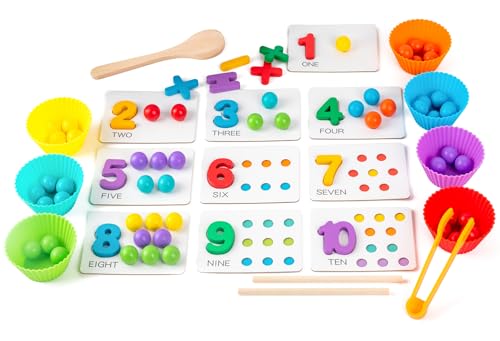
WECHARM KIDS Fine Motor Toys,Wooden Peg Board Bead Game for Toddlers – Rainbow Stacking, Color Sorting & Counting Toys | Fine Motor Skills Development | Math Learning Games for 3 4 5 Years Old
Rainbow Clip Beads Wooden Puzzle Board Game – a bright, engaging toddler toy with vibrant rainbow-colored wooden beads…
As an affiliate, we earn on qualifying purchases.
As an affiliate, we earn on qualifying purchases.
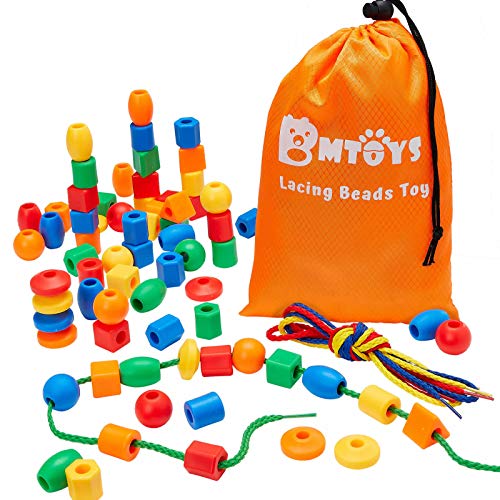
BMTOYS Lacing Beads for Kids – 70pcs Threading Beads Occupational Therapy Toys for Kids Fine Motor Skills Developmental Activity OT Toys
【BRIGHT LACING BEADS FOR KIDS】Use as math counters, teach colors and shapes, thread the large variety of colorful…
As an affiliate, we earn on qualifying purchases.
As an affiliate, we earn on qualifying purchases.