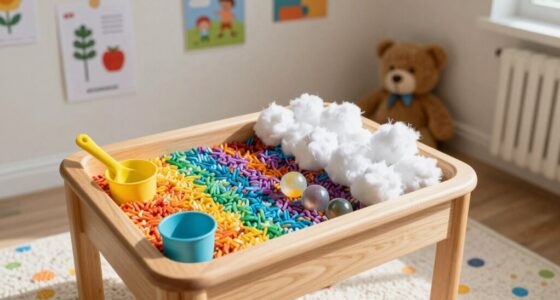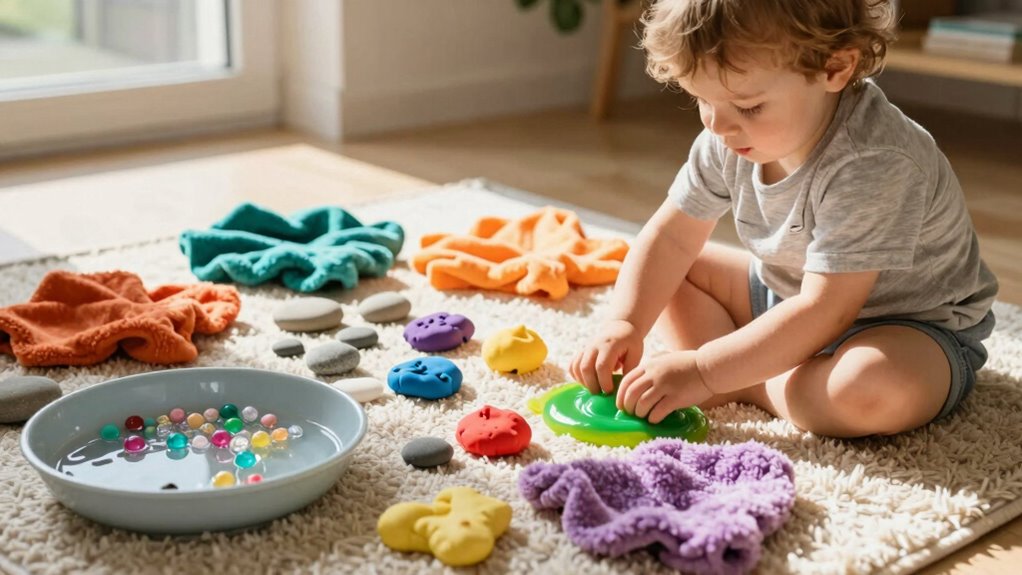

To use sensory play for calm-down time, create a safe, inviting space with calming scents, soft lighting, and gentle sounds. Offer tactile activities like bins filled with rice or beans, and include tools like scoops or cups for exploration. Guide slow, deliberate movements and incorporate deep pressure with soft sensory balls or weighted blankets. By fostering a secure environment and engaging the senses, you help children feel grounded and relaxed. Keep exploring to discover more ways to support calming sensory experiences.
Key Takeaways
- Create a sensory-rich, calming environment with soft lighting, gentle sounds, and soothing scents to promote relaxation.
- Use tactile activities like rice or beans bins, encouraging slow, deliberate movements to foster calmness.
- Incorporate calming techniques such as deep pressure with weighted blankets or sensory balls during play.
- Guide children to explore materials at their own pace, helping them process emotions and regain control.
- Include tools like soft music and calming visual elements to maintain a peaceful atmosphere during sensory activities.

When children feel overwhelmed or upset, engaging in sensory play can be an effective way to help them calm down. Sensory play benefits are numerous, especially when it comes to soothing stress and reducing anxiety. This type of play engages your child’s senses—touch, sight, sound, smell, and even taste—in a way that helps them process their emotions and regain a sense of control. You might notice that sensory activities provide immediate calming techniques, helping children shift focus from their distress to a calming, engaging activity.
To start, choose simple sensory activities that are easy to set up and safe for your child. For example, a bin filled with rice, beans, or pasta offers a rich tactile experience. As they run their hands through the materials, they can focus on the sensation, which often distracts from overwhelming feelings. Add in small toys or tools, like scoops or cups, to encourage exploration and fine motor skills. The key is to create a sensory-rich environment that invites your child to touch, squeeze, or manipulate materials at their own pace. This not only calms but also helps them express their emotions non-verbally. Incorporating sensory integration strategies can further support your child’s ability to interpret and respond to sensory input more effectively. Recognizing the importance of tactile stimulation can enhance the effectiveness of these activities by supporting your child’s sensory processing abilities.
Incorporate calming techniques into sensory play by guiding your child through slow, deliberate movements. For instance, encourage deep pressure by gently pressing on a soft sensory ball or providing a weighted blanket during play. These calming techniques can reinforce the soothing nature of sensory activities. You might also use calming scents like lavender or chamomile in the play area to enhance relaxation, or soft background music to create a peaceful environment. The goal is to help your child feel grounded and secure while engaging their senses. Understanding the importance of sensory processing can help you better tailor activities to meet your child’s needs and promote a sense of calm.

MAXTID Weighted Blanket for Kids 5lbs 36"x48" Cotton Kids Blanket for Boys & Girls Weighted Throw Blanket Children Bedding Gifts for 3 4 5 6 7 8+ Year Old Kid Small Weighted Comfort Blankets
Kids weighted blanket 5lb
As an affiliate, we earn on qualifying purchases.
As an affiliate, we earn on qualifying purchases.
Frequently Asked Questions
Can Sensory Play Be Used for Older Children or Adults?
Yes, sensory play can be effective for older children and adults. You can engage in activities like textured materials, aromatherapy, or tactile objects to promote sensory integration and reduce stress. By actively participating, you help improve focus and emotional regulation. Incorporate adult engagement in these sensory activities to create a calming routine, making it easier to manage anxiety, enhance mindfulness, and foster overall well-being.
Are There Any Safety Concerns With Sensory Play Materials?
You should always prioritize safety during sensory play. Material safety is essential—ensure items are non-toxic, washable, and free of small parts that could pose choking hazards. Don’t forget allergy considerations; avoid materials like latex or certain dyes if allergies exist. Always supervise closely, check for any skin reactions, and choose age-appropriate, safe materials. A little caution now prevents potential health issues later, keeping the experience fun and safe.
How Long Should a Sensory Play Session Last?
A sensory play session should last around 10 to 15 minutes, following the activity duration guidelines to prevent overstimulation. You can do these activities 1-3 times a day, depending on your child’s needs and attention span. Keep an eye on their cues—if they seem overwhelmed or tired, it’s best to wrap up earlier. Consistent, short sessions help children enjoy sensory play without feeling overstressed.
Can Sensory Play Help With Anxiety or Emotional Regulation?
Think of sensory play as a bridge connecting your emotions to calm waters. It fosters sensory integration, helping you process feelings more effectively. When you engage in sensory activities, you create a foundation for emotional grounding, which can ease anxiety and promote emotional regulation. This active approach helps you regain control, turning overwhelming emotions into manageable waves, and ultimately, guiding you toward a more balanced, peaceful state.
What if a Child Is Overwhelmed During Sensory Play?
If your child becomes overwhelmed during sensory play, stop the activity immediately and use calming techniques like deep breathing or gentle reassurance. Provide emotional support by offering comforting words and a safe space to regroup. You can also introduce calming sensory items, such as a soft blanket or calming scent, to help your child regain composure. Always observe your child’s cues and adjust activities to make sure they feel secure and supported.

Sensory-N-Stuff Rainbow Rice Sensory Bin Filler for Sensory Play 2 LB (4 Cups) – Non-Toxic Colored Rice for Sensory Tables – DIY Montessori Color Rice – Rice Sensory Bin Filler for Educational Play
Boosts Sensory Skills: Our sensory bin filler encourages tactile exploration, helping kids develop fine motor skills, hand-eye coordination,…
As an affiliate, we earn on qualifying purchases.
As an affiliate, we earn on qualifying purchases.
Conclusion
Think of sensory play as a gentle lullaby for your child’s busy mind, soothing them into calm waters. When they’re overwhelmed, these activities become a cozy blanket, wrapping them in comfort and clarity. By weaving sensory play into your routine, you’re planting seeds of peace that bloom into calmness even on stormy days. With patience and a touch of creativity, you’ll find that calm-down time transforms from a challenge into a peaceful oasis for both of you.

Fidget Toys Stress Ball for Kids Adult: 3 Pack Double Sided Textured Sensory Toys for Autism Kids Calming – Quiet Stress Fidget Ball for Student Classroom, Adult Office – Goodie Bags Stuffers
Fidget Toys for nervousness & Stress Relief: Each sensory stress ball is perfectly sized to fit in your…
As an affiliate, we earn on qualifying purchases.
As an affiliate, we earn on qualifying purchases.

Squishy Sensory Toys for Kids Toddlers: Super Soft & Textured Sensory Fidget Toy for Autistic Children Special Needs | Stress Calming Toys for Kids | Baby Stocking Stuffers Fidget Toy for Autism, ADHD
【6 Textures Sensory Fidget Toys】Our textured, extra durable, bright, stretchy, calming sensory toys provide a unique tactile experience…
As an affiliate, we earn on qualifying purchases.
As an affiliate, we earn on qualifying purchases.