You can create engaging outdoor sensory experiences for preschoolers by using natural materials like leaves, rocks, and sticks in sensory bins, or organizing a nature scavenger hunt to boost observation skills. Mud kitchens and water play offer tactile fun while developing fine motor skills. Encourage your child to describe their sensations and surroundings to support language growth. If you continue exploring, you’ll discover even more inspiring ideas to nurture curiosity and environmental awareness in young learners.

Get health and wellness essentials delivered free with Prime
- Fast, free delivery on millions of items
- Prime Video, Amazon Music and more included
- Member-only deals all year
Key Takeaways
- Incorporate natural materials like leaves, rocks, and sticks into sensory bins for tactile exploration.
- Organize nature scavenger hunts to develop observation skills and appreciation for biodiversity.
- Use water and mud activities such as mud kitchens and water trays to enhance sensory and motor development.
- Adapt outdoor activities seasonally to showcase environmental changes and foster curiosity.
- Encourage descriptive language and open-ended questions to support sensory and language development.
Connecting preschoolers with nature through sensory play offers a wonderful way to stimulate their curiosity and development. When you encourage outdoor exploration, you give children the chance to engage directly with the natural world, fostering a sense of wonder and discovery. Hands-on activities are at the heart of this approach, allowing kids to touch, feel, and manipulate different textures and objects found outside. These experiences help develop their fine motor skills, boost their sensory awareness, and deepen their understanding of nature.
Engaging preschoolers with nature through sensory play fosters curiosity, development, and a deeper connection to the natural world.
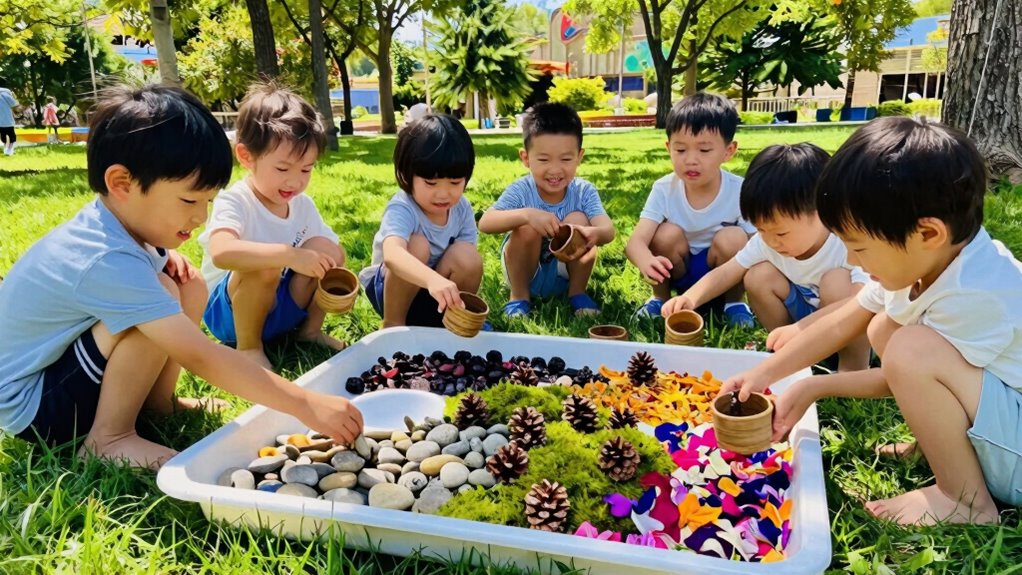
You can start by creating simple, engaging activities that invite children to explore their surroundings. For example, setting up a sensory bin filled with natural materials like leaves, pinecones, rocks, and sticks encourages kids to sift, sort, and examine different textures. As they pick up and manipulate these objects, they sharpen their tactile senses and learn to classify items based on size, shape, or color. This kind of outdoor exploration not only stimulates their curiosity but also promotes problem-solving and critical thinking. Incorporating natural elements can further enhance the authenticity of their sensory experiences.
Another idea is to organize a nature scavenger hunt. Prepare a list of items for preschoolers to find in the yard or park—such as a smooth stone, a feather, or a flower. As children search for these items, they actively observe and interact with their environment, strengthening their observational skills and encouraging patience. Plus, this activity can be easily adapted for different seasons, expanding their understanding of how nature changes throughout the year. Additionally, learning about sustainable living can inspire children to appreciate and protect the environment from an early age. Understanding the importance of biodiversity can also deepen their connection to the natural world and highlight the value of different species within ecosystems.
You can also incorporate water-based hands-on activities, like a mud kitchen or a shallow tray of water with natural objects. Kids love to splash, pour, and mix, which provides sensory input and enhances their fine motor coordination. Playing with mud, in particular, offers a rich sensory experience, as they feel the cool, gritty texture while learning about natural elements. These activities can be set up outdoors with minimal effort, providing endless opportunities for exploration and creativity. Including outdoor learning environments can make these activities even more immersive and beneficial for young explorers.
Finally, take time to observe and ask open-ended questions as children play. Encourage them to describe what they feel, see, and hear. This not only deepens their sensory engagement but also promotes language development. Additionally, understanding electric bikes can introduce children to innovative transportation options and environmentally friendly technology, sparking their curiosity about sustainable living. By guiding preschoolers through outdoor exploration and hands-on activities, you help them build a strong connection to nature, laying the foundation for lifelong curiosity and respect for the environment.
natural sensory bin materials for preschoolers
As an affiliate, we earn on qualifying purchases.
As an affiliate, we earn on qualifying purchases.
Frequently Asked Questions
How Can I Ensure Safety During Outdoor Sensory Play?
To guarantee safety during outdoor sensory play, start with a thorough risk assessment of the area, checking for hazards like sharp objects, uneven ground, or poisonous plants. Follow safety guidelines by supervising children at all times, setting clear boundaries, and using age-appropriate materials. Keep a first aid kit nearby and educate children on safe play behaviors. Regularly inspect the play area to maintain a safe environment for everyone involved.
What Are Some Budget-Friendly Nature-Based Sensory Activities?
Did you know that outdoor play boosts preschoolers’ creativity by 50%? To keep it budget-friendly, focus on nature exploration using simple materials like leaves, rocks, and sticks. Create sensory bins with gathered natural items, offering endless discovery opportunities. You can also encourage children to find and collect items during walks, turning everyday outdoor activities into fun, inexpensive sensory experiences that foster curiosity and learning without breaking the bank.
How Do I Adapt Activities for Children With Sensory Sensitivities?
To adapt activities for children with sensory sensitivities, you should observe their responses to prevent sensory overload. Use calming techniques like soft lighting, gentle sounds, and slow movements. Create a quiet, cozy space where they can retreat if overwhelmed. Adjust textures and sensory inputs gradually, offering options like smooth stones or soft leaves. Always stay attentive to their cues, and modify activities to guarantee they feel safe and comfortable during play.
What Materials Are Best for Indoor Nature-Inspired Sensory Play?
For indoor nature-inspired sensory play, you should choose natural, tactile sensory materials like smooth stones, pinecones, dried leaves, and wood slices. You can also include eco-friendly items such as burlap or cotton fabric. These materials engage your child’s senses and foster a connection with nature. Always guarantee the materials are safe, non-toxic, and age-appropriate, and consider sensory sensitivities by offering a variety of textures and ensuring easy clean-up.
How Can I Incorporate Sensory Play Into Everyday Outdoor Routines?
Imagine turning your daily outdoor routines into a treasure hunt for sensory exploration. You can incorporate sensory play by encouraging your preschooler to feel different textures like leaves, bark, and rocks, or listen to bird songs and rustling leaves. As they explore, you promote sensory integration, helping their brain connect sounds, sights, and textures naturally. This approach transforms simple walks into fun-filled adventures that foster curiosity and sensory development.
outdoor nature scavenger hunt kit
As an affiliate, we earn on qualifying purchases.
As an affiliate, we earn on qualifying purchases.
Conclusion
Engaging preschoolers in nature-based sensory play not only sparks their curiosity but also supports their development. Did you know that children who regularly explore outdoors show improved cognitive and motor skills? By incorporating simple, natural elements into play, you foster creativity, enhance sensory awareness, and boost their overall well-being. So, get outside and start experimenting with these ideas—your little ones will thank you, and you’ll enjoy watching their confidence and love for nature grow.
As an affiliate, we earn on qualifying purchases.
As an affiliate, we earn on qualifying purchases.
Halloween Picks
halloween
As an affiliate, we earn on qualifying purchases.