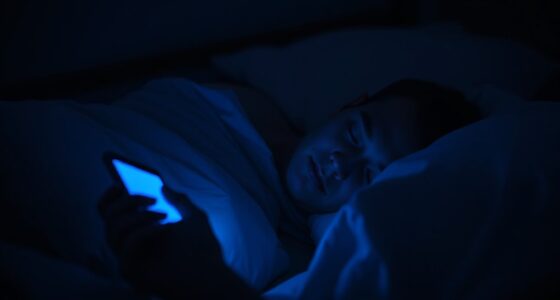
Blue light from screens and LED lights suppresses melatonin, making it harder for you to fall asleep and stay asleep. It disrupts your circadian rhythm, delaying your natural sleep-wake cycles and leaving you feeling less rested. Regular exposure, especially in the evening, can lead to ongoing sleep difficulties and fatigue. To improve your sleep, it’s helpful to limit blue light in the evening and adopt habits that support your body’s natural signals. Continue to explore ways to protect your sleep health.
Key Takeaways
- Blue light suppresses melatonin production, making it harder to fall asleep and reducing sleep quality.
- Evening blue light exposure delays sleep onset by disrupting the body’s circadian rhythm.
- Regular exposure shifts the internal clock later, causing difficulty waking up and feeling alert in the mornings.
- Blue light exposure during evening hours can lead to chronic sleep issues and daytime fatigue.
- Using blue light filters, dimming lights, and avoiding screens before bed can help protect sleep quality.
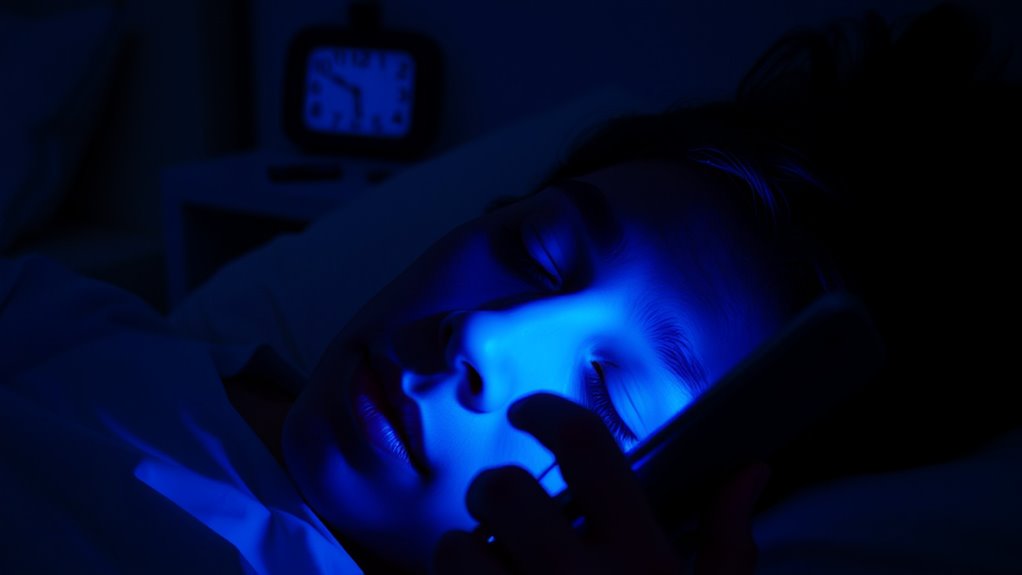
Have you ever wondered how your screen time before bed affects your sleep? It’s more impactful than you might think. Blue light emitted from your devices can interfere with your body’s natural sleep processes, primarily through melatonin suppression and circadian disruption. Melatonin is the hormone that helps regulate your sleep-wake cycle, signaling to your body that it’s time to wind down. When you’re exposed to blue light in the evening, it tricks your brain into thinking it’s daytime, suppressing melatonin production. This suppression can make it harder for you to fall asleep and stay asleep through the night. The more often you’re exposed to blue light before bedtime, the more your melatonin levels decrease, leading to poorer sleep quality and a longer time needed to fall asleep.
Beyond melatonin suppression, blue light exposure also causes circadian disruption. Your circadian rhythm is an internal clock that aligns your sleep patterns with the natural light-dark cycle. When this rhythm gets disrupted, it throws off your entire sleep schedule, making it difficult to wake up feeling refreshed and alert in the morning. This disruption can lead to a cascade of issues, including increased fatigue, reduced cognitive function, and even mood disturbances. The problem is especially significant if your exposure to blue light happens regularly in the hours leading up to sleep, as it can shift your internal clock later, pushing your sleep time later and making early mornings more challenging.
You might think that simply turning off your devices an hour before bed would solve the problem, but blue light can still be a hidden culprit. Many screens and LED lights emit enough blue light to influence melatonin levels even if you’re not staring directly at a screen. That’s why it’s important to contemplate strategies like using blue light filters, wearing blue-light blocking glasses, or dimming your lights in the evening. These measures can help minimize melatonin suppression and support your circadian rhythm, making it easier to fall asleep naturally. Creating a relaxing pre-sleep routine that avoids screens altogether can also help your body wind down, reinforcing your natural sleep signals. Additionally, understanding the impact of artificial light exposure on sleep can help you make better choices about your evening environment.
Frequently Asked Questions
Does Blue Light Affect Children’s Sleep Patterns Differently?
Yes, blue light affects children’s sleep patterns differently. Their developing eyes are more sensitive to blue light from screen time, which can disrupt melatonin production. As a parent, you should provide guidance on limiting screen time before bed and encourage activities that promote relaxation. Reducing blue light exposure helps improve their sleep quality, supporting healthy growth and development. Parental guidance is essential to establish good habits early on.
Can Blue Light Exposure Improve Alertness During Daytime?
Imagine blue light as the morning sun, energizing your inner clock. When you’re exposed to it during the day, it helps reset your circadian rhythm, boosting your alertness and sharpening cognitive performance. This natural wake-up call keeps you focused and productive. So, yes, blue light exposure during daytime can enhance your alertness, making you feel more awake and ready to tackle your tasks.
Are There Specific Blue Light Wavelengths More Harmful to Sleep?
Yes, certain blue light wavelengths are more harmful to your sleep. Wavelength specificity matters because shorter wavelengths, around 460-480 nanometers, have higher spectral sensitivity to your circadian system, making them more disruptive. When you’re exposed to these wavelengths, especially in the evening, it can suppress melatonin production and delay sleep. To protect your sleep, minimize exposure to these specific blue wavelengths before bedtime.
How Does Blue Light Exposure Influence Melatonin Levels?
Blue light exposure decreases your melatonin levels by impacting your retinal sensitivity, which is vital for circadian regulation. When you’re exposed to blue light, especially in the evening, your retina detects it and signals your brain to suppress melatonin production. This disruption hampers your ability to fall asleep and maintain restful sleep, making it harder for your body to follow its natural sleep-wake cycle.
Can Wearing Blue Light Glasses at Night Fully Prevent Sleep Disruption?
Blue light glasses act like a shield, but they don’t completely block sleep disruption. Wearing them at night helps reduce exposure, kind of like dimming the harsh spotlight of screens, but isn’t a magic bullet. You might still experience some disturbance, especially if you’re exposed for hours. For truly restful sleep, combine blue light glasses with other good habits like limiting screen time before bed and maintaining a consistent sleep schedule.
Conclusion
So, next time you’re scrolling through your phone at midnight, remember, you’re not just wasting time—you’re sabotaging your sleep. Blue light’s sneaky glow tricks your brain into thinking it’s daytime, making you toss and turn all night. Congratulations, you’ve officially turned into a nocturnal zombie, all because of that tempting screen. Maybe put the phone down, or risk becoming the walking dead of the sleep-deprived world. Sleep’s waiting—don’t keep it waiting forever!