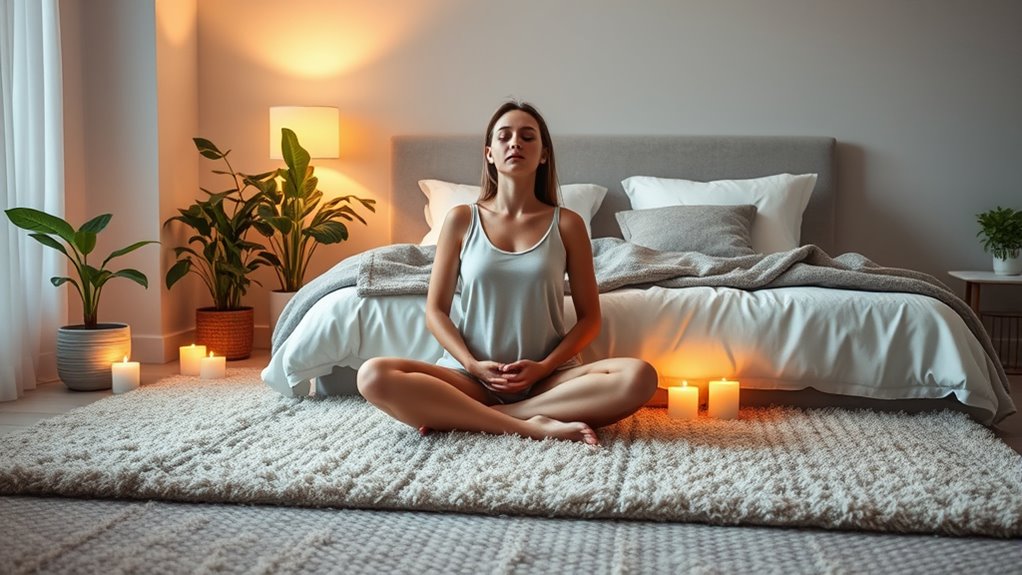

To improve sleep through meditation and relaxation, you can try deep breathing techniques by inhaling through your nose, holding, then exhaling slowly to calm your nervous system. Adding guided imagery, like visualizing peaceful scenes, helps distract your mind from racing thoughts. Practice these methods consistently for 10-15 minutes before bed, creating a cozy environment. Keep at it, and you’ll discover simple ways to fall asleep faster and enjoy more restorative rest as you explore further options.
Key Takeaways
- Incorporate deep breathing exercises to calm the nervous system and reduce stress before bedtime.
- Use guided imagery to visualize peaceful scenes, distracting from racing thoughts and promoting relaxation.
- Establish a consistent bedtime routine combining breathing and visualization techniques for better sleep onset.
- Create a sleep-friendly environment with dim lighting and minimal screens to enhance relaxation practices.
- Practice these techniques regularly for improved sleep quality and faster transition into restful sleep.
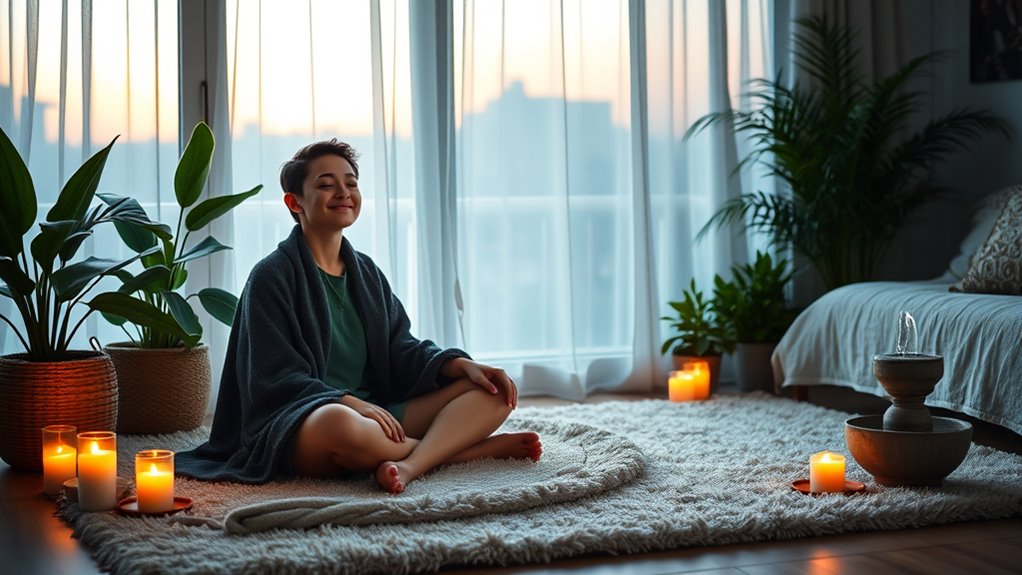
Getting a good night’s sleep can be challenging, but incorporating meditation and relaxation techniques into your nightly routine can make a significant difference. One effective method is to focus on breathing techniques that help calm your mind and relax your body. Deep, slow breaths can signal to your nervous system that it’s time to wind down. Try inhaling deeply through your nose for a count of four, holding your breath for a count of four, then exhaling slowly through your mouth for another count of four. Repeat this cycle a few times, paying close attention to your breath. This practice reduces stress hormones and lowers your heart rate, creating a peaceful state conducive to sleep.
Guided imagery is another powerful relaxation tool you can incorporate into your bedtime routine. With guided imagery, you visualize calming scenes or peaceful settings to distract your mind from racing thoughts. Close your eyes and imagine a serene beach, a quiet forest, or a gentle stream. Focus on the sensory details—hear the waves, feel the breeze, see the sunlight filtering through leaves. This mental escape helps reduce anxiety and mental chatter, making it easier to drift off. Using guided imagery consistently can train your brain to associate these peaceful images with sleep, easing the transition from wakefulness to rest.
To maximize benefits, combine these techniques into a calming pre-sleep ritual. Spend about 10-15 minutes before bed practicing your breathing exercises, then move into guided imagery. As you breathe mindfully, imagine yourself in your chosen tranquil scene. Focus on each detail, allowing your body to relax further with every exhale. The combination of controlled breathing and vivid visualization can reduce tension accumulated throughout the day and quiet your mind.
It’s important to be consistent. The more regularly you practice these techniques, the more effective they become. Don’t worry if your mind wanders; gently bring your focus back to your breath or your imagery. Over time, you’ll find it easier to enter a relaxed state quickly, helping you fall asleep faster and enjoy more restorative rest. Keep your environment comfortable, dim the lights, and avoid screens before bed to enhance these practices. With patience and persistence, integrating breathing techniques and guided imagery into your nightly routine will become valuable tools in your journey toward better sleep. Additionally, creating a sleep-friendly environment can significantly enhance the effectiveness of these relaxation methods.
Frequently Asked Questions
Can Meditation Replace Medication for Sleep Issues?
Meditation vs medication isn’t a one-size-fits-all answer. While meditation can be a natural sleep aid, helping you relax and reduce stress, it might not fully replace medication for severe sleep issues. If your sleep problems persist, consult a healthcare professional. You can try meditation as a complementary approach, but don’t rely solely on it if medication has been prescribed. Combining natural sleep aids with medical advice often yields the best results.
How Long Should I Meditate Before Bed for Best Results?
You should meditate for about 10 to 15 minutes before bed to see the best results. This duration fits seamlessly into your bedtime routines, allowing your mind to unwind without feeling rushed. Longer sessions might become counterproductive, causing restlessness instead of relaxation. So, set a gentle timer, create a calming environment, and commit to this simple routine nightly—your sleep quality can dramatically improve with just this small change.
Are There Specific Relaxation Techniques Better for Insomnia?
You’ll find that progressive muscle relaxation and guided imagery are particularly effective for insomnia. Progressive muscle helps you release tension by tensing and relaxing muscle groups, making it easier to fall asleep. Guided imagery involves visualizing calming scenes to quiet your mind. Try practicing these techniques for 10-15 minutes before bed. Consistent use can improve your sleep quality by reducing stress and calming your nervous system.
Can Meditation Help With Sleep Apnea or Other Sleep Disorders?
Meditation can be a gentle beacon guiding you toward better sleep, but it doesn’t directly clear the storm of sleep apnea. Instead, it helps improve sleep hygiene and calms your mind. Breathing exercises, a core part of meditation, can ease breathing and reduce stress, making it easier to relax. While not a cure, these practices support your overall sleep health, helping you sail more smoothly into restful nights.
How Quickly Can I Expect to See Improvements in Sleep?
You might notice improvements in your sleep duration within a few weeks of consistent meditation practice. Staying dedicated and practicing daily helps reinforce relaxation techniques, making it easier to fall asleep and stay asleep. Keep in mind, everyone’s different, so some may see faster results. The key is to be patient and maintain meditation consistency, which gradually trains your mind to relax and enhances overall sleep quality over time.
Conclusion
Imagine your mind as a restless river always rushing and churning. Meditation and relaxation are the gentle currents that calm its waters, guiding you toward a peaceful, still lake. By embracing these practices, you become the skilled captain steering your thoughts away from stormy waters and into tranquil, restful shores. With patience and consistency, you’ll find your nights become as serene as a quiet, moonlit lake, inviting restful sleep and renewal each morning.