
To cope with jet lag, prioritize light exposure—seek sunlight in the morning to help your body adjust to the new time zone and avoid screens an hour before bed. Establish a sleep routine that aligns with your destination, use blackout curtains or sleep masks to block unwanted light, and stay active during daylight hours. Incorporate simple sleep tips like limiting naps and creating a comfortable environment. For more effective strategies, explore how managing light can speed up your recovery.

Get health and wellness essentials delivered free — and shop member deals
- Fast, free delivery on millions of items
- Access to Prime Big Deal Days deals on October 6–7
- Prime Video, Amazon Music and more included
Key Takeaways
- Adjust your sleep schedule to match the destination’s time zone as soon as possible.
- Maximize natural light exposure during the day to reset your circadian rhythm effectively.
- Use blackout curtains or sleep masks to create a dark, quiet sleeping environment.
- Minimize screen time and blue light exposure before bedtime to promote melatonin production.
- Stay active and avoid long naps upon arrival to help your body adapt faster.
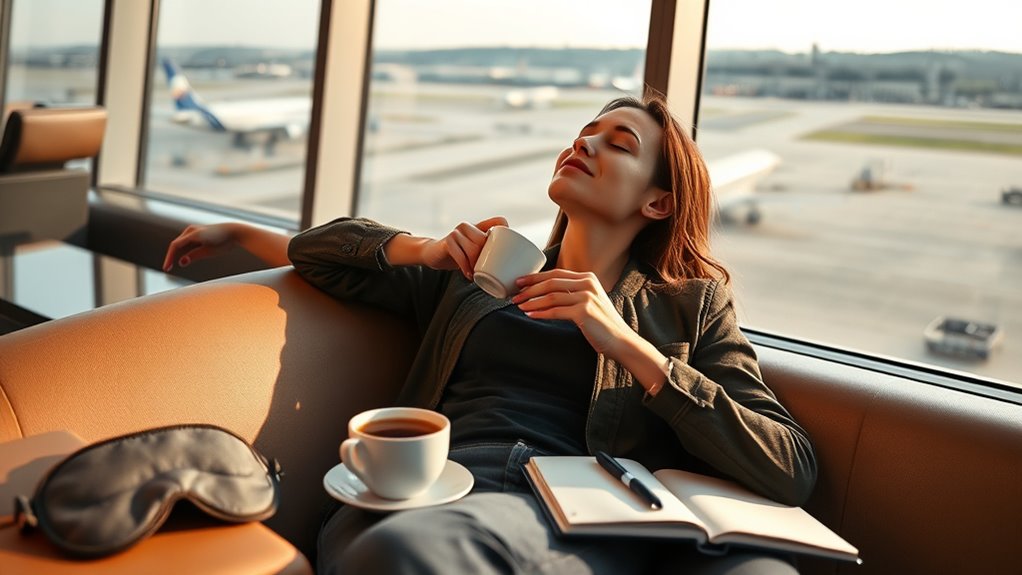
Traveling across time zones often disrupts your body’s internal clock, leaving you tired, groggy, and out of sync. This disorientation, known as jet lag, can make it hard to sleep, stay alert, and enjoy your trip. To combat these effects, focusing on sleep adjustment and light exposure becomes vital. Your body’s internal clock responds to light cues, so manipulating light exposure can help reset your circadian rhythm faster. When you arrive at your destination, try to get outside during daylight hours, especially in the morning if you’re adjusting to an earlier time zone, or in the late afternoon if you need to delay your sleep cycle. Natural light signals your brain that it’s daytime, helping you stay awake and alert. Conversely, minimizing light exposure in the evening, especially blue light from screens, encourages your body to produce melatonin, the hormone responsible for sleep. Wearing sunglasses during evening walks or avoiding screens an hour before bed can make a significant difference in sleep adjustment. Additionally, using essential oils such as lavender or peppermint can create a calming environment that promotes relaxation and better sleep, further aiding your adjustment process.
Establishing a sleep routine aligned with your new time zone accelerates your recovery from jet lag. As soon as possible, try to adapt your sleep schedule to match your destination’s local time. If you arrive early in the day, resist the urge to nap excessively; instead, stay active and seek daylight to help your body adjust. When it’s bedtime, create a sleep-conducive environment: keep the room cool, dark, and quiet, and consider using blackout curtains or a sleep mask to block out unwanted light. If you’re feeling sleepy during the day, short naps of 20-30 minutes can boost alertness without interfering with nighttime sleep. It’s essential to listen to your body, but also to push yourself to stay awake until an appropriate local bedtime, reinforcing your new sleep pattern.
Consistent sleep adjustment and mindful light exposure are powerful tools in your jet lag recovery kit. By strategically managing when and how you expose yourself to light and establishing a sleep routine aligned with your destination’s time, you can help your internal clock reset more quickly. This means less fatigue, sharper focus, and a more enjoyable travel experience. Remember, your body responds best when you give it clear cues, and controlling light exposure is one of the most effective ways to guide your circadian rhythm back into harmony. Incorporating light manipulation techniques such as adjusting exposure to natural and artificial light can significantly enhance your adjustment process. With patience and a proactive approach, you’ll find yourself adapting faster and feeling more energized upon arrival.
As an affiliate, we earn on qualifying purchases.
Frequently Asked Questions
Can Jet Lag Affect Children Differently Than Adults?
Yes, jet lag can affect children differently than adults. Children’s sleep patterns are still developing, so their pediatric adaptation to time zone changes may be slower or more unpredictable. You might notice your child’s mood or energy levels fluctuate more, and they could have trouble adjusting to new schedules. To help, maintain consistent routines and give them time to adapt, supporting their unique needs during the shift.
Are There Specific Foods That Help Reduce Jet Lag Symptoms?
Think of foods that help reduce jet lag symptoms as your allies in restoring balance. You should focus on sleep-inducing snacks like nuts, cherries, or warm milk, which promote restful sleep. Avoid foods to avoid, such as caffeine and alcohol, which can disrupt your sleep cycle. Incorporate light, nutritious meals to support your body’s adjustment, making it easier to reset your internal clock and feel more energized upon arrival.
How Long Does It Typically Take to Recover From Jet Lag?
You typically recover from jet lag within a few days, but it varies based on how many time zones you crossed. Your body needs time to adjust its sleep schedule and re-sync your circadian rhythm. To speed this up, stick to local sleep times, stay active during the day, and get plenty of sunlight. Consistent sleep adjustment helps your body realign faster, reducing symptoms and helping you feel better sooner.
Is There a Difference in Jet Lag Effects Between Eastward and Westward Travel?
Like Alice’s journey through Wonderland, your body adjusts differently depending on your direction change. Traveling eastward causes a more noticeable circadian shift, making jet lag effects stronger and lasting longer. Westward travel aligns better with your natural rhythms, easing the passage. So, you’ll likely feel more jet lagged when heading east, as your internal clock struggles to adapt quickly to the earlier sleep schedule.
Can Hydration Levels Influence the Severity of Jet Lag?
Hydration importance plays a big role in reducing jet lag severity. When you maintain proper fluid intake, it helps your body adjust more quickly by preventing dehydration, which can worsen fatigue and headaches. You should drink plenty of water before, during, and after your flight to stay hydrated. By keeping your hydration levels balanced, you support your body’s internal clock, making the shift to a new time zone smoother and less exhausting.
As an affiliate, we earn on qualifying purchases.
Conclusion
Now that you know effective jet lag strategies, you’ll be better prepared for your next trip. Did you know that about 70% of travelers experience jet lag symptoms? By adjusting your sleep schedule, staying hydrated, and getting sunlight, you can minimize its effects. Remember, planning ahead makes a huge difference. So, use these tips to stay energized and enjoy your journey from takeoff to touchdown. Safe travels and sweet dreams!
As an affiliate, we earn on qualifying purchases.
As an affiliate, we earn on qualifying purchases.
Fall Picks
fall essentials
As an affiliate, we earn on qualifying purchases.