

Melatonin supplements help you regulate your sleep cycle when it’s disrupted by factors like jet lag, shift work, or stress. They signal your brain to wind down and fall asleep by mimicking your body’s natural hormone, especially when taken about 30 to 60 minutes before bed. Proper timing, dosage, and consistency are key to their effectiveness. To learn more about how to optimize your sleep using melatonin, keep exploring these guidelines.

Get health and wellness essentials delivered free — and shop member deals
- Fast, free delivery on millions of items
- Access to Prime Big Deal Days deals on October 6–7
- Prime Video, Amazon Music and more included
Key Takeaways
- Melatonin supplements mimic the body’s natural hormone to regulate sleep-wake cycles.
- They help realign disrupted circadian rhythms caused by jet lag, shift work, or stress.
- Proper dosage (usually 0.5-5 mg) and timing (30-60 minutes before bed) are essential for effectiveness.
- Consistent use and minimizing blue light exposure enhance sleep quality.
- Supplements support, but do not replace, healthy sleep habits and are tailored to individual needs.
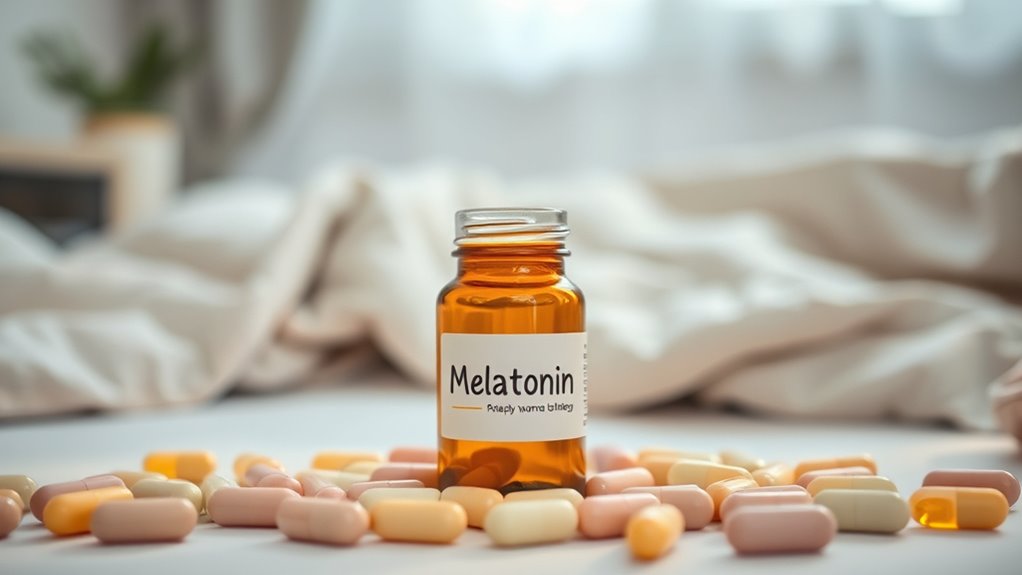
If you’re having trouble sleeping, melatonin supplements might offer a helpful solution. Melatonin is a hormone that your body naturally produces to regulate your sleep cycle, signaling to your brain that it’s time to wind down and prepare for rest. When your sleep cycle is disrupted—due to jet lag, shift work, or stress—supplementing with melatonin can help reset your internal clock. To achieve the best results, understanding the proper dosage guidelines is essential. Taking too much or too little can impact how effectively melatonin influences your sleep.
Your sleep cycle is a complex process governed by the circadian rhythm, which responds to environmental cues like light and darkness. Melatonin levels typically rise in the evening, peak during the night, and fall in the morning. When this cycle is thrown off, you may experience difficulty falling asleep or staying asleep. Melatonin supplements work by mimicking your body’s natural hormone, signaling to your brain that it’s time to sleep. However, the effectiveness of these supplements depends heavily on taking the right dosage at the right time.
Dosage guidelines for melatonin vary depending on individual needs and the specific sleep issue you’re addressing. For most adults, starting with a low dose—around 0.5 to 1 milligram—is recommended. Higher doses, such as 3 to 5 milligrams, are sometimes used, but taking more isn’t always better and can increase the risk of side effects like dizziness or grogginess. It’s best to consult with a healthcare professional before adjusting your dose, especially if you have underlying health conditions or are taking other medications. Timing is equally important; taking melatonin approximately 30 to 60 minutes before your desired bedtime allows it to align with your natural sleep cycle, helping you fall asleep more easily.
You should also be mindful of your environment and routines. Limiting exposure to blue light from screens before bed can enhance melatonin’s effectiveness, allowing your body to naturally produce more of the hormone. Consistency is key—using melatonin supplements at the same time each night helps reinforce your sleep cycle. While melatonin can be a valuable tool in managing sleep issues, it’s not a one-size-fits-all solution. Adjusting dosage guidelines and timing to fit your unique needs can make a significant difference in improving your sleep quality. Additionally, understanding your circadian rhythm can help optimize how and when you take supplements for better results.
As an affiliate, we earn on qualifying purchases.
Frequently Asked Questions
Are Melatonin Supplements Safe for Children?
You should be cautious about giving melatonin supplements to children, as their safety isn’t fully established. Always prioritize child safety by consulting a healthcare professional before use. Follow dosage guidelines carefully, since excessive amounts can cause side effects. Keep in mind that each child’s needs are different, and a doctor can help determine if melatonin is appropriate and how to give it safely, ensuring your child’s health stays protected.
Can Melatonin Cause Dependency or Addiction?
Melatonin isn’t likely to cause dependency or addiction risks, but some people worry about dependency concerns. While it’s generally safe, using melatonin long-term might lead you to rely on it, making you feel like you can’t sleep without it. However, it doesn’t create the same addictive cycle as certain medications. Always talk to your healthcare provider if you’re concerned about dependency concerns or how it might affect your sleep habits.
How Long Does It Take for Melatonin to Work?
Melatonin typically starts working within 30 minutes to an hour after you take it, helping improve your sleep quality. To see the best results, follow dosage guidelines, usually taking 1 to 3 milligrams about 30 minutes before bedtime. Keep in mind that individual responses vary, so you might need to adjust your timing or dosage for ideal sleep. Always consult a healthcare professional if you’re unsure.
Are There Any Interactions With Medications?
Think of melatonin as a friendly neighbor, but even friends can cause trouble if they clash with your other residents. You should check for drug interactions before taking it, as melatonin can interfere with medications like blood thinners or immune suppressants. Always prioritize medication safety by consulting your healthcare provider, ensuring your supplement use doesn’t turn your well-managed health into a chaotic neighborhood.
What Are the Best Times to Take Melatonin?
You should take melatonin about 30 to 60 minutes before bedtime for the best results. Keep your timing consistent each night to help regulate your sleep cycle. Consider your dosage carefully—starting with a low dose and adjusting as needed can prevent side effects. Taking it at the same time every night helps your body anticipate sleep, making it easier to fall asleep naturally and improve overall sleep quality.
best melatonin tablets for sleep
As an affiliate, we earn on qualifying purchases.
As an affiliate, we earn on qualifying purchases.
Conclusion
Thinking about taking melatonin supplements? They can be a helpful tool to improve your sleep, but isn’t it worth asking if they’re the right choice for your unique needs? Remember, while they offer benefits, they aren’t a cure-all. Always consult with a healthcare professional before starting new supplements. Are you ready to explore natural ways to support your sleep, or will you rely solely on pills? Your well-being starts with informed decisions.
As an affiliate, we earn on qualifying purchases.
As an affiliate, we earn on qualifying purchases.
Fall Picks
fall essentials
As an affiliate, we earn on qualifying purchases.