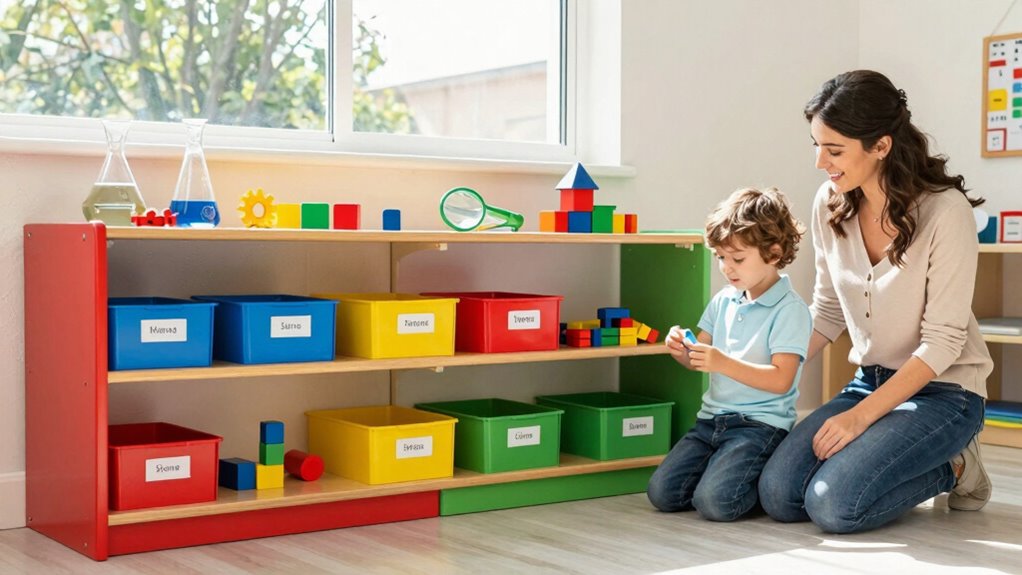

To build a STEM shelf for preschoolers, start by planning an inviting, organized space with easy-access storage like open bins, labeled containers, and adjustable shelves. Use sturdy, non-toxic materials with rounded edges, anchor shelves securely to the wall, and incorporate safety features such as corner protectors and childproof locks. Keep items within kids’ reach at eye level to foster independence and exploration. Keep safety in mind to minimize risks, and if you keep going, you’ll discover more tips to create a safe, engaging environment.
Key Takeaways
- Design accessible, colorful storage with open bins and labeled containers at preschoolers’ eye level to promote independence and exploration.
- Use sturdy, non-toxic materials with rounded edges, securely anchored to walls to ensure safety and stability.
- Incorporate adjustable shelves and childproof locks to accommodate growth and prevent access to hazardous items.
- Include safety features like corner protectors, safety straps, and proper lighting to minimize risks during STEM activities.
- Organize small parts in secure containers to prevent clutter, promote safety, and facilitate easy cleanup by children.
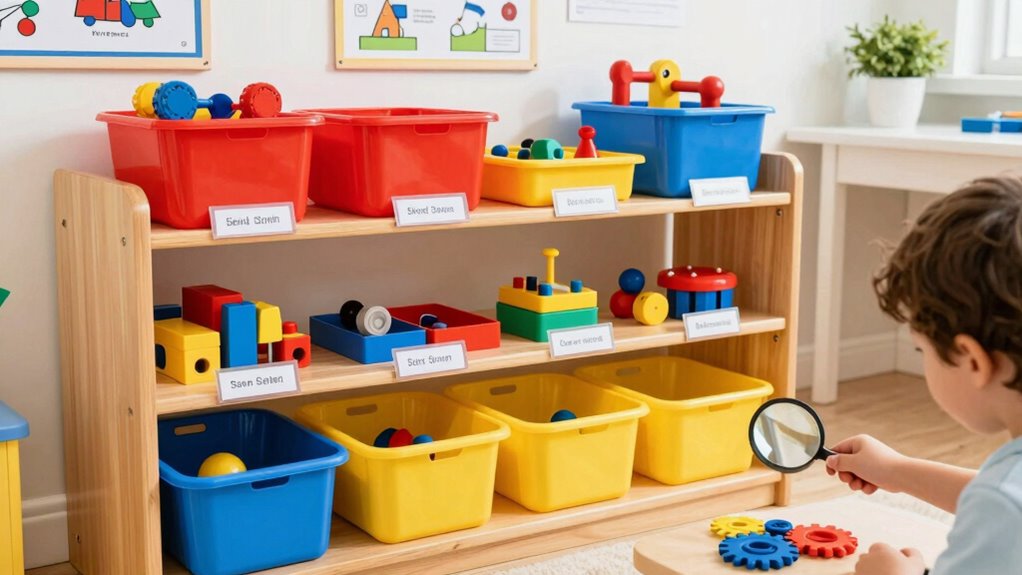
Ever wondered how to create a dedicated space that sparks curiosity and encourages hands-on learning for your preschooler? Building a STEM shelf is a fantastic way to do that, and it starts with smart planning. You want a space that’s inviting, organized, and safe. When designing your shelf, think about creative storage solutions that make everything accessible and appealing. Use open bins, labeled containers, or adjustable shelves so your child can easily find and return items. Incorporate colorful bins or baskets to add visual interest while keeping smaller parts tidy. Think about how your little one will interact with the space daily—make sure everything is at their eye level, so they feel empowered to explore without needing constant help.
Safety considerations are essential when building a shelf for preschoolers. Your primary goal should be to create a secure environment that minimizes risks. Start by anchoring the shelf firmly to the wall to prevent tipping over, especially if your child climbs or leans on it. Choose sturdy, non-toxic materials that are free of sharp edges or splinters. Avoid open shelving with small gaps that tiny fingers could get caught in or small enough to swallow. Rounded corners and smooth surfaces are vital for safety and comfort. Also, keep hazardous items out of reach—small parts, batteries, or anything with choking potential should be stored on higher shelves or in locked containers. Regularly inspect the shelf and storage bins for wear and tear to guarantee everything stays safe and functional. Incorporating safety principles from other areas like solar/power safety can inspire you to add features such as anti-tip brackets or childproof locks, ensuring it remains a secure environment for your preschooler. Additionally, considering projector technology principles can help you select safe, appropriate lighting and visual aids that enhance learning without hazards. Being aware of age-appropriate safety standards can further guide your choices to create an optimal learning environment. Including essential safety tools, like corner protectors or safety straps, can help prevent accidents and promote a secure play area.
As an affiliate, we earn on qualifying purchases.
Frequently Asked Questions
What Safety Precautions Should I Consider When Building the Shelf?
When building the shelf, you should prioritize safety by installing childproof locks to prevent accidental falls or access to dangerous items. Guarantee all edges are rounded to avoid cuts or injuries. Secure the shelf firmly to the wall to prevent tipping. Using non-toxic paint and materials is also essential. Regularly check for loose screws or damages, and always supervise children during STEM activities to keep their environment safe and engaging.
How Can I Customize the Shelf for Different Age Groups?
Imagine transforming your shelf into a magical learning universe! To customize for different age groups, make exaggerative adjustments like adding giant, easy-to-reach bins for preschoolers and sturdy, smaller shelves for older kids. Use material customization—soft, colorful foam for tiny hands, durable wood for growing explorers. Tailor the height, safety features, and accessibility, creating an engaging, age-appropriate space that sparks curiosity at every developmental stage.
What Are Some Budget-Friendly Materials for a STEM Shelf?
You can find affordable supplies like plastic bins, wooden crates, and metal baskets at dollar stores or thrift shops. DIY alternatives include repurposing cardboard boxes, tin cans, or old jars, which are perfect for organizing STEM tools. Using recycled materials not only saves money but also encourages sustainability. These budget-friendly options make it easy to create an engaging STEM shelf without overspending, while still offering plenty of educational opportunities.
How Do I Encourage Independent Exploration With the Shelf?
Imagine a world where curiosity sparks like fireflies in the night—encouraging independence begins here. You can do this by organizing sensor activities and creative prompts on the shelf, inviting your preschooler to explore at their own pace. Use open-ended questions to inspire thinking, and allow them to choose activities freely. This cultivates confidence, ignites their love for discovery, and turns exploration into an exciting adventure they own.
What Maintenance Is Required to Keep the Shelf Safe and Clean?
You should establish a regular cleaning routine, wiping down surfaces with a gentle, child-safe cleaner to keep the shelf hygienic. Additionally, perform frequent material inspections to identify any damage or wear that could pose safety risks. Tighten loose screws and replace broken or chipped items promptly. This proactive maintenance guarantees the shelf remains safe, clean, and inviting for your preschoolers’ independent exploration and learning.
As an affiliate, we earn on qualifying purchases.
Conclusion
Building a STEM shelf for preschoolers not only fosters early curiosity but also supports critical thinking from a young age. Did you know that early exposure to STEM activities can boost a child’s problem-solving skills by up to 50%? By creating this engaging space, you’re giving your little ones the tools to explore, learn, and grow confidently. Your effort today sets the foundation for their future success in science, technology, engineering, and math.
adjustable kids bookshelf with safety features
As an affiliate, we earn on qualifying purchases.
As an affiliate, we earn on qualifying purchases.
colorful open storage baskets for kids
As an affiliate, we earn on qualifying purchases.
As an affiliate, we earn on qualifying purchases.