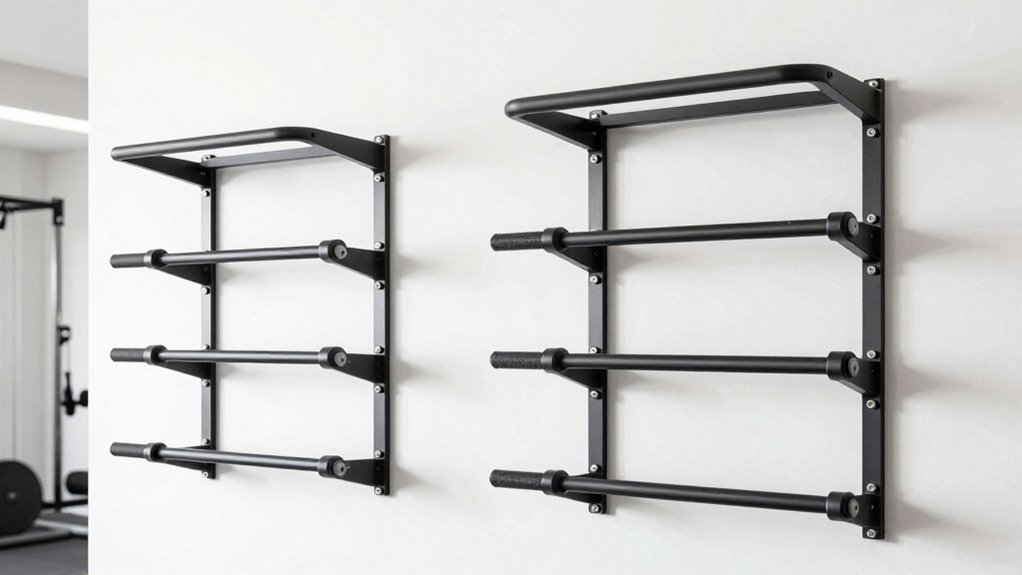

For a heavy-duty wall-mounted pull-up bar, my best overall pick is the Jusgym model, whose 14 grip positions and stated 600-pound capacity make it the most adaptable straightforward bar in this lineup. The SELEWARE stands out for buyers who want a cable pulley system, while the OneTwoFit combines pull-ups with dip-station functionality for a broader home-gym setup. The main tradeoff is between a simpler bar that takes up less space and a more versatile unit that needs more room and careful installation. Stated load capacities are not a substitute for checking your wall structure, fasteners, and installation instructions. Read on for the full breakdown, selection criteria, and guidance on matching a bar to your training space.

Get health and wellness essentials delivered free with Prime
- Fast, free delivery on millions of items
- Prime Video, Amazon Music and more included
- Member-only deals all year
Key Takeaways
Jusgym leads the straightforward-bar group with 14 grip positions and a stated 600-pound capacity, making it the clearest choice for users who want grip variety without adding a pulley or dip station.
SELEWARE is the lineup’s pulley-focused option; choose it for cable exercises, not if your priority is the simplest possible pull-up setup.
OneTwoFit and the other multifunctional models trade simplicity for exercise range, so measure available wall and floor space before choosing a dip-station format.
Stud compatibility can matter more than a large capacity number: the model specified for 16-, 24-, and 32-inch studs offers a concrete fit detail, while all buyers still need to verify their own wall construction.
Several bars state 500- or 600-pound capacities, but the product titles alone do not show identical testing or installation conditions. Compare mounting design and fit rather than treating those figures as directly equivalent.
| OneTwoFit Multifunctional Wall Mounted Pull Up Bar Chin Up Bar Dip Station for Indoor Home Gym Workout Power Tower Set |  | Best for Pull-Ups and Dips | Mount type: Wall mount | Material: Alloy steel | Maximum weight support: 440 lbs | VIEW ON AMAZON | See Our Full Breakdown |
| Jusgym Heavy Duty Wall Mounted Pull Up Bar with 14 Grip Positions, Supports 600 lbs |  | Best for Grip Variety | Mount type: Wall mount | Material: Alloy steel | Listed maximum capacity: 600 lbs in description; supplied listing notes also cite a 500-pound maximum recommendation | VIEW ON AMAZON | See Our Full Breakdown |
| SELEWARE 48” Heavy Duty Wall Mount Pull Up Bar with Cable Pulley System |  | Best for Cable Training | Mount type: Wall mount | Material: 4mm alloy steel | Finish: Powder-coated | VIEW ON AMAZON | See Our Full Breakdown |
| Multifunctional Wall Mounted Pull Up Bar, Chin Up Bar, Dip Station |  | Best for a Simple Fixed Workout Station | Mount type: Wall mount | Material: Alloy steel | Maximum weight recommendation: 440 lbs | VIEW ON AMAZON | See Our Full Breakdown |
| Wall Mounted Pull Up Bar, 51”/36” Chin Up Bar |  | Best for Adjustable Projection | Mount type: Wall mount | Material: Alloy steel | Maximum weight capacity: 500 lbs | VIEW ON AMAZON | See Our Full Breakdown |
| Wall Mount Pull Up Bar, Fits 16″, 24″ & 32″ Studs, Supports 500 Lbs |  | Best for Flexible Stud Spacing | Material: Heavy-duty steel | Weight capacity: 500 lbs | Stud spacing: 16, 24, and 32 inches | VIEW ON AMAZON | See Our Full Breakdown |
| Wall Mounted Pull Up Bar, Heavy Duty Multi Grip Bar (600 lbs Capacity) |  | Best for Higher Stated Capacity | Material: Reinforced alloy steel | Weight capacity: 600 lbs | Wall-mount length: 24 inches | VIEW ON AMAZON | See Our Full Breakdown |
| Rage Fitness Wall Mounted Pull Up Bar, Heavy-Duty Steel, 500 lbs Capacity |  | Best for Wall-or-Ceiling Installation | Brand: Rage Fitness | Material: 11-gauge steel | Weight capacity: 500 lbs | VIEW ON AMAZON | See Our Full Breakdown |
| 2026 Upgrade Pull Up Bar Wall Mounted – Heavy Duty 600 lbs Capacity for Home & Gym |  | Best for Wide Multi-Grip Training | Material: Alloy steel | Weight capacity: 600 lbs | Dimensions: 50 in W x 11.8 in H | VIEW ON AMAZON | See Our Full Breakdown |
| pull up bars wall mounted heavy duty | Material | Mount type | Color | Item weight |
|---|---|---|---|---|
| OneTwoFit Multifunctional Wall | Alloy steel | Wall mount | Red | — |
| Jusgym Heavy Duty Wall Mounted | Alloy steel | Wall mount | Black | 25.6 lbs |
| SELEWARE 48” Heavy Duty Wall | 4mm alloy steel | Wall mount | Black | 12 kg |
| Multifunctional Wall Mounted P | Alloy steel | Wall mount | Black | 23 lbs |
| Wall Mounted Pull Up Bar | Alloy steel | Wall mount | Black | 9.8 kg |
| Wall Mount Pull Up Bar | Heavy-duty steel | — | — | — |
| Wall Mounted Pull Up Bar | Reinforced alloy steel | — | — | — |
| Rage Fitness Wall Mounted Pull | 11-gauge steel | Wall or ceiling mount | — | 25 lbs |
| 2026 Upgrade Pull Up Bar Wall | Alloy steel | Wall mount | Black | 19.4 lbs |
More Details on Our Top Picks
OneTwoFit Multifunctional Wall Mounted Pull Up Bar Chin Up Bar Dip Station for Indoor Home Gym Workout Power Tower Set
The OneTwoFit suits buyers who want more than a bar: its wall-mounted frame combines pull-ups with a dip station and padded supports for varied upper-body and core work. Its 440-pound capacity is below the 500-pound rating of the SELEWARE 48” Heavy Duty Wall Mount Pull Up Bar with Cable Pulley System, but OneTwoFit emphasizes supported exercises rather than adding pulley-based training. The 37.4-inch width and 30.3-inch height also make it a substantial fixture, so check the workout area and wall before buying. The main constraint is installation: the listing specifies concrete or brick walls, not drywall or plaster. I would choose it over a simpler pull-up bar if dips and padded support matter more than a higher stated capacity or cable options.
Pros:- Combines pull-ups and dips in one wall-mounted station.
- Padded cushions add support for exercises that use the frame.
- 440-pound stated capacity suits many home strength-training setups.
- Wide, fixed design provides multiple exercise options without a freestanding tower.
Cons:- Requires a concrete or brick installation surface; drywall and plaster are not suitable.
- Assembly may call for specific tools and installation skills.
- Its 440-pound capacity is lower than the 500-pound SELEWARE and adjustable 500-pound wall bar in this lineup.
Best for: Home gym users with a suitable concrete or brick wall who want one fixed station for pull-ups, dips, and supported core exercises.
Not ideal for: Renters or anyone with drywall, plaster, or uncertain wall construction, since the stated installation surfaces are concrete or brick.
- Mount type:Wall mount
- Material:Alloy steel
- Maximum weight support:440 lbs
- Dimensions:37.4″ W x 30.3″ H
- Color:Red
- Intended installation:Indoor use on concrete or brick walls
Our verdict“Choose OneTwoFit if your wall is suitable and you want a fixed pull-up-and-dip station with padded supports rather than a higher-capacity, simpler bar.”
Jusgym Heavy Duty Wall Mounted Pull Up Bar with 14 Grip Positions, Supports 600 lbs
Fourteen grip positions are the Jusgym’s defining advantage: they give experienced trainees more hand-placement options than the OneTwoFit, which is built around a pull-up-and-dip station. Its reinforced alloy-steel frame and 44.8-inch width suit buyers prioritizing a broad pull-up setup, while the listed 17.7-inch height gives a sense of its wall profile. There is a capacity inconsistency to resolve before purchase: the product description says 600 lbs, but the cons supplied with the listing say the maximum recommendation is 500 lbs. I would not treat the higher figure as settled without checking the manufacturer’s documentation. At 25.6 pounds, installation may also be awkward for one person. This is a stronger match for grip-focused training than the SELEWARE, which adds a cable pulley system instead.
Pros:- Fourteen grip positions support varied hand placements.
- Reinforced alloy-steel construction is intended for heavy-duty training.
- 44.8-inch width offers a broad pull-up setup.
- Listed for indoor and outdoor installation.
Cons:- Capacity information conflicts: the description states 600 lbs while the supplied cons cite a 500-pound maximum recommendation.
- Requires a suitable wall, so it is not a universal fit for drywall or other weak surfaces.
- At 25.6 pounds, it may need another person to hold it during mounting.
Best for: Strength trainees who want many pull-up hand positions and can confirm the appropriate load rating and wall-mounting method before installation.
Not ideal for: Buyers who need an unambiguous capacity rating, cannot safely manage a 25.6-pound installation, or lack a suitable structural wall.
- Mount type:Wall mount
- Material:Alloy steel
- Listed maximum capacity:600 lbs in description; supplied listing notes also cite a 500-pound maximum recommendation
- Measurements:44.8″ W x 17.7″ H
- Item weight:25.6 lbs
- Color:Black
- Grip positions:14
Our verdict“Pick Jusgym for its 14 grip positions if you can verify the capacity and have help and a suitable wall for installation.”
SELEWARE 48” Heavy Duty Wall Mount Pull Up Bar with Cable Pulley System
The SELEWARE is the most training-flexible choice here for someone who wants a wall bar and cable-pulley work in one setup. Its 48-inch width, multiple grips, hangers, and included pulley system extend the routine beyond pull-ups and chin-ups, unlike the OneTwoFit, which adds dips and padded supports instead. The bar is rated for 500 pounds and uses 4mm alloy steel with a powder-coated finish, but that rating applies to the pull-up bar; the supplied data does not give a separate pulley-system capacity. At 12 kg, it may be difficult to mount alone, and the product information says both that it mounts on standard studs and that wall suitability can vary. I would verify the mounting instructions and wall structure before buying. Choose it for pulley versatility, not for the simplest installation.
Pros:- Includes a cable pulley system for training beyond pull-ups and chin-ups.
- Multiple grip positions support varied pull-up hand placement.
- 4mm alloy-steel construction has a powder-coated finish.
- 500-pound maximum weight recommendation is higher than the 440-pound OneTwoFit.
Cons:- The supplied data does not state a separate capacity for the cable pulley system.
- At 12 kg, installation may be difficult to manage alone.
- Wall requirements need careful checking despite the stated standard-stud mounting guidance.
Best for: Home gym users who want pull-ups plus pulley-based resistance or boxing exercises and can confirm their wall and mounting points match the installation instructions.
Not ideal for: Buyers seeking a straightforward pull-up bar, a separately stated pulley load limit, or a lightweight one-person installation.
- Mount type:Wall mount
- Material:4mm alloy steel
- Finish:Powder-coated
- Maximum weight recommendation:500 lbs
- Item dimensions:48″ W x 48″ H
- Item weight:12 kg
- Color:Black
- Included training features:Cable pulleys and hangers
Our verdict“Choose SELEWARE if pulley exercises are a priority and you can verify the mounting setup, rather than opting for the simpler Jusgym grip-focused bar.”
Multifunctional Wall Mounted Pull Up Bar, Chin Up Bar, Dip Station
This multifunctional station covers pull-ups, chin-ups, dips, leg raises, and boxing, with non-slip grips and a 440-pound stated capacity. Compared with the OneTwoFit, it offers a similar 37.4-inch-wide, 30.3-inch-high frame and the same capacity, but this listing highlights non-slip grips rather than padded cushions. Its 23-pound item weight is also specified, giving buyers a clearer idea of what they will need to hold during installation. The tradeoff is a narrow wall requirement: the supplied information calls for concrete or solid brick, and notes that hollow walls and drywall are unsuitable. That makes it a poor choice for many rentals or stud-wall setups. I’d favor it over the adjustable-depth 51”/36” bar when dips and a fixed multi-exercise station matter more than changing the bar’s projection.
Pros:- Supports pull-ups, chin-ups, dips, leg raises, and boxing exercises.
- Non-slip grips address hand security during workouts.
- Alloy-steel construction and a stated 440-pound capacity.
- Listed 23-pound item weight helps buyers plan installation.
Cons:- Requires concrete or solid brick and is not suitable for hollow walls or drywall.
- Wall anchors and tools may be needed for installation.
- At 440 pounds, its stated capacity is lower than the 500-pound SELEWARE and adjustable-depth bar.
Best for: Buyers with a solid brick or concrete wall who want pull-ups, dips, leg raises, and other fixed-station exercises in one unit.
Not ideal for: People with drywall, hollow walls, or no suitable masonry surface, and buyers who need an adjustable-depth bar.
- Mount type:Wall mount
- Material:Alloy steel
- Maximum weight recommendation:440 lbs
- Measurements:37.4″ W x 30.3″ H
- Item weight:23 lbs
- Color:Black
- Grip feature:Non-slip grips
- Stated installation surfaces:Concrete or solid brick
Our verdict“Choose this model for a fixed, multi-exercise station on masonry; pick the 51”/36” bar instead if adjustable depth is more useful.”
Wall Mounted Pull Up Bar, 51”/36” Chin Up Bar
The standout here is adjustable depth: the bar can be set at 19 or 27 inches, letting buyers choose a closer wall profile or more clearance for exercise movements. That makes it different from the fixed OneTwoFit and the multifunction station, whose frames have set dimensions. Its 500-pound rating matches the SELEWARE, while reinforced alloy steel, a rust-resistant coating, and dual steel rings add useful options for home training. The rings are not a substitute for a pulley system, though; SELEWARE is the clearer choice if cable work is the goal. Installation is listed for concrete or wooden walls, but not drywall, and the 9.8 kg unit may be difficult to mount alone. I’d choose this bar for adjustable projection, provided the wall type and mounting hardware suit the intended load.
Pros:- Two depth settings, 19 and 27 inches, allow different wall clearances.
- 500-pound stated capacity matches the SELEWARE bar.
- Rust-resistant coating is suited to a range of home gym conditions.
- Dual steel rings add training attachment points.
Cons:- Requires a solid installation surface; drywall is not listed as suitable.
- At 9.8 kg, mounting may be difficult without another person.
- Wall-mounted design is not portable, and the rings do not provide the included pulley setup found on SELEWARE.
Best for: Home gym owners who want to choose between 19- and 27-inch projection and have a suitable concrete or wooden wall for mounting.
Not ideal for: Renters or buyers with drywall, anyone needing a portable bar, or trainees who want a complete cable-pulley setup rather than steel rings.
- Mount type:Wall mount
- Material:Alloy steel
- Maximum weight capacity:500 lbs
- Adjustable depth:19″ or 27″
- Item weight:9.8 kg
- Color:Black
- Finish:Rust-resistant coating
- Additional features:Dual steel rings
Our verdict“Pick this bar if adjustable projection and attachment rings matter more than a fixed multi-exercise frame or an included pulley system.”
Wall Mount Pull Up Bar, Fits 16″, 24″ & 32″ Studs, Supports 500 Lbs
The standout here is its stated fit for 16-, 24-, and 32-inch spacing, which gives buyers with nonstandard mounting layouts more flexibility than the Rage Fitness Wall Mounted Pull Up Bar, whose description points to standard studs or concrete. Its 500-pound capacity and powder-coated steel suit regular bodyweight training, while the two O-rings add practical options for bands or a hanging bag without a separate anchor. The tradeoff is that the product description sets clear limits on where it can go: it rules out drywall, hollow brick, and several other weak wall types. The capacity also falls below the 600-pound figures listed for the B0GVJQ5Z89 multi-grip bar and the 2026 Upgrade. I’d choose this for mounting flexibility and accessory use, not for the highest stated load limit.
Pros:- Specifies compatibility with 16-, 24-, and 32-inch stud spacing.
- Two O-rings support bands, straps, or a punching bag.
- Powder-coated steel is described as resistant to sweat damage and rust.
- Includes mounting hardware for concrete and wood installations.
Cons:- The 500-pound stated capacity is lower than the 600-pound figures for two other products in this batch.
- The manufacturer excludes drywall, hollow brick, and several other wall types.
- No bar dimensions or grip spacing are provided.
Best for: Home gym owners whose solid wood mounting surface has 16-, 24-, or 32-inch spacing and who want built-in O-rings for bands or a hanging bag.
Not ideal for: Renters or buyers with drywall, hollow brick, or other unsupported wall types, and users who want a stated capacity above 500 pounds.
- Material:Heavy-duty steel
- Weight capacity:500 lbs
- Stud spacing:16, 24, and 32 inches
- Finish:Black powder coating
- Attachment points:Two O-rings
- Mounting surfaces:Solid concrete, cement, red brick, or wood walls; drywall and hollow or cellular brick are excluded
- Warranty:2 years
Our verdict“Choose this bar if your solid mounting surface has one of its specified spacing patterns and you value built-in accessory rings over a higher stated capacity.”
Wall Mounted Pull Up Bar, Heavy Duty Multi Grip Bar (600 lbs Capacity)
Among these four, this bar pairs the highest listed capacity, 600 pounds, with a compact 24-inch wall-mount length. That makes it a focused choice for buyers prioritizing a strong capacity figure without the wider footprint of the 2026 Upgrade Pull Up Bar, which measures 50 inches across. Its multi-grip positions and built-in anchor points also support more than a single overhand pull-up setup. Those benefits depend on a suitable wall: the listed installation surfaces are solid brick or reinforced structures, so this is not a sensible pick for an unverified wall or a portable workout setup. Compared with the HWOOUSA bar, it offers a higher stated capacity, but its description gives less detail about stud-spacing compatibility and included installation hardware. I’d put wall suitability ahead of the capacity number when choosing it.
Pros:- Lists a 600-pound weight capacity.
- Multiple grip positions support varied pull-up and chin-up hand placements.
- Built-in anchor points allow accessory use.
- A 24-inch wall-mount length takes less horizontal space than the 50-inch 2026 Upgrade.
Cons:- Installation is limited to solid brick or reinforced structures.
- The supplied description does not specify included mounting hardware.
- No exact grip dimensions or full bar dimensions are listed.
Best for: Home gym owners with a verified solid-brick wall or reinforced structure who want multiple grip positions and a compact 24-inch mount.
Not ideal for: Buyers mounting to drywall or ordinary, unverified framing, or anyone needing a freestanding or portable bar.
- Material:Reinforced alloy steel
- Weight capacity:600 lbs
- Wall-mount length:24 inches
- Finish:Powder-coated, rust-resistant
- Grip design:Multiple grip positions
- Attachment points:Built-in anchor points
- Installation surfaces:Solid brick walls or reinforced structures
Our verdict“Pick this compact multi-grip option if your wall is confirmed suitable and its 600-pound stated capacity matters more to you than broad wall compatibility.”
Rage Fitness Wall Mounted Pull Up Bar, Heavy-Duty Steel, 500 lbs Capacity
The Rage Fitness bar stands apart through its stated installation flexibility: it can be mounted vertically or horizontally on a wall or ceiling, and its 36 inches of clearance leaves room for a wider range of movements. That is a different proposition from the compact, wall-only B0GVJQ5Z89 multi-grip bar, which is better suited to buyers with limited space and a suitable brick wall. Rage uses 11-gauge steel and lists a 500-pound capacity, but it does not include mounting hardware, so buyers need to match fasteners to their structure and plan for a more involved installation. The listed dimensions are 52 by 22 inches, making it a larger fixture than the 24-inch option. I’d favor it when ceiling mounting or extra clearance is useful, not when a quick, hardware-included setup is the priority.
Pros:- Can be installed on a wall or ceiling in vertical or horizontal orientations.
- Provides 36 inches of wall clearance for exercise space.
- Constructed from heavy-duty 11-gauge steel.
- Lists a 500-pound maximum capacity.
Cons:- Mounting hardware is not included.
- Requires suitable standard studs or a concrete wall.
- Its 52-inch width and 25-pound weight make it less compact than the 24-inch bar.
Best for: Home or commercial gym owners with suitable studs or concrete who want the option of wall or ceiling mounting and generous exercise clearance.
Not ideal for: Buyers who need included mounting hardware, a compact wall fixture, or a freestanding and portable setup.
- Brand:Rage Fitness
- Material:11-gauge steel
- Weight capacity:500 lbs
- Mount type:Wall or ceiling mount
- Installation orientation:Vertical or horizontal
- Dimensions:52 in W x 22 in H
- Item weight:25 lbs
- Wall clearance:36 inches
- Mounting hardware:Not included
Our verdict“Choose the Rage Fitness bar if ceiling-mount flexibility and extra clearance outweigh the need for included hardware or a smaller footprint.”
2026 Upgrade Pull Up Bar Wall Mounted – Heavy Duty 600 lbs Capacity for Home & Gym
At 50 inches wide, this is the broadest specified training bar in this group and gives multi-grip positions more room than the 24-inch B0GVJQ5Z89. Its 600-pound stated capacity and two attachment rings make it appealing for users who want pull-ups plus band-based work from one fixed station. The added width is also the central tradeoff: buyers need enough uninterrupted wall space and a sound stud or concrete installation, and the description warns that setup can be challenging. Unlike the Rage Fitness option, this model lists rings for accessories but does not describe ceiling mounting or provide an 11-gauge steel specification. Its 19.4-pound weight is lighter than Rage’s listed 25 pounds, though that alone does not determine installation strength. I’d choose it for a wider, accessory-ready wall station, provided the mounting plan is solid.
Pros:- Lists a 600-pound capacity.
- 50-inch width accommodates multiple grip positions across a broad bar.
- Two attachment rings support resistance bands and other accessories.
- Specified for standard wood studs and concrete walls.
Cons:- Requires a suitable mounting structure and careful installation.
- Its 50-inch width needs more wall space than the 24-inch B0GVJQ5Z89.
- No steel gauge or included hardware details are provided.
Best for: Home gym owners with a wide, structurally suitable wall who want multiple grip positions, two accessory rings, and a 600-pound stated capacity.
Not ideal for: People with narrow wall sections, uncertain stud or concrete support, or a need for ceiling mounting or portability.
- Material:Alloy steel
- Weight capacity:600 lbs
- Dimensions:50 in W x 11.8 in H
- Item weight:19.4 lbs
- Color:Black
- Mount type:Wall mount
- Grip design:Multiple grip positions
- Attachment points:Two attachment rings
- Installation surfaces:Standard wood studs and concrete walls
Our verdict“Choose this wide bar if you have a suitable wall and want multi-grip training with accessory rings, but skip it if your space or mounting structure is uncertain.”

How We Picked
I compared the nine options on the factors that shape a wall-mounted bar’s day-to-day usefulness: mounting compatibility, grip choices, stated capacity, exercise range, and space demands. I gave more weight to specific, buyer-relevant details—such as Jusgym’s 14 grip positions, the multi-stud fit listed for one model, and SELEWARE’s pulley system—than to broad “heavy duty” wording alone. Since the supplied product information does not establish identical capacity tests, wall types, or included hardware, I treat capacity claims as manufacturer-stated figures rather than a common benchmark.
The ranking favors bars with a clear use case and useful features that do not add needless complexity. A straightforward multi-grip bar ranks ahead for many buyers than a larger multifunction unit; the pulley and dip-station products move up for shoppers who specifically want those exercises. I also factor in installation demands: every wall-mounted choice depends on suitable structural support and correct mounting, so a product’s stated capacity cannot make an incompatible wall safe.
| pull up bars wall mounted heavy duty | Mount type | Color |
|---|---|---|
| OneTwoFit Multifunctional Wall | Wall mount | Red |
| Jusgym Heavy Duty Wall Mounted | Wall mount | Black |
| SELEWARE 48” Heavy Duty Wall | Wall mount | Black |
| Multifunctional Wall Mounted P | Wall mount | Black |
| Wall Mounted Pull Up Bar | Wall mount | Black |
| Wall Mount Pull Up Bar | — | — |
| Wall Mounted Pull Up Bar | — | — |
| Rage Fitness Wall Mounted Pull | Wall or ceiling mount | — |
| 2026 Upgrade Pull Up Bar Wall | Wall mount | Black |
Factors to Consider When Choosing Pull Up Bars Wall Mounted Heavy Duty
Before choosing among heavy-duty wall-mounted bars, I would settle the installation and training questions first. A feature-rich bar can be a poor fit if the wall, clearance, or workout plan does not support it. These checks help separate a useful upgrade from extra hardware you may not need.
Match the Mount to the Actual Wall
Start by identifying what is behind the wall surface: wood studs, masonry, or another structure. Do not assume that a bar advertised for home gyms can attach safely to drywall alone. Measure stud spacing and compare it with the product’s mounting plate and instructions; the model listing compatibility with 16-, 24-, and 32-inch studs is unusually explicit, but you still need to confirm the exact fit. Masonry installation calls for fasteners and methods suited to that material, not a wood-stud approach. If the wall type or installation method is unclear, get qualified help before loading the bar. The right fit is more important than choosing the largest capacity figure on a product page.
Treat Capacity Claims as One Piece of the Decision
A stated capacity is useful for screening products, but it does not reveal every condition behind the number. Installation surface, fastener choice, mounting geometry, and the way force is applied can all affect a wall-mounted setup. Dynamic movements such as kipping can place different demands on a bar and its anchors than controlled pull-ups, so do not assume a listed limit covers every training style. Look for clear installation instructions and use the specified hardware only when it suits your wall. If documentation does not explain the rating or mounting requirements, contact the maker rather than filling in the gaps yourself. For home use, a securely installed bar matters more than a headline number.
Choose Grip Variety for a Purpose
Multiple handles can let you vary hand position and select grips that feel comfortable for different movements. They also add shape and reach that may affect head clearance, wrist position, or how easy the bar is to share between users. A 14-position design such as Jusgym’s makes sense if you expect to use several grips; it may be unnecessary if you only want a basic overhand pull-up. Before buying, check the grip layout and the space needed to approach and use each handle. Beginners may benefit more from a comfortable, repeatable grip and clear movement space than from the largest number of positions. More handles are only an advantage when they suit your training.
Decide Whether Extra Exercise Functions Earn Their Space
Dip-station formats and pulley attachments can expand a compact home gym, but they also bring more components and more demanding clearance needs. A pulley setup may require room for cable travel and weights, while dip handles need enough space for the body to move without striking nearby walls or furniture. Compare those needs with the exercises you will actually perform each week. If pull-ups are the main goal, a simpler bar can reduce visual clutter and avoid paying for unused functions. If you want one wall-mounted setup for several movements, the extra footprint may be a worthwhile trade. Measure the full exercise area, not only the bar’s width.
Measure Clearance and Bar Width Before Ordering
Check the bar’s width against available wall space, then account for room to grip, swing your legs, and step on or off safely. A 48-inch or 51-inch bar can suit a wide training area but may not fit a narrow wall or the spacing of usable structural supports. Some listings mention more than one width; verify which configuration is included and how it mounts rather than relying on the title alone. Ceiling height also affects whether you can hang freely and complete a full repetition without contacting the ceiling. Mark the intended position with tape and test the movement path before committing to a location. This quick check can prevent a bar from fitting the wall but failing to fit the workout.
Know When Paying for More Features Makes Sense
A premium-style multifunction setup is worthwhile when you will use its additional stations regularly and have the space and wall structure to support them. A simpler bar may deliver better value for someone focused on pull-ups, especially if extra attachments would sit unused. Beginners should prioritize manageable installation, clear instructions, a comfortable grip, and a stable structural mounting point over advanced exercise options. Experienced users may place more value on grip variation or cable work if those features match an established routine. Check what hardware and accessories are included, since product titles do not always spell out the full package. Choose based on the complete setup you need, not the longest feature list.
Frequently Asked Questions
Can I mount a heavy-duty pull-up bar to drywall?
Drywall by itself is not a suitable structural mounting point for a loaded pull-up bar. The mounting system needs to connect to appropriate structural support, such as compatible studs or masonry, using the installation method specified for that surface. Locate and verify the support before drilling; do not rely on drywall anchors unless the product maker explicitly specifies a suitable system for the exact setup. The bar’s capacity claim does not change what the wall can support. If you cannot confirm the wall construction or fastener requirements, ask a qualified installer.
Is a bar rated for 600 pounds automatically safer than one rated for 500 pounds?
No: those figures are not directly comparable unless the products use the same test method, mounting surface, fasteners, and loading conditions. A bar with a higher stated capacity can still be a poor choice if its mounting pattern does not fit your wall or it is installed incorrectly. Look for clear instructions and details about the intended mounting surface, then confirm compatibility with your structure. Also match the product to your training style; controlled repetitions and dynamic movements can place different demands on the setup. Treat the number as one selection detail, not a complete safety guarantee.
Should I choose a multi-grip bar or a pulley-system model?
Choose a multi-grip bar if you mainly want pull-ups and chin-ups with several hand positions. A pulley-system model makes more sense if cable exercises are part of your routine and you have room for the cable path and any required loading equipment. Those features solve different needs, so neither format is a universal upgrade over the other. Check what accessories are included and how much clearance each exercise requires. If you are unsure whether you will use cable work, a simpler bar keeps the setup less involved.
How can I tell whether a wide wall bar will fit my stud spacing?
Measure the centers of the structural supports where the mounting plates would attach, then compare that distance with the bar’s mounting-hole pattern and instructions. Overall bar width does not tell you whether its brackets will align with your studs. One product in this lineup specifies compatibility with 16-, 24-, and 32-inch spacing, but that listing should still be checked against the actual product documentation and your wall. Do not drill new holes or alter a mounting plate unless the manufacturer approves that change. If the pattern does not align, choose a model designed for your structure or seek professional advice.
Is a multifunction dip-station bar a good first pull-up bar?
It can be a good first choice if you want dips as well as pull-ups, have room for the extra handles, and can mount the unit correctly. If your main goal is learning pull-ups, a simpler bar may be easier to fit and may leave more space around the exercise area. Beginners should pay attention to grip comfort, head and leg clearance, and a clear installation plan rather than choosing by the number of exercises listed. Check whether the unit’s layout suits your height and movement path. Buy the multifunction format only when its additional stations match exercises you plan to use.
Conclusion
My best overall choice is the Jusgym for buyers who want many grip options in a straightforward wall-mounted bar. For best value, I would start with a simpler multi-grip option that fits the wall and training plan rather than paying for unused stations; the lineup does not provide enough consistent package or price detail to name a universal value winner. The best premium-style pick for broader exercise range is SELEWARE if its pulley setup suits your routine and available space. For beginners, a basic bar with a clear mounting fit is the sensible starting point, while OneTwoFit suits users seeking pull-ups and dips in one setup. Choose the stud-spacing model for a specific fit need, and consider a wide or multifunction bar only after measuring the wall and movement clearance. In every case, confirm structural support and installation requirements before use.