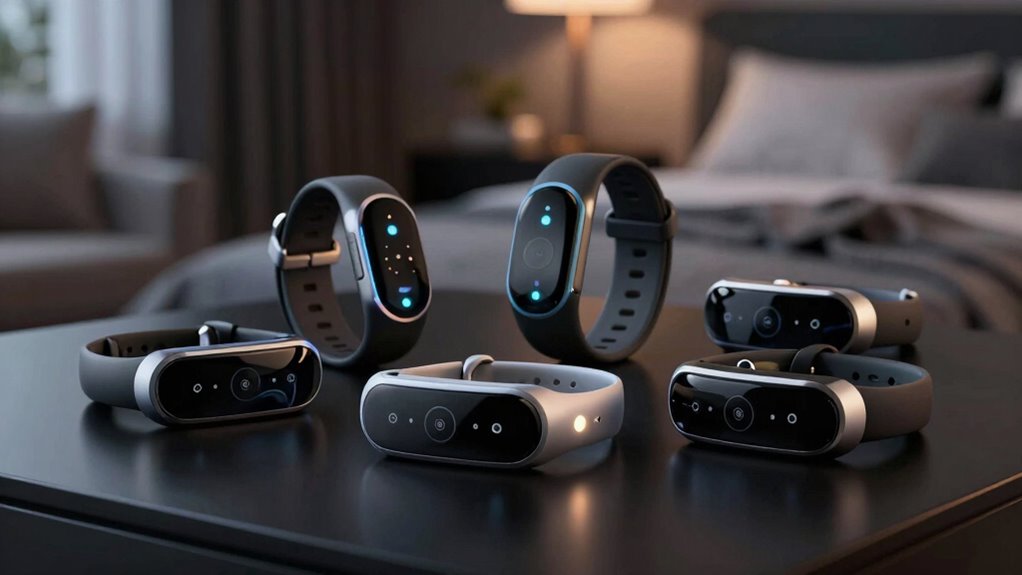

Google Fitbit Inspire 3 is my best overall pick among these wearable sleep trackers because it combines sleep tracking with a familiar screen-based fitness band. For a screen-free setup, Fitbit Air stands out for its simpler band design, while RingConn Gen 2 Air suits readers who prefer a compact ring. The main tradeoffs are wearing comfort overnight, how much information you want on your wrist, battery and charging routines, and whether a service requires a membership. The lineup also includes less-established options with broad feature claims, so brand support and data clarity matter alongside specifications. Read on for the full breakdown and guidance on which style best fits your sleep-tracking habits.

Get health and wellness essentials delivered free with Prime
- Fast, free delivery on millions of items
- Prime Video, Amazon Music and more included
- Member-only deals all year
Key Takeaways
- The lineup’s clearest split is form factor: Fitbit Inspire 3 and the display-equipped bands provide on-wrist screens, while Fitbit Air, WHOOP, and the rings favor a less screen-centered experience.
- Fitbit Inspire 3 is the most balanced pick: it offers a recognizable fitness-band format without the membership commitment attached to WHOOP.
- WHOOP 5.0/MG is the membership-based outlier: its 12-month membership makes the ongoing service commitment part of the buying decision, not an optional detail.
- The two no-subscription smart rings and RingConn Gen 2 Air target discreet wear: compare sizing, comfort, app support, and charging habits rather than assuming ring shape suits every sleeper.
- Some low-profile bands make broad health claims: features such as blood-pressure monitoring or extensive sport modes do not by themselves establish sleep-measurement accuracy or useful interpretation.


| sleep trackers wearable | Compatibility | Battery life | Water resistance | Display |
|---|---|---|---|---|
| Google Fitbit Air | Android 11.0+ and iOS 16.4+ | Up to 7 days | 50 meters | — |
| Screenless Fitness Tracker Sma | Android 4.4+ and iOS 9.0+ | — | IP68 | Screenless |
| Google Fitbit Inspire 3 | Apple iOS 16.4+ and Android OS 11.0+ | — | — | — |
| Google Fitbit Inspire 3 | Apple iOS 15+ and Android OS 9+ | Up to 10 days | 50 meters | Color touchscreen |
| WHOOP 5.0/MG Activity Tracker | — | 14+ days | — | No display |
| BIEMHA Women Men Smart Ring He | iOS and Android | 2–3 days; up to 5 days with charging case | Up to 80 meters | — |
| Smart Ring Health Monitor | iOS and Android | 2–3 days; up to 5 days with charging case | Up to 80 meters | No display |
| Fitness Tracker with 24/7 Hear | Android 5.0+ and iOS 9.0+ | Up to 7 days | IP68 | 1.10-inch AMOLED HD touchscreen |
| Zeacool Fitness Tracker with H | iPhone and Android | 10–14 days regular use; up to 30 days standby | IP68 | 1.47-inch AMOLED HD touchscreen |
| RingConn Gen 2 Air Ultra-Thin | iOS and Android | Up to 10 days | IP68; up to 100 meters | — |
More Details on Our Top Picks
Google Fitbit Air – Screenless Activity Tracker, Obsidian
I’d shortlist the Fitbit Air for sleepers who want overnight tracking without a lit screen or a bulky watch face. Its seven-day battery means fewer charging gaps than the Screenless Fitness Tracker Smart Band’s advertised 20–30 days, but Fitbit offers a more clearly specified sensor set, including optical heart rate and SpO2 sensors. The lightweight band and 50-meter water resistance also suit day-and-night wear, not just bedtime.
The tradeoff is that this is a tracker, not a wrist display: I can’t check readings at a glance, and GPS depends on a compatible phone. Personalized coaching also requires a premium membership. Compared with the Fitbit Inspire 3, the Air prioritizes a distraction-free, screenless fit over its color touchscreen and smart wake alarm, so it’s a better match for minimalists than for people who want sleep data on their wrist.
Pros:- Screenless design avoids a bright display during sleep and keeps the band visually understated.
- Seven-day battery life reduces charging interruptions during continuous tracking.
- Optical heart rate, SpO2, accelerometer, and gyroscope sensors support a range of health and movement measurements.
- 50-meter water resistance and a lightweight Performance Loop suit regular wear.
Cons:- No screen means sleep and health data are not available for quick wrist-side checks.
- GPS functionality requires a compatible smartphone.
- Personalized coaching requires a premium membership.
Best for: Sleep-focused Fitbit users who want a lightweight, screen-free band for continuous day-and-night wear and are comfortable checking data on a phone.
Not ideal for: Buyers who want a wrist display, a smart wake alarm, or personalized coaching without a membership.
- Operating system:Fitbit OS
- Battery life:Up to 7 days
- Battery capacity:168 mAh
- Water resistance:50 meters
- Sensors:3-axis accelerometer, gyroscope, optical heart rate, SpO2
- Compatibility:Android 11.0+ and iOS 16.4+
- Band material and color:Google Performance Loop, Obsidian
- Band fit:One size, 130–210 mm
Our verdict“Choose the Fitbit Air if you want a screen-free Fitbit for overnight wear; choose the Inspire 3 if its display and smart wake alarm matter more.”
Screenless Fitness Tracker Smart Band, Sleep, HRV, Heart Rate, SpO2
If charging habits are the main obstacle to wearing a tracker overnight, this band’s stated 20–30-day battery life gives it a practical advantage over the Fitbit Air’s seven days and the Fitbit Inspire 3’s listed maximum of 10. It tracks sleep alongside heart rate, SpO2, HRV, and stress, giving data-minded buyers several wellness measures in one screen-free band. Its 25-gram weight and IP68 water resistance also support routine wear without a display to interrupt sleep.
The tradeoff is a less convenient wrist experience: there’s no screen for checking data or notifications, and GPS is connected through a phone. Its broad feature list doesn’t make the readings medical measurements, either. Compared with WHOOP 5.0/MG, this is positioned around long battery life and many activity modes rather than a membership-based coaching package, but buyers should expect to use the phone app to interpret its data.
Pros:- Advertised 20–30-day battery life can reduce charging interruptions compared with the Fitbit Air.
- Tracks sleep, heart rate, SpO2, HRV, and stress in one band.
- Lightweight 25-gram build and IP68 water resistance support everyday wear.
- Offers over 170 sports modes and connected GPS.
Cons:- Screenless design limits quick access to readings and notifications.
- Connected GPS requires a smartphone.
- Readings are for reference and are not medical measurements.
Best for: People who want screen-free sleep and wellness tracking with infrequent charging, plus heart rate, HRV, SpO2, and stress measurements.
Not ideal for: Wearers who want on-wrist data, independent GPS, or medical-grade readings.
- Display:Screenless
- Battery:180 mAh; advertised 20–30 days
- Water resistance:IP68
- Weight:25 g
- Compatibility:Android 4.4+ and iOS 9.0+
- Health features:Sleep tracking, heart rate, SpO2, HRV, stress
- Activity features:Over 170 sports modes; connected GPS
- Materials:Nylon and silicone
Our verdict“Pick this band if long battery life and a broad set of wellness metrics matter more than a wrist display or the Fitbit app experience.”
Google Fitbit Inspire 3 – Midnight Zen/Black – Small and Large Bands
The Fitbit Inspire 3 makes the most sense for buyers who want sleep tracking to sit alongside daily activity and stress tools, rather than choosing a dedicated screenless band. Its listed features include sleep analysis, sleep mode, and a smart wake alarm, which give it a more sleep-specific wrist experience than the Fitbit Air. Heart-rate tracking, SpO2, stress management, and menstrual health tracking round out the picture for people who want broader daily context.
That extra access comes with a tradeoff: unlike the Air, the Inspire 3 has a screen, which may not suit someone who wants a completely distraction-free band at bedtime. Compared with the lilac Inspire 3 listing, this Midnight Zen/Black version includes small and large bands, but its supplied data doesn’t specify battery life or water resistance. I’d favor the better-documented lilac listing if those details are decision points, while this version is appealing for its named sleep features.
Pros:- Sleep analysis, sleep mode, and a smart wake alarm are specifically listed.
- Combines 24/7 heart-rate tracking with activity, stress, SpO2, and menstrual health features.
- Includes small and large band sizes for a more adaptable fit.
- Works with supported Apple iOS and Android devices.
Cons:- The supplied product data does not state battery life or water-resistance level.
- Its screen is less suited to buyers seeking the screen-free feel of the Fitbit Air.
- The supplied details do not establish which features require a Fitbit membership.
Best for: Fitbit users who want sleep analysis, a sleep mode, and a smart wake alarm alongside activity, heart-rate, stress, and menstrual health tracking.
Not ideal for: Buyers who require confirmed battery-life and water-resistance details before choosing, or who prefer a screenless sleep tracker.
- Compatibility:Apple iOS 16.4+ and Android OS 11.0+
- Sleep features:Sleep tracking, sleep analysis, sleep mode, smart wake alarm
- Heart and wellness features:24/7 heart rate, stress management, SpO2, menstrual health tracking
- Exercise modes:40+
- Exercise tracking:Automatic exercise tracking
- Band sizes included:Small and large
- Color:Midnight Zen/Black
Our verdict“Choose this Inspire 3 if a smart wake alarm and named sleep features matter most, but favor the lilac listing if its stated battery and water-resistance details are priorities.”
Google Fitbit Inspire 3 – Lilac Bliss/Black – Small and Large Bands
For buyers who want to check sleep and activity information on their wrist, this Fitbit Inspire 3 is a stronger fit than the screenless Fitbit Air. Its color touchscreen, listed sleep monitor, and up-to-10-day battery give it a more conventional tracker experience, while 50-meter water resistance means it can stay on for swimming as well as overnight wear. The included six-month Premium membership also offers a period of access to personalized insights, a distinction from the Air’s membership requirement for coaching.
Its display is a tradeoff for minimalists who prefer the Air’s unobtrusive band, and several features may vary by region or need a subscription beyond the included membership. Compared with the Midnight Zen/Black Inspire 3 listing, this version provides clearer battery and water-resistance specifications, making it easier to judge for continuous wear. I’d pick it for a screen-first Fitbit experience, not for a screen-free sleep setup.
Pros:- Color touchscreen makes information accessible on the wrist, unlike the Fitbit Air.
- Listed battery life of up to 10 days supports regular overnight tracking.
- 50-meter water resistance suits swimming and daily wear.
- Small and large bands are included, along with a six-month Premium membership.
Cons:- Some personalized insights and other features require Fitbit Premium, and availability can vary by region.
- The screen may be less appealing to people seeking a distraction-free sleep band.
- GPS is provided via a connected smartphone rather than specified as built-in.
Best for: Fitbit users who want a wrist display for daily checks, sleep and stress tracking, and a water-resistant band for swimming and overnight wear.
Not ideal for: Minimalists who want no screen at bedtime, or buyers who do not want features tied to a Premium membership or regional availability.
- Display:Color touchscreen
- Battery life:Up to 10 days
- Water resistance:50 meters
- Compatibility:Apple iOS 15+ and Android OS 9+
- Sleep and wellness features:Sleep monitor, heart-rate monitor, stress tracking, SpO2
- Activity feature:Active Zone Minutes
- Connectivity:Bluetooth; GPS via smartphone
- Materials and dimensions:Silicone band, resin case; 0.71 × 0.43 × 1.54 inches
Our verdict“Choose this Inspire 3 over the Fitbit Air if you want a touchscreen, stated water resistance, and longer listed battery life in a sleep-capable tracker.”
WHOOP 5.0/MG Activity Tracker – 12 Month Membership – Health and Fitness Wearable
The WHOOP 5.0/MG is the most coaching-oriented option in this group: it combines 24/7 monitoring with insights into sleep, recovery, and longer-term health. That makes it a better match for athletes who want sleep interpreted alongside training and recovery than the Fitbit Inspire 3, whose listed strengths include a display, smart wake alarm, and everyday activity features. Its 14+ day battery and screen-free design also suit continuous wear without nightly charging or a bright watch face.
The main compromise is the membership model: this listing includes a 12-month membership, but full features require a subscription, unlike the Screenless Fitness Tracker Smart Band, which is presented as a simpler tracker. WHOOP also has no display or notifications, so I wouldn’t pick it for quick wrist checks. Compatibility is listed for several health and activity apps, but the supplied details don’t specify sensor types or a water-resistance rating.
Pros:- Connects sleep tracking with recovery, health insights, and personalized coaching.
- Battery life is listed as over 14 days, supporting continuous wear with fewer charging breaks.
- Screen-free, waterproof design suits overnight use and workouts.
- Includes a 12-month membership and lists integrations with Apple Health, Google Health Connect, Strava, and Natural Cycles.
Cons:- Full features require a membership, unlike the simpler screenless tracker in this lineup.
- No display or notifications for on-wrist checks.
- The supplied product data does not specify sensor types or a water-resistance rating.
Best for: Athletes and health-focused users who want screen-free sleep and recovery insights with personalized coaching and plan to use the included 12-month membership.
Not ideal for: People who want a display or notifications, prefer to avoid recurring membership requirements, or need detailed sensor and water-resistance specifications.
- Model number:973-004-000
- Battery life:14+ days
- Display:No display
- Waterproof:Yes
- Included membership:12 months
- Included components:WHOOP Peak, fitness tracker, SuperKnit Band, Waterproof PowerPack, Quick Start Guide
- Listed integrations:Apple Health, Google Health Connect, Strava, Natural Cycles
Our verdict“Choose WHOOP 5.0/MG if coaching around sleep and recovery is worth a membership; choose the Fitbit Inspire 3 for a display and everyday wrist access.”
BIEMHA Women Men Smart Ring Health Tracker, Sleep & Fitness Monitoring, Waterproof, iOS/Android Compatible, No Subscription, 5-Day Battery (Silver, Size 8)
The BIEMHA ring makes the most sense for buyers who want sleep tracking in a discreet form and prefer not to pay an ongoing app fee. It also records heart rate, steps, and calories, so it covers basic daily wellness without the screen and notifications of a smartwatch. Its battery is listed as 2–3 days, or up to 5 with the charging case, a more modest claim than the RingConn Gen 2 Air’s up-to-10-day battery. The stated 80-meter water resistance is useful for regular water exposure, but the product information gives little detail about its app or materials. Compared with the BIEMHA rose-gold ring in this lineup, the core tracking and battery claims are similar; this version’s clear distinction is its silver finish and specified size 8. Check sizing carefully before ordering.
Pros:- Tracks sleep, heart rate, steps, and calories in a compact ring format
- No subscription required for full functionality
- Water resistance is listed at 80 meters
- Up to 5 days of battery life when using the charging case
Cons:- Battery life is listed as 2–3 days without the charging case
- Material and app capabilities are not described in detail
- Fit depends on choosing the right ring size
Best for: Sleep-focused shoppers who want a screen-free ring for basic wellness metrics, use iOS or Android, and want full functionality without a subscription.
Not ideal for: Buyers who need detailed app information, verified material details, or longer use between charges than the listed 2–3 days without the case.
- Size:8
- Color:Silver
- Sleep tracking:Yes
- Other listed metrics:Heart rate, steps, and calories
- Water resistance:Up to 80 meters
- Battery life:2–3 days; up to 5 days with charging case
- Compatibility:iOS and Android
- Subscription:No subscription required for full functionality
Our verdict“Choose this silver BIEMHA ring for subscription-free, basic sleep and activity tracking, but pick the RingConn Gen 2 Air if longer stated battery life and clearer material details matter more.”
Smart Ring Health Monitor, Wearable Ring Tracker for Sleep & Workout, IP68 Water Resistant, Compatible with iOS and Android, No Subscription Fee, 5 Days Battery Life (Rose Gold)
This rose-gold BIEMHA is a fit for someone who wants basic sleep and workout tracking without a display. The ring lists sleep duration and heart rate among its metrics, and its no-subscription setup avoids a recurring fee for access. Since it has no screen, you’ll need a compatible phone app to see the recorded information; buyers who want activity data on their wrist may prefer the Zeacool tracker, which pairs sleep monitoring with a 1.47-inch display and many sports modes. Battery life is stated as 2–3 days, up to 5 with the charging case, rather than the RingConn Gen 2 Air’s claim of up to 10 days. The listing also names blood pressure as a metric but gives few details about measurement or app functions. Treat that claim cautiously, and check ring sizing for a comfortable fit.
Pros:- Tracks sleep and heart rate, with workout monitoring listed
- No subscription fee for full feature access
- Water resistance is listed up to 80 meters
- Charging case can extend stated battery life to up to 5 days
Cons:- No display, so detailed readings require an app
- Battery life is listed as 2–3 days without the charging case
- Sizing and the details behind listed health metrics need clarification
Best for: Phone-first buyers seeking a screen-free ring for sleep and workout tracking, with no subscription fee and iOS or Android compatibility.
Not ideal for: People who want to check readings directly on a device, need a clearly documented app experience, or prioritize longer battery life without a charging case.
- Color:Rose Gold
- Display:No display
- Metrics listed:Heart rate, sleep duration, and blood pressure
- Water resistance:Up to 80 meters
- Battery life:2–3 days; up to 5 days with charging case
- Battery type:Lithium-ion
- Compatibility:iOS and Android
- Subscription:No subscription fee
Our verdict“Pick this rose-gold BIEMHA if you want a simple app-based sleep ring without a subscription, but choose the Zeacool if on-device display and broader activity tracking are priorities.”
Fitness Tracker with 24/7 Heart Rate, Blood Pressure, Sleep Monitoring, 1.10″ AMOLED Screen, Waterproof Smart Watch for Women and Men
For buyers who prefer a wrist-worn tracker with a screen, this model combines sleep monitoring with a 1.10-inch AMOLED display, continuous heart-rate monitoring, and 25 sports modes. Seeing information on the watch can make it easier to check activity without opening a phone app, while reminders and weather updates add everyday utility. Its up-to-7-day battery claim sits between the BIEMHA rings’ listed 2–3 days without their case and the Zeacool tracker’s 10–14 days in regular use. That broader screen-and-feature approach comes with a tradeoff: sleep and blood-pressure data accuracy may vary, and extensive notifications or GPS use can shorten battery life. GPS connects through a smartphone, rather than being built in. I’d choose it over a ring for visible wrist feedback, but not for a minimalist, screen-free sleep wearable.
Pros:- AMOLED touchscreen displays information directly on the wrist
- Includes continuous heart-rate monitoring and sleep monitoring
- Offers 25 sports modes and smartphone-linked GPS
- Lists up to 7 days of battery life
Cons:- Blood-pressure and sleep data accuracy may vary
- Notifications and GPS use can reduce battery life
- Full functionality requires a smartphone app, and GPS uses the phone
Best for: Buyers who want sleep and heart-rate monitoring on a wrist display, plus sports modes, reminders, and smartphone-linked GPS.
Not ideal for: People who want a discreet screen-free sleep tracker, need built-in GPS, or rely on the listed blood-pressure readings as medical measurements.
- Display:1.10-inch AMOLED HD touchscreen
- Heart-rate monitoring:24/7
- Sleep monitoring:Yes
- Blood-pressure monitoring:Yes
- Sports modes:25
- Water resistance:IP68
- Battery life:Up to 7 days
- Compatibility:Android 5.0+ and iOS 9.0+
- GPS:Via smartphone
Our verdict“Choose this tracker if you want visible sleep and activity information on your wrist, but favor a BIEMHA ring for a screen-free form or Zeacool for a longer stated battery life.”
Zeacool Fitness Tracker with Heart Rate, Blood Oxygen, Sleep Monitoring, 123 Sports Modes, IP68 Waterproof Smart Watch for Women and Men
The Zeacool stands out for pairing sleep monitoring with a claimed 10–14 days of regular-use battery life, plus a 1.47-inch AMOLED screen. That runtime gives it a clear advantage over the 1.10-inch AMOLED watch in this lineup, which lists up to 7 days, while the Zeacool also names blood oxygen and 123 sports modes. For buyers tracking both nights and varied workouts, the larger display and broad activity selection may be more useful than a basic sleep-only ring. The tradeoff is complexity: a long list of modes and metrics can make setup and daily navigation less straightforward, and the listing provides limited setup guidance. Battery life can also change with use. Unlike the RingConn Gen 2 Air, it is a watch rather than a lightweight ring, so it takes up more space on the wrist during sleep.
Pros:- Lists sleep, 24/7 heart-rate, and blood-oxygen monitoring
- Up to 10–14 days of battery life in regular use
- 1.47-inch AMOLED touchscreen provides a larger on-device view
- Offers 123 sports modes and IP68 water resistance
Cons:- Many features may make the interface harder to navigate
- Battery life varies with usage
- Setup instructions are limited in the product information
Best for: Active users who want a wrist display for sleep, heart-rate, and blood-oxygen tracking, many sports modes, and fewer charging interruptions.
Not ideal for: Sleepers who dislike wearing a watch overnight, prefer a compact ring, or want a simpler interface and clearer setup guidance.
- Display:1.47-inch AMOLED HD touchscreen
- Heart-rate monitoring:24/7
- Blood-oxygen monitoring:Yes
- Sleep tracking:Yes
- Sports modes:123
- Water resistance:IP68
- Battery life:10–14 days regular use; up to 30 days standby
- Compatibility:iPhone and Android
- Charging:Magnetic fast charging
Our verdict“Choose the Zeacool if you want a feature-rich sleep-tracking watch with a longer stated runtime, but opt for the RingConn Gen 2 Air if a light, screen-free ring is more comfortable for overnight wear.”
RingConn Gen 2 Air Ultra-Thin Smart Ring (Size 9, Galaxy Silver)
The RingConn Gen 2 Air is the strongest fit here for buyers who want a lightweight ring they can wear through the night without a screen or subscription. At 2.5 grams, it is designed to keep the form factor unobtrusive, while its sensors cover sleep, heart rate, stress, blood oxygen, and activity. Its up-to-10-day battery claim exceeds the BIEMHA rings’ stated 2–3 days without a charging case, making it a better match for people who dislike frequent charging. The titanium build and listed 100-meter water resistance also set it apart from the less-detailed BIEMHA material specifications. The tradeoffs are fit and scope: the listing calls for a sizing kit, and this is a wellness tracker, not an advanced medical device. It also has no built-in GPS or wrist display.
Pros:- Lightweight 2.5-gram design is suited to overnight wear
- Tracks sleep, heart rate, stress, blood oxygen, and activity
- Lists up to 10 days of battery life
- Titanium construction and water resistance up to 100 meters
Cons:- Sizing kit is recommended to find a suitable fit
- Does not include built-in GPS or a display
- Health tracking is not described as an advanced medical service
Best for: Sleep-focused buyers who want a lightweight, screen-free ring with multiple wellness metrics, no subscription, and a longer stated battery life.
Not ideal for: People who need built-in GPS, a watch display, advanced medical features, or a tracker that can be selected confidently without checking its sizing system.
- Size:9
- Color:Galaxy Silver
- Material:Titanium
- Weight:2.5 g
- Sensors:Heart rate, sleep, stress, blood oxygen, and activity
- Water resistance:IP68; up to 100 meters
- Battery life:Up to 10 days
- Charging time:90 minutes
- Compatibility:iOS and Android
Our verdict“Choose the RingConn Gen 2 Air for a lightweight, longer-running sleep-tracking ring, but pick the Zeacool if you want a visible watch display and extensive sports modes.”

How We Picked
I ranked these wearable sleep trackers by how well their design and ownership model fit overnight use, not by the length of their feature lists. I weighed comfort-relevant form factor, the practicality of wearing the device consistently, the type of sleep and health information advertised, battery and charging details when provided, compatibility, and whether ongoing membership is involved. I also separated products with established brand identities from generic listings whose descriptions make broad claims but provide fewer details for judging their sleep-focused experience.
Fitbit Inspire 3 leads because it offers a balanced, familiar band format; Fitbit Air follows for people who want to avoid a screen. WHOOP ranks lower for buyers who do not want a membership commitment, while the rings earn distinct places for discreet wear but require a good fit. The remaining screen-equipped trackers offer potentially useful all-in-one functionality, yet their broad feature claims and limited detail make them harder to rank ahead of options with clearer product positioning. The two Inspire 3 colors are listed separately as supplied, though they share the same basic model and role.
Factors to Consider When Choosing Sleep Trackers Wearable
Choosing among sleep trackers starts with the device you can comfortably wear night after night. Use these broader checks to look past feature lists and match the tracker to your habits, body, and expectations for the data.
Choose a form factor for overnight comfort
A tracker can only build a useful record when you actually keep it on, so start with what feels least intrusive during sleep. A band is easy to put on and remove, but its buckle or screen may press against your wrist; a ring removes wrist bulk but can feel restrictive or rotate if its fit is wrong. Screenless designs reduce nighttime light and visual distractions, while watches make daytime checks more convenient. If you sleep on your side or move your hands under a pillow, think about where the device contacts the mattress. Avoid choosing a ring based on appearance alone: finger size can change, and a secure fit matters for both comfort and sensor contact.
Separate sleep tracking from broader health claims
Product pages may list heart rate, oxygen, blood pressure, HRV, and sport modes beside sleep monitoring, but a longer feature list does not tell you how clearly the app explains overnight patterns. Decide whether you want a simple record of sleep timing or a wider set of health and activity summaries. Treat consumer wearables as tools for personal trend tracking, not as substitutes for clinical measurement or diagnosis. If a particular metric matters to you, check how the manufacturer describes it and whether the companion app presents it in a way you can use. A device with fewer advertised measurements may be a better fit if its main job is helping you notice consistent changes in your routine.
Check the full ownership model before choosing
The hardware is only part of the decision: some trackers connect their experience to a membership, while several rings in this roundup advertise no subscription fee. Compare what the app provides without payment and whether the features you care about depend on an ongoing plan. A membership can make sense if you want a continuing service and are comfortable with its terms, but it is a poor fit if you want a one-time device purchase with no recurring commitment. Also check phone compatibility, account requirements, and whether the app offers the history or insights you expect. Confirm current terms directly before buying, since service details can change after a product launch.
Build charging into your real routine
Battery claims matter because charging gaps can interrupt the overnight records you bought the tracker to collect. Consider when you naturally have time to charge: a short daytime break, while showering, or on a fixed weekly schedule. The ring listings here state a five-day battery life, but actual runtime can vary with settings and use, so treat that figure as a guide rather than a guarantee. A screen, frequent notifications, and active tracking may affect how often a device needs charging. Before deciding, check whether the charger is included, how it connects, and whether you can comfortably keep the device charged without missing the nights you most want to track.
Prioritize consistency over precision promises
Wearable sleep estimates are most useful as a way to compare your own patterns over time, not as a perfect account of every sleep stage. A common mistake is to chase a device that advertises more detailed metrics and then treat each nightly number as definitive. Instead, ask whether the app makes it easy to spot repeated shifts in bedtime, duration, or overnight signals. Keep your wearing position and schedule reasonably consistent before drawing conclusions from changes. If the data causes worry or conflicts with how you feel, use it as a prompt for reflection rather than a diagnosis.
Match the display to how you use a tracker by day
A screen is helpful if you want to check time, activity, or notifications without reaching for your phone, but it can add bulk and create another source of nighttime light. Screenless bands and rings suit buyers who prefer a quieter wearable and are content to review information in an app. A display-equipped tracker can be a better all-day companion if you want exercise information close at hand. Consider whether you will use the screen regularly or mainly wear the device for sleep; paying for features you leave unused can complicate a simple goal. You can also check whether nighttime display settings let you keep the convenience by day without distraction in bed.
Frequently Asked Questions
Should I choose a smart ring or a wrist band for sleep tracking?
Choose based on what you can wear comfortably for a full night, not on which shape seems more advanced. A ring keeps the wrist free and can be discreet, but it must fit securely and may feel uncomfortable if you sleep with your hands tucked under you. A band is easier to adjust and may suit you better if you already wear a watch, though its clasp or screen can bother some sleepers. The products in this roundup also differ in service model and app details, so compare those alongside comfort. If possible, check the return policy before committing to a new form factor.
Does WHOOP 5.0 make sense if I only want sleep tracking?
WHOOP 5.0 may suit you if you want a broader activity and health wearable and accept its listed 12-month membership. If sleep is your only goal, that commitment may be more than you need, especially when the lineup includes band and ring options that advertise sleep monitoring without the same membership framing. Compare the actual sleep summaries and app access available under the membership rather than assuming every feature is relevant to you. Check the current plan terms before purchase, since membership details can affect the long-term fit. A simpler tracker may be easier to justify if you mainly want to observe sleep patterns.
Are blood pressure or blood oxygen readings from a wearable reliable enough for health decisions?
Do not treat a consumer wearable reading as a medical diagnosis or a replacement for a validated clinical device. The generic trackers in this roundup advertise several health measurements, but feature claims alone do not establish their accuracy or clinical usefulness. If you need to monitor a condition, ask a qualified health professional which measurement method to use and how to interpret results. Wearable readings may still help you notice personal trends, provided you use the same device consistently and understand its limitations. Seek medical advice about symptoms rather than waiting for a tracker to flag them.
Is a no-subscription tracker always the better choice?
Not necessarily: avoiding a recurring fee is useful only if the device and app still provide the information you want. The ring listings from BIEMHA and the other no-subscription model advertise no subscription fee, while WHOOP explicitly includes a 12-month membership. Compare what data, history, and insights you can access with each option, rather than making the decision on fees alone. Also check whether app features or service terms may change over time. If you prefer predictable ownership and basic tracking, a no-subscription model may fit; if you value a continuing service, a membership could still be worthwhile to you.
How should I compare two Fitbit Inspire 3 listings in different colors?
The Midnight Zen/Black and Lilac Bliss/Black listings are the same Inspire 3 model with different color options, so the choice is mainly about appearance and the included band sizing. Both listings specify small and large bands, which gives you a way to select a more suitable fit. Compare the listing details to confirm the package matches your needs rather than treating the colors as separate tracking systems. If color is not a priority, choose the listing with the band configuration you prefer. The model’s role in this roundup is the same either way: a familiar screen-based band for buyers who want more than a screenless tracker.
Conclusion
Best overall: I recommend Google Fitbit Inspire 3 for a balanced, screen-equipped band with a clear place in an everyday routine. Best value: the Screenless Fitness Tracker Smart Band may appeal if you want a basic screen-free format, though its broad listing claims deserve careful checking. Best premium: WHOOP 5.0/MG is the distinct membership-based choice for buyers who want more than sleep tracking and accept an ongoing service commitment. Best for beginners: Fitbit Inspire 3 is the easiest starting point for someone who wants a familiar wrist-worn device, while Fitbit Air suits a beginner who would rather avoid a screen. Best for discreet wear: compare RingConn Gen 2 Air with the no-subscription BIEMHA ring and the rose-gold smart ring based on fit, app compatibility, and ownership terms. Choose the option you are most likely to wear consistently; that matters more than the longest feature list.