TL;DR

Get health and wellness essentials delivered free with Prime
- Fast, free delivery on millions of items
- Prime Video, Amazon Music and more included
- Member-only deals all year
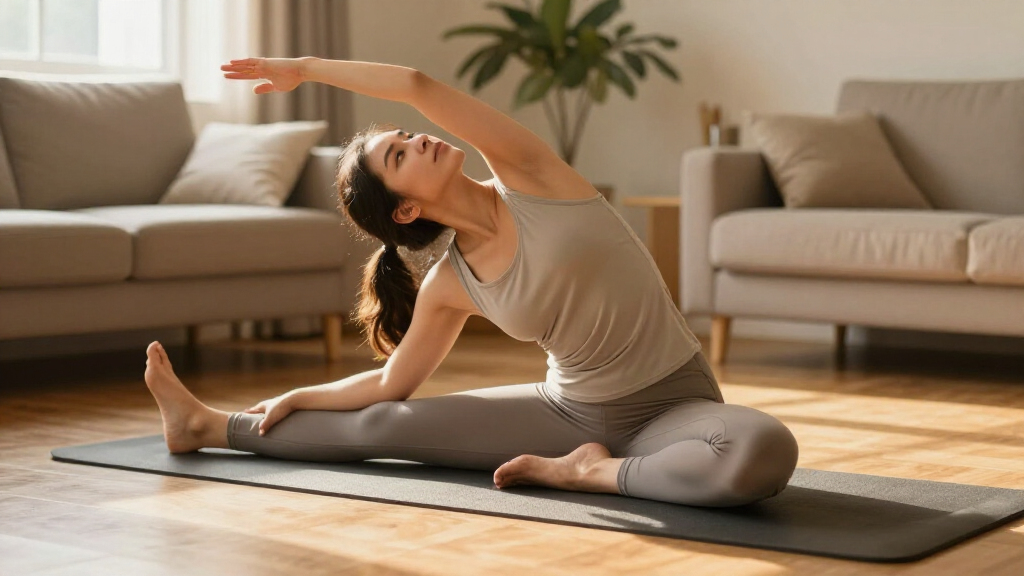
Yoga teacher Alina Boyett has shared a four-movement, beginner-friendly flow intended for gentle recovery and stretching at home. The sequence uses supported leg elevation, Child’s Pose, a relaxed forward fold and a seated twist; Boyett advises moving comfortably and not stretching through pain.
Yogalina Studios founder and yoga teacher Alina Boyett has shared a four-pose recovery flow designed for people seeking gentle movement after exercise or prolonged sitting. Published by Fit&Well, the equipment-free sequence is presented as beginner-friendly and focuses on the legs, hips, spine and shoulders, with instructions to stay within a comfortable range rather than force a stretch.
The routine consists of Waterfall Pose, Child’s Pose, a ragdoll forward fold and a seated spinal twist. Boyett says she selected the movements because they gently address areas that commonly feel tense after physical activity. The sequence combines resting positions, forward folding and rotation, and does not require previous yoga experience or special equipment.
For Waterfall Pose, lie on your back near a wall and rest your legs up against it, bending the knees slightly if needed. Boyett suggests holding for three to five breaths. In Child’s Pose, begin on hands and knees, bring the toes together, separate the knees and lower the hips toward the heels, extending the arms forward. Hold for three to five breaths.
The ragdoll fold is done standing with feet hip-width apart and knees softened, allowing the torso, head and arms to hang; the instructions call for two rounds of three to five breaths. Finish with a seated twist on each side, rotating gently without forcing the movement for two to three breaths per side. The source also features Yogalina teacher Misha Clarke demonstrating the movements in a video.
A Short Routine for Recovery
The sequence offers a brief, low-equipment option for gentle movement on days when a full workout may not be appropriate or appealing. It may be relevant to people coming off a run or challenging session, as well as those who have spent much of the day seated. Boyett describes recovery as part of caring for the body, rather than simply stopping activity.
That framing is guidance from the instructor, not evidence that this particular flow prevents injury or produces a specific physical benefit. The practical takeaway is narrower: the poses provide a structured way to pause, breathe and move gently, with modifications such as keeping the knees bent and choosing a comfortable range.
Products Worth Considering

Hyperice Hypervolt Go 3 Percussion Massage Gun with Carry Case

Oral-B iO Series 5 Rechargeable Electric Toothbrush with Travel Case and 3 Brush Heads, Black

BowFlex Results Series SelectTech 552 Adjustable Dumbbell
As an affiliate, we earn on qualifying purchases.
How the Four Poses Fit Together
Boyett told Fit&Well that exercise habits often emphasize how much or how hard people train, while recovery also deserves attention. She said the routine could be used after exercise or a day at a desk, and described even a short period of mindful movement and breathing as potentially changing how someone feels. Those statements reflect her professional perspective as a yoga teacher.
The movements progress from resting with the legs supported to floor-based stretching, a standing fold and seated rotation. Together they cover several body areas without asking participants to perform advanced poses. The source provides breath counts and basic setup instructions, but does not report a clinical evaluation or study testing the sequence.
Limits of the Routine’s Claims
The source does not describe a study measuring whether the four poses improve flexibility, speed recovery or reduce muscle soreness. Boyett’s comments about relaxation, tension and bodily sensations are attributed instructor guidance, and individual experiences may differ. The report also does not specify how frequently to repeat the flow or whether it is suitable for every fitness level or health circumstance.
Boyett advises people with an injury or relevant medical condition to seek appropriate professional guidance before trying the routine. Readers should stop or adjust a movement if it causes pain; the source does not provide individualized medical assessment.
Choose a Comfortable Starting Point
The published instructions offer a starting point for trying the sequence at home: set aside a few minutes, move slowly and follow the stated breath counts only if they feel comfortable. Participants can keep their knees bent in the forward fold, use the wall for support in Waterfall Pose, or omit a movement that does not feel suitable.
The source material does not announce a follow-up study, scheduled event or additional development. The immediate next step for readers is to use the demonstration and instructions cautiously, and to seek qualified professional guidance if an injury or medical condition may affect participation.
Key Questions
What poses are included in the yoga flow?
The four movements are Waterfall Pose, Child’s Pose, a ragdoll forward fold and a seated spinal twist. Fit&Well’s report includes setup instructions and breath counts for each.
Do I need equipment or yoga experience?
Boyett describes the flow as suitable for beginners and says it does not require special equipment or previous yoga experience. A wall is used to support the legs in Waterfall Pose.
How long should I hold each pose?
The instructions suggest three to five breaths for Waterfall Pose and Child’s Pose, two rounds of three to five breaths for the forward fold, and two to three breaths per side for the seated twist.
Is this flow proven to prevent soreness or injury?
The source does not report research testing whether the sequence prevents soreness or injury. Boyett presents it as a gentle recovery routine and advises people not to force stretches or push through pain.
Who should get professional guidance before trying it?
Boyett advises anyone with an injury or relevant medical condition to seek appropriate professional guidance before attempting the sequence. The routine is not individualized medical advice.
Source: fitandwell.com