
TL;DR

Get health and wellness essentials delivered free with Prime
- Fast, free delivery on millions of items
- Prime Video, Amazon Music and more included
- Member-only deals all year
A Sixty and Me report describes seven simple fitness habits for adults over 60, including walking, light strength work, balance practice and rest. The suggestions are general guidance, not evidence that these routines will produce the same results for everyone; people with health or mobility concerns are advised to consult a qualified professional.
Sixty and Me has published a report recommending seven manageable movement habits for adults over 60, from short walks and basic strength exercises to balance practice and rest. The article frames the ideas as ways to support everyday tasks such as climbing stairs or standing from a chair, while advising readers to adapt exercises and seek professional guidance when health conditions or balance concerns are involved.
The report suggests beginning with a short daily walk, such as 10 minutes after breakfast, then extending the walk if it feels manageable. It also recommends simple strength exercises two or three times a week, including standing up from a chair, wall push-ups and bicep curls using cans. These are presented as accessible examples rather than a prescribed program.
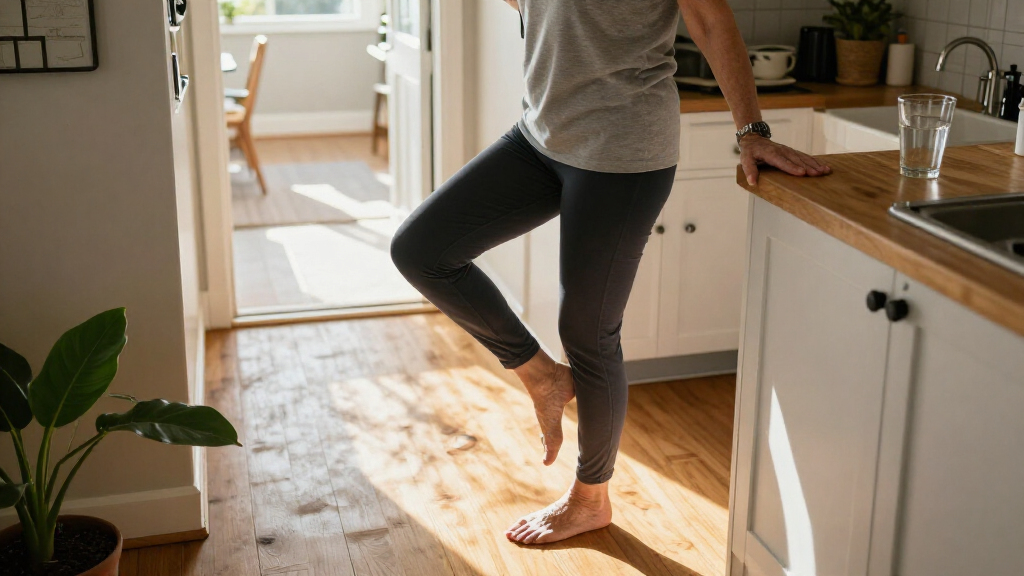
Other suggestions include practicing balance with support nearby, stretching in the morning, and interrupting long periods of sitting by standing during television commercials or walking while on the phone. The article also emphasizes consistency over perfection: a shorter session on a low-energy day may be more realistic than waiting for ideal conditions, and a missed day does not mean a person must abandon the routine.
The final habit is allowing time to recover. Sixty and Me advises readers to rest when they feel unusually sore or fatigued, drink enough water and adjust activities to their abilities. It says to stop or reduce intensity if discomfort occurs and to seek medical attention for symptoms including dizziness, chest pain or shortness of breath.
Everyday Tasks Shape the Advice
The report links movement to practical activities rather than athletic performance. Getting up from a low seat, carrying groceries and stepping onto a curb are examples of routine actions that can become harder for some people. Its advice is aimed at making movement a regular part of daily life, instead of treating exercise as a demanding or separate undertaking.
That framing may make the suggestions easier to try, but the article does not establish that any one habit will prevent falls, improve a particular condition or produce a specific fitness outcome. The value for readers is a menu of small options they can consider, alongside clear reminders to scale activity to personal ability and seek qualified advice when needed.
Products Worth Considering

Garmin Venu 3S GPS Smartwatch with AMOLED Display, Soft Gold and French Gray Silicone Band

Oral-B iO Series 3 Rechargeable Electric Toothbrush for Adults, Black, 3 Modes, 2 Brush Heads and Travel Case

Withings Sleep Under-Mattress Sleep Tracking Pad
As an affiliate, we earn on qualifying purchases.
Seven Habits, One at a Time
The report’s seven habits are walking, easy strength training, balance practice, morning stretching, moving more during the day, aiming for consistency and resting. Examples are designed to fit into ordinary routines: a hallway for heel-to-toe walking, a countertop for support, or a chair for sit-to-stand practice.
Sixty and Me says readers do not need to adopt all seven habits at once. It recommends choosing one that feels manageable and building from there. The source material does not identify a publication date or cite clinical studies, expert interviews or specific research supporting the recommendations, so the article should be read as general lifestyle guidance rather than an individualized exercise prescription.
“Aim to do easy strength training 2-3 times per week.”
— Sixty and Me report
Individual Results and Safety Vary
The report does not provide evidence quantifying how much these habits affect strength, balance or independence, and it does not say how outcomes differ by age, medical history or starting fitness level. Its examples may not suit every reader. People with medical conditions, medication that affects balance or a recent period of inactivity are advised to ask a doctor or physical therapist what is safe to try. The source also gives no individualized guidance on exercise intensity or how to progress.
Start Small and Seek Guidance
The next step suggested by the report is to select one activity that feels achievable, try it at a comfortable pace and consider adding another after it becomes routine. Readers should use a sturdy chair or counter for support during balance exercises, stop or ease back if discomfort arises, and consult a qualified health professional before beginning when health or mobility issues are relevant. The source describes no formal follow-up, clinical evaluation or scheduled update.
Key Questions
What are the seven habits in the report?
They are walking, light strength training, balance practice, stretching, moving more during the day, consistency and rest.
Does the report say to start all seven habits at once?
No. Sixty and Me advises choosing one manageable habit first and adding others gradually. It does not present a fixed schedule for everyone.
What safety steps does the article recommend?
Adapt exercises to your needs, keep a sturdy chair or countertop nearby for support, and stop or reduce intensity if discomfort occurs. The report advises seeking medical attention for dizziness, lightheadedness, chest pain or shortness of breath.
Who should seek professional advice before trying the exercises?
The report recommends speaking with a doctor or physical therapist if you have a medical condition, take medication that affects balance or have recently been inactive. This is general guidance, not a personal medical assessment.
Source: sixtyandme.com