Turn cleanup into a game by framing it as a fun challenge or race, making it feel like playtime. Use visual cues like labeled bins or designated areas to help your child recognize where things go, simplifying the process. Add upbeat music, storytelling, or timed challenges to energize the activity. Incorporate cleanup routines into daily habits and show how household chores can be playful. Keep exploring for more creative tips to make tidying up easier and more enjoyable.
Key Takeaways
- Turn cleanup into a game or race with timers and challenges to make it fun.
- Use visual cues like labeled bins and designated areas for quick, easy tidying.
- Incorporate music, storytelling, or imaginative themes to energize and engage children during cleanup.
- Integrate cleanup into daily routines as a natural, playful part of their activities.
- Involve children in household chores beyond toys to teach responsibility through interactive play.

Making cleanup part of play can turn a routine chore into a fun and engaging activity for your child. Instead of viewing tidying up as a boring task, you can use it as an opportunity to encourage toy organization while fostering creative routines. When you involve your child in the process, it becomes less of a hassle and more of a game, which can boost their motivation to keep their space tidy.
Turning cleanup into a game makes tidying fun and motivates your child to stay organized.
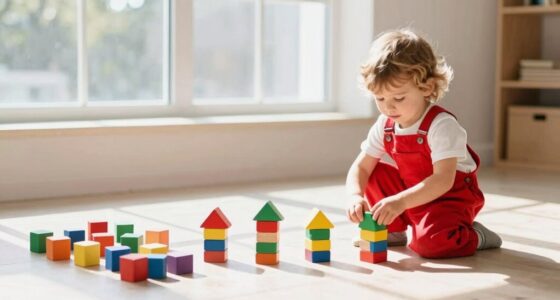
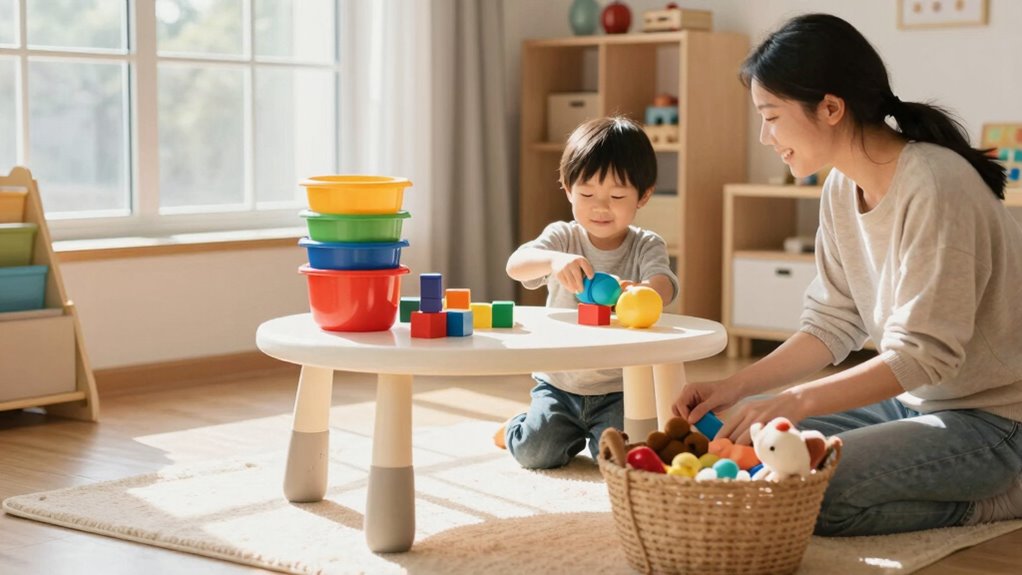
Start by creating designated areas for different toy types. Label bins or shelves with pictures or words so your child can easily identify where each toy belongs. This visual cue helps develop their understanding of toy organization and makes the cleanup process straightforward. You might turn putting away puzzles into a quick puzzle game or see cleaning up action figures as a race to see who can gather the most in a set amount of time. When you frame it as a challenge or a fun activity, your child is more likely to participate *enthusiastically*.
Develop creative routines that turn cleanup into an interactive experience. For example, you could set a timer and challenge your child to clean up all their blocks before it goes off, turning it into a race against the clock. Use upbeat music to make the activity lively and energetic, and encourage your child to dance along as they pick up toys. Incorporating storytelling can also make tidying up more engaging—imagine that their stuffed animals are going to bed or that their toy cars are lining up for a race. These imaginative elements help your child see cleanup time not as a chore, but as a part of their playtime adventure. Additionally, engaging in air fryer cleaning techniques can demonstrate that tidying up extends beyond toys to other household tasks, reinforcing the importance of organization. Incorporating regular exfoliation with glycolic acid can also teach children about the value of routine maintenance for personal care, making the concept of organization more comprehensive. Recognizing that household maintenance involves multiple aspects can help children understand the broad scope of keeping a space orderly. For example, showing them how to clean glass of small stoves can introduce practical lessons on cleanliness and responsibility, making the idea of household chores more tangible and relatable.
As an affiliate, we earn on qualifying purchases.
Frequently Asked Questions
How Can I Encourage My Child to Enjoy Cleanup Time?
You can encourage your child to enjoy cleanup time by using motivation techniques like turning it into a game or setting a timer to make it feel more like fun. Positive reinforcement also works well; praise your child when they help or offer small rewards. Making cleanup a team effort and keeping it short and engaging helps your child develop a positive attitude toward tidying up while feeling accomplished.
What Are Some Age-Appropriate Cleanup Tools for Kids?
Think of cleanup tools as your child’s superhero gear, making tidying up exciting. Age-appropriate tools include lightweight storage solutions like bins or baskets, easy-to-hold brooms, and colorful dustpans for little hands. Turn cleanup into a game by using cleanup games that motivate them. These tools help your child develop independence while making the process fun, transforming chores into a playful adventure rather than a task.
How Do I Handle Cleanup Resistance or Tantrums?
To handle cleanup resistance or tantrums, use motivational techniques like turning cleanup into a game or challenge. Offer positive reinforcement by praising your child when they make an effort, highlighting their progress. Keep your tone upbeat and encouraging, making cleanup feel less like a chore. Setting clear expectations and offering small rewards can also motivate your child. Patience and consistency are key to helping them develop a positive attitude toward tidying up.
Can Cleanup Routines Be Adapted for Different Play Areas?
Think of cleanup routines as a chameleon, adapting seamlessly to different play areas. You can do this by using multifunctional storage options and themed organization, which make cleanup intuitive and fun. For each space, tailor your approach with colorful bins or themed labels that match the play area’s vibe. This way, cleanup becomes a natural extension of play, encouraging independence and keeping your home organized, no matter the zone.
How Long Should Cleanup Sessions Typically Last?
Cleanup sessions should typically last around 5 to 10 minutes, depending on the age and attention span of your child. Timing considerations are important to keep cleanup manageable and not disruptive to play. Incorporate cleanup frequency into your routine, perhaps after each play session or activity, to help your child develop consistent habits. Short, regular cleanup periods work best and prevent messes from becoming overwhelming.
As an affiliate, we earn on qualifying purchases.
Conclusion
By blending play with cleanup, you turn chores into cheerful challenges. Embrace easy, engaging methods to make tidying up feel less like a task and more like a game. With a little creativity, cleanup becomes an enthralling part of your child’s day, cultivating cooperation and confidence. Remember, making mess management a fun-filled, fantastic feature of play fosters freedom from fuss and fuels future friendly, tidy habits. Keep it simple, spirited, and spontaneous!
As an affiliate, we earn on qualifying purchases.
As an affiliate, we earn on qualifying purchases.