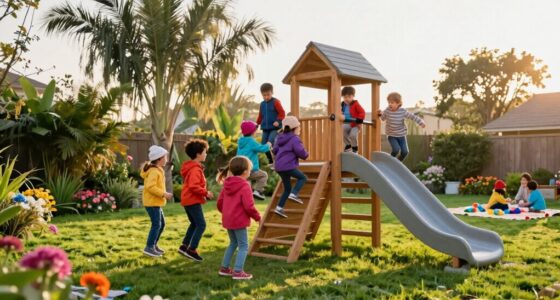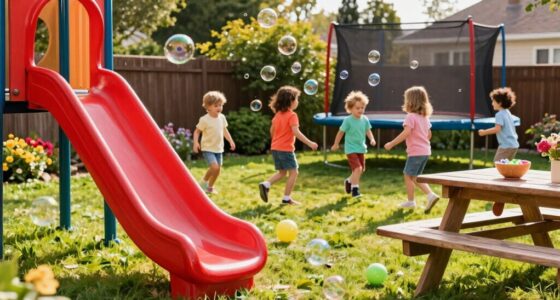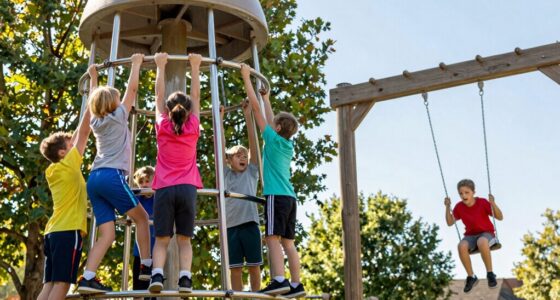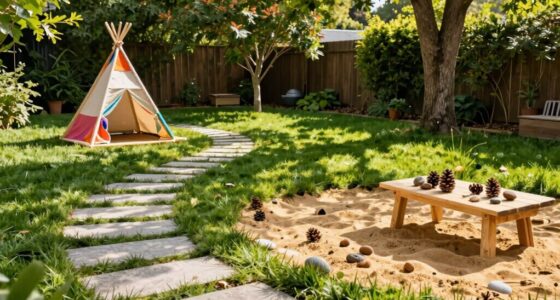
You can easily create simple outdoor play invitations by gathering natural materials like sticks, stones, leaves, and shells, then arranging them in accessible and inviting ways. Set up stations for building towers, creating nature collages, or scavenger hunts, encouraging children to explore and use their imagination. Use colorful items to stimulate visual contrast and add variety. If you keep going, you’ll discover even more ideas to make outdoor play engaging and inspiring for all children.
Open a free Amazon Business account
Business pricing, bulk buying and tax-exempt orders.
As an affiliate, we earn on qualifying purchases.
Key Takeaways
- Arrange natural materials like sticks, stones, and leaves in accessible stations for open-ended exploration and creative building.
- Create simple scavenger hunts using colorful or unique natural items to encourage observation and discovery.
- Set up themed nature collages with collected leaves, flowers, and twigs for sensory art activities.
- Use natural loose parts for construction challenges, such as building towers or bridges with sticks and stones.
- Incorporate storytelling props like shells or pinecones to inspire imaginative outdoor play and language development.
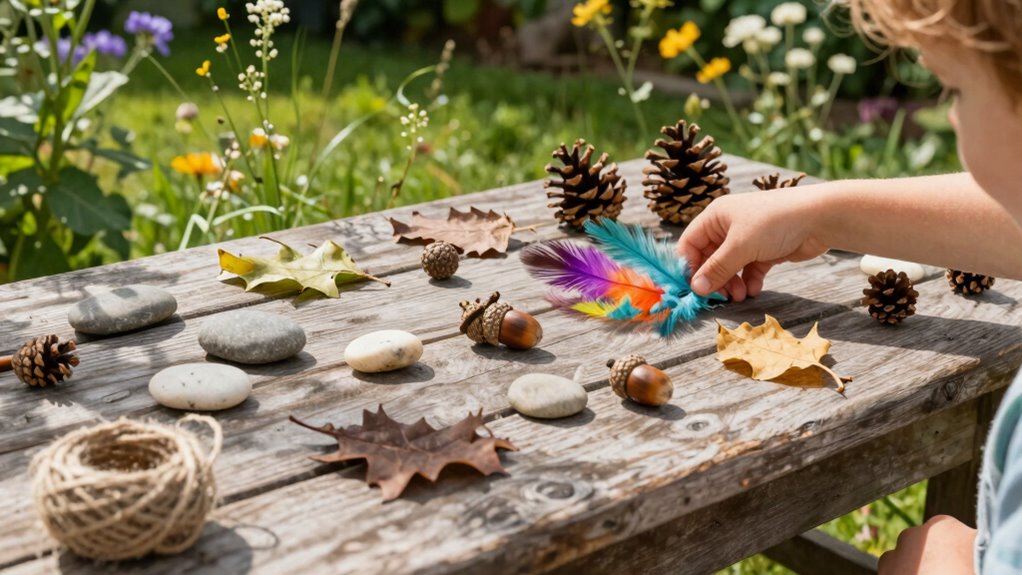
Introducing outdoor play invitations is a wonderful way to encourage children to explore and enjoy the natural world. When you set up simple invitations using natural materials, you give kids the chance to engage with their environment in meaningful ways. Nature exploration becomes more exciting when children have access to loose parts like sticks, stones, leaves, pinecones, and shells. These materials aren’t just ordinary toys; they’re versatile tools that inspire creativity, problem-solving, and discovery. By inviting children to use loose parts in open-ended ways, you foster an environment where their imaginations can flourish, and their curiosity is sparked.
Outdoor invitations with natural materials spark imagination, creativity, and curiosity through open-ended exploration.
You can start by gathering a variety of natural materials and placing them in accessible spots around your outdoor space. For example, create a small “treasure hunt” with different-sized stones or colorful leaves. Encourage children to collect and compare their finds, developing their observation skills while engaging in nature exploration. These loose parts can be turned into building blocks, art supplies, or even storytelling props. The key is to let children decide how to use these items, promoting independence and confidence in their choices. When kids are given the freedom to manipulate loose parts, they learn about shapes, textures, and balance—all while having fun. Incorporating natural materials into play also supports ecological awareness and sustainability from an early age. Additionally, understanding how to arrange these materials considering color accuracy and contrast ratio can help stimulate visual discrimination skills and sensory engagement.
Designing simple outdoor invitations is easy. You might set up a “nature collage” station with a basket of leaves, twigs, and flowers, inviting children to create pictures or patterns. Alternatively, lay out a collection of sticks and stones to inspire a construction challenge—who can build the tallest tower or the strongest bridge? You can also incorporate natural loose parts into more active play, like a scavenger hunt where children search for specific items or a game of “nature bingo.” The possibilities are endless, and all of them revolve around encouraging exploration and hands-on engagement. Additionally, understanding the role of color accuracy and contrast ratio in visual environments can help you arrange materials to better stimulate their senses and visual discrimination skills.
Furthermore, paying attention to the visual environment allows you to create more inclusive and engaging setups that cater to different sensory needs. By keeping the focus on open-ended play with natural materials, you help children develop a deeper connection to the outdoors. They’ll see nature not just as a backdrop but as an active, inspiring part of their learning experience. This approach nurtures their love for the environment and builds essential skills that will serve them well throughout their lives.
natural materials outdoor play set
As an affiliate, we earn on qualifying purchases.
As an affiliate, we earn on qualifying purchases.
Frequently Asked Questions
How Can I Ensure Outdoor Safety During Play?
To guarantee outdoor safety during play, you should start with hazard identification—check for sharp objects, unstable surfaces, or toxic plants. Follow safety guidelines by supervising children closely, setting clear boundaries, and teaching them about safe play. Regularly inspect the area and natural materials for risks. By staying vigilant and proactive, you create a safe environment where kids can enjoy outdoor activities without unnecessary dangers.
What Age Groups Are Best Suited for Natural Materials?
You understand that “the early bird catches the worm,” so natural materials suit a wide age range, from toddlers to early elementary kids. Younger children thrive with sensory exploration and developing fine motor skills through soft leaves, sticks, and stones. Older kids can engage in more complex play, like building or sorting. Natural materials adapt well to different ages, fostering creativity and skill development across the board.
How Often Should Outdoor Play Invitations Be Changed?
You should change outdoor play invitations using natural materials every one to two weeks. Incorporate natural material variety to keep children engaged and excited. Regularly updating the invitations encourages exploration, creativity, and sustained interest. Pay attention to how children interact with the materials, and switch them out when they start to look worn or lose appeal. This way, your play environment remains fresh, stimulating, and inviting for ongoing outdoor adventures.
Can Outdoor Materials Be Reused for Different Activities?
Yes, outdoor materials can definitely be reused for different activities. Using versatile and reusable resources encourages creativity and sustainability in play. You can transform natural materials like sticks, stones, or leaves into various setups, from obstacle courses to art projects. Reusing these versatile materials not only saves money but also helps children learn about resourcefulness and environmental responsibility. Keep exploring ways to repurpose outdoor items for endless play possibilities.
How Do I Encourage Inclusive Play With Natural Materials?
You can turn play into an unstoppable force of inclusion, inspiring every child to join in. Encourage inclusive play by setting up sensory exploration activities with natural materials like leaves, stones, and sticks, inviting children to discover together. Foster cooperative building projects that require teamwork, sharing, and communication. Celebrate diverse ideas and guarantee all children feel valued, creating a vibrant, welcoming environment where everyone’s creativity and curiosity thrive.
As an affiliate, we earn on qualifying purchases.
Conclusion
Remember, the best way to nurture a child’s imagination is by giving them the freedom to explore nature’s treasures. Simple outdoor play invitations with natural materials encourage creativity, curiosity, and joy. As the saying goes, “Nature is the best playground,” so don’t hesitate to set up easy, inviting activities. With just a few natural items, you can create countless opportunities for meaningful play and discovery that will leave lasting memories.
As an affiliate, we earn on qualifying purchases.
As an affiliate, we earn on qualifying purchases.
Flea & tick season Picks
flea and tick prevention
As an affiliate, we earn on qualifying purchases.