
To expand your child’s vocabulary with pretend play toys, actively join their scenarios and introduce relevant words naturally. Use contextual language, describing actions and encouraging your child to narrate. Incorporate trendy toys and accessories that match their interests, and support play with visual aids like pictures or storybooks. Reinforce new words through repetition and varied scenarios, helping your child understand and remember them. Keep exploring these strategies to make learning playful and engaging.
Open a free Amazon Business account
Business pricing, bulk buying and tax-exempt orders.
As an affiliate, we earn on qualifying purchases.
Key Takeaways
- Incorporate themed pretend scenarios that naturally introduce and repeat new vocabulary in context.
- Use trendy and age-appropriate toys to engage interest and facilitate relevant language development.
- Encourage children to describe actions and objects during play to reinforce vocabulary understanding.
- Integrate visual aids like pictures or storybooks to support vocabulary recognition and retention.
- Promote social interactions and role-playing to develop vocabulary through perspective-taking and communication.

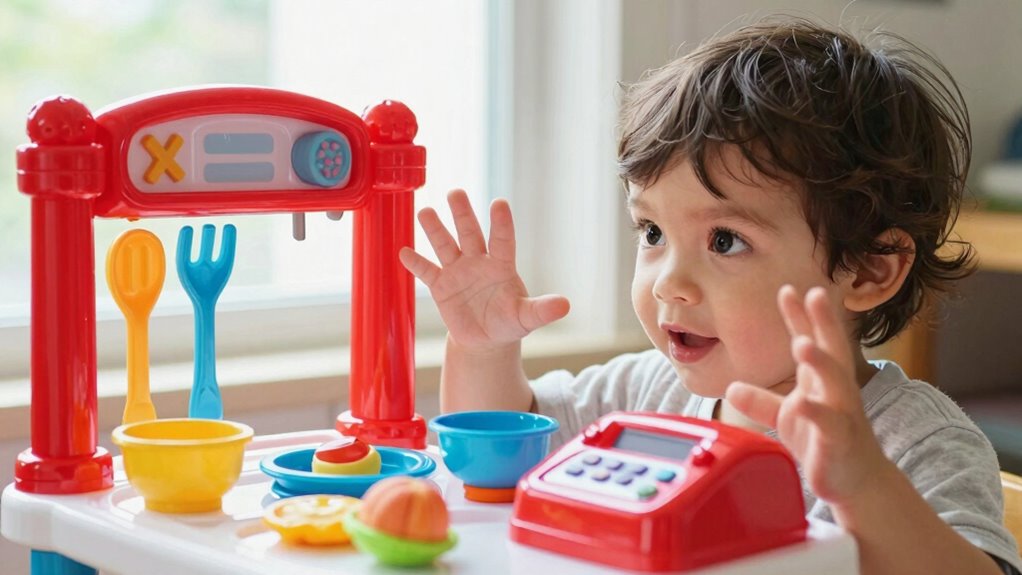
To maximize the benefits, you can actively participate in your child’s pretend play. Join in their scenarios and introduce relevant vocabulary naturally. For example, if they’re playing “doctor,” you might say, “Let’s check your patient’s temperature with this thermometer,” or “Can you find the stethoscope?” By doing so, you model correct word usage and expand their vocabulary without making it feel like a formal lesson. Listen carefully and encourage your child to describe what they’re doing, ask questions, and narrate their actions. This dialogue helps reinforce new words and their meanings, making the learning process more engaging and memorable. Incorporating emerging trends in toys can also enhance the play experience and introduce your child to contemporary themes and concepts. Paying attention to age-appropriate toys ensures that your child remains engaged and challenged at the right level, further supporting vocabulary growth. Using pretend play toys also allows you to target specific vocabulary themes based on your child’s interests. If they love animals, incorporate animal figurines and ask them to identify and describe each one. If they’re into cooking, introduce toy kitchen sets and name different utensils, ingredients, and cooking actions. This targeted approach aligns with the importance of color accuracy in visual learning, making the play more vivid and memorable. Repetition and varied contexts help solidify new words in your child’s mind. Additionally, pretend play naturally supports social skills because it involves role-playing, perspective-taking, and negotiation. Your child learns to understand different viewpoints and develop empathy through these interactions, which are *essential* components of social development. Engaging with trendy and well-designed hair accessories or monochrome outfits can also inspire themed pretend scenarios, making playtime even more exciting and educational. Incorporating visual aids such as pictures or storybooks during play can further reinforce vocabulary and comprehension skills.
As an affiliate, we earn on qualifying purchases.
Frequently Asked Questions
What Age Is Best for Using Pretend Play Toys to Teach Vocabulary?
You can start using pretend play toys to teach vocabulary around ages 2 to 4, when kids are enthusiastic to explore role-playing scenarios. During this period, your child benefits from storytelling techniques, which enhance language development. Encourage them to act out different roles, describe their actions, and create stories, helping expand their vocabulary naturally and enjoyably through imaginative play.
How Can Parents Encourage More Complex Language During Pretend Play?
Want to boost your child’s language skills during pretend play? Start by creating engaging role-playing scenarios that challenge them to describe actions, settings, and feelings vividly. Encourage your child to use descriptive language, asking open-ended questions like “What do you see?” or “How does that feel?” This keeps the play dynamic and pushes them to use more complex vocabulary, making every moment a chance for rich language development.
Are There Specific Pretend Play Toys That Are Most Effective for Vocabulary Growth?
You should choose pretend play toys that inspire role playing scenarios and include themed toy sets, like kitchen or doctor kits. These toys encourage your child to use new words and practice complex language within engaging contexts. When kids act out stories or daily routines, they naturally expand their vocabulary. Themed sets help introduce specific vocabulary related to different professions, activities, or environments, making learning both fun and meaningful.
How Long Should Pretend Play Sessions Last for Optimal Vocabulary Development?
Back in the day, a good hour feels just right for pretend play sessions. You should encourage your child to engage in imaginative storytelling and role-playing scenarios without rushing, allowing ideas to flow naturally. Keep the play focused and fun, aiming for about 20-30 minutes if they seem tired or distracted. Longer sessions may overwhelm, but a well-timed hour fosters rich vocabulary growth and helps your child develop language skills organically.
Can Pretend Play Help Children With Language Delays?
Yes, pretend play can help children with language delays through engaging role play and storytelling. When you encourage them to act out scenarios, they practice new words and sentence structures in a fun, meaningful way. This interactive approach boosts their confidence and comprehension. By creating stories and assigning roles, you foster their expressive language skills, making learning enjoyable and effective for children facing language challenges.
children's vocabulary development toys
As an affiliate, we earn on qualifying purchases.
As an affiliate, we earn on qualifying purchases.
Conclusion
As you watch your child explore the pretend play toys, you’ll see their vocabulary blossom like a garden in full bloom. Every giggle and excited word adds color and life to their language skills. With each imaginative adventure, they’re building a rich vocabulary that will grow stronger with every play session. So, keep encouraging their creativity—soon, their words will paint a vibrant picture of their world, full of endless possibilities.
As an affiliate, we earn on qualifying purchases.
animal figurines for pretend play
As an affiliate, we earn on qualifying purchases.
As an affiliate, we earn on qualifying purchases.
Fall Picks
fall essentials
As an affiliate, we earn on qualifying purchases.