
Focusing on the process in early learning helps you emphasize exploration, creativity, and persistence over just the final product. When you value activities like play and problem-solving, you encourage your child to develop essential skills like resilience and emotional regulation. Active involvement and guiding questions boost their confidence and curiosity. By prioritizing the journey, you help your child build a love for learning that lasts. Keep exploring to discover more ways to nurture growth through the process.
Key Takeaways
- Focusing on the process fosters essential skills like problem-solving, creativity, and emotional regulation.
- Emphasizing the journey encourages perseverance, patience, and a growth mindset.
- Active involvement during play builds confidence and helps children see mistakes as learning opportunities.
- Celebrating efforts and steps nurtures intrinsic motivation and a love for learning.
- Creating a supportive environment through process-oriented learning promotes resilience and lifelong curiosity.
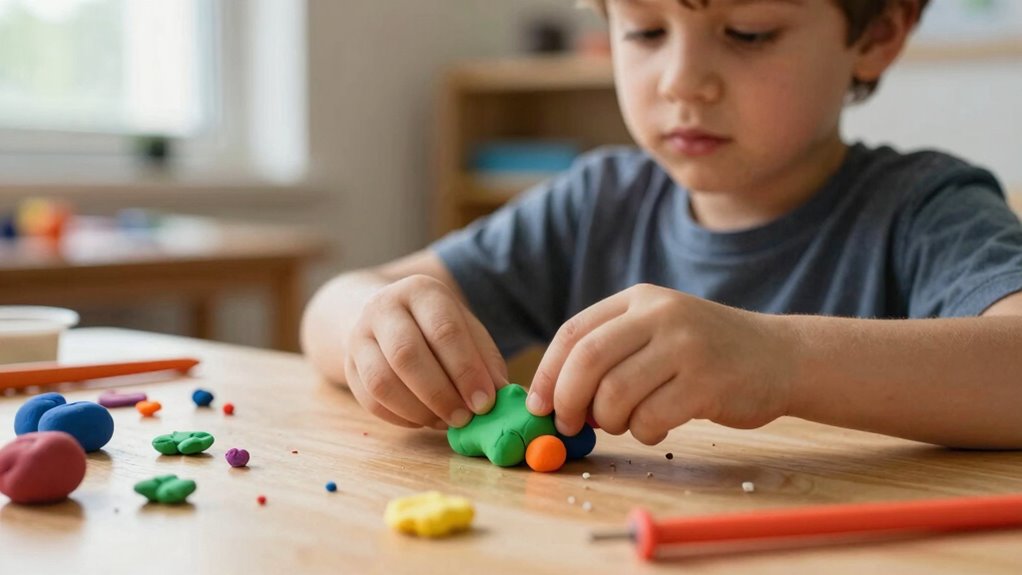
When it comes to early learning, focusing solely on the final product can overlook the true benefits of the process. As a parent, you might be tempted to encourage your child to produce perfect drawings, neat handwriting, or polished projects. However, the real value lies in how they get there—the process they go through during play based learning. Play isn’t just a way for kids to have fun; it’s a vital tool for developing essential skills like problem-solving, creativity, and emotional regulation. When you involve yourself actively in your child’s play, you’re not just observing. You’re guiding, encouraging exploration, and fostering a love of learning that builds confidence and resilience.
Engaging actively in your child’s play nurtures confidence, resilience, and a lifelong love of learning through exploration and guidance.
Your involvement is crucial because it shows your child that learning is important and enjoyable. Instead of focusing on the end result, you can emphasize the experience of discovery. For instance, if your child is building a tower with blocks, praise their problem-solving process rather than how tall the tower becomes. Ask questions that make them think—“What happens if you add one more block?” or “How can you make it more stable?” These questions promote critical thinking and keep them engaged in the learning journey. Your active participation during play based learning helps them see mistakes as part of the process, not failures, fostering perseverance and a growth mindset.
By emphasizing the process, you also help your child develop patience and attention to detail. These qualities are often overlooked when parents only care about the finished product. When your focus is on the steps taken—whether it’s sorting shapes, mixing colors, or storytelling—you’re teaching your child to value effort and persistence. This approach encourages intrinsic motivation, where they learn because they’re genuinely interested, not just to earn praise or rewards. Recognizing that project-based learning involves engaging in meaningful activities can further enhance their understanding of how skills develop through active participation.
Moreover, your involvement as a parent enhances the quality of the learning experience. When you join in, you model curiosity, creativity, and a positive attitude toward challenges. This creates a supportive environment where your child feels safe to explore and take risks. It’s important to remember that the process of learning is just as, if not more, important than the outcome. Celebrating the journey helps foster a lifelong love of learning, builds essential skills, and nurtures a resilient mindset that will serve your child well beyond early childhood. Additionally, understanding the importance of play-based learning can help you create more engaging and meaningful experiences for your child. Recognizing that growth mindset development through exploration and discovery can further enhance your approach to early education.
play-based learning toys for preschoolers
As an affiliate, we earn on qualifying purchases.
As an affiliate, we earn on qualifying purchases.
Frequently Asked Questions
How Can Parents Support Process-Oriented Learning at Home?
You can support process-oriented learning at home by engaging in play-based strategies and simple home activities that focus on exploration rather than outcomes. Allow your child to experiment freely, ask questions, and solve problems without rushing to a finished product. Celebrate their efforts, curiosity, and creativity. This approach encourages a love of learning, helps develop critical thinking skills, and emphasizes the importance of the learning process over the final result.
What Are Common Challenges Teachers Face With Process-Focused Early Education?
You might find that teachers struggle with assessment methods that track progress without focusing solely on products, making it hard to value the learning process. Curriculum design can also be challenging, as it needs to prioritize exploration and reflection rather than just outcomes. Balancing these elements requires ongoing adjustments, patience, and a solid understanding that fostering curiosity and growth is more important than immediate results.
How Does Process-Based Learning Impact Long-Term Academic Success?
Process-based learning boosts long-term academic success by strengthening your child’s cognitive development and fostering creative exploration. When you focus on the learning journey, your child develops critical thinking, problem-solving skills, and a love for discovery that lasts a lifetime. This approach encourages curiosity and resilience, helping them adapt to new challenges. Ultimately, they build a strong foundation that supports continued growth, academic achievement, and a lifelong passion for learning.
Are There Specific Age Groups That Benefit More From Process-Oriented Methods?
Like a budding tree reaching for the sun, young children thrive with process-oriented methods. You’ll find that children in the preschool and early elementary years benefit most, as these stages are rich with developmental milestones. Using age-specific strategies, you nurture curiosity and resilience, facilitating growth. Emphasizing the journey over the destination helps kids build skills that serve as strong roots for lifelong learning and adaptation.
How Can Schools Measure Success in Process-Driven Early Learning Programs?
You can measure success in process-driven early learning programs through assessment metrics that focus on children’s engagement, curiosity, and problem-solving skills. Observe how they explore and interact with activities, and document their growth over time. Incorporate these insights into curriculum development to tailor experiences that support ongoing learning. Regularly evaluating these metrics helps you guarantee the process fosters critical thinking and creativity, rather than just the final product.
problem-solving activity kits for kids
As an affiliate, we earn on qualifying purchases.
As an affiliate, we earn on qualifying purchases.
Conclusion
As you watch a child explore, notice how their tiny hands grasp, rotate, and discover. It’s the process—the messy, joyful journey—that shapes their understanding, not just the final outcome. Imagine each moment as a brushstroke on a vibrant canvas, where the colors blend and swirl. In this dance of discovery, it’s the process that truly sparks growth, turning curious steps into confident leaps. Embrace the journey, and watch your little one flourish.
children's creative art supplies
As an affiliate, we earn on qualifying purchases.
As an affiliate, we earn on qualifying purchases.
As an affiliate, we earn on qualifying purchases.