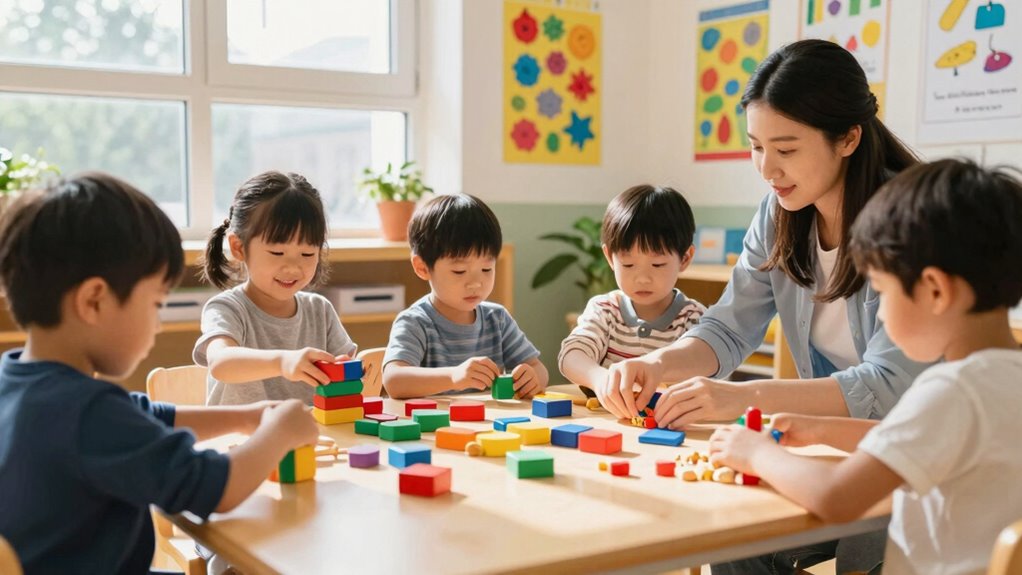

You’ll find that young children learn best with hands-on play because it actively engages their senses, helping them understand textures, shapes, and sizes through touch and manipulation. This type of play also builds fine motor skills needed for writing and other tasks. Active participation boosts brain development, making new information more memorable. Using simple, everyday objects for play keeps learning accessible and fun. Keep exploring to discover even more ways hands-on play supports your child’s growth.

Get health and wellness essentials delivered free with Prime
- Fast, free delivery on millions of items
- Prime Video, Amazon Music and more included
- Member-only deals all year
Key Takeaways
- Hands-on play engages multiple senses, enhancing understanding and retention of new information.
- Physical manipulation of objects develops fine motor skills essential for future tasks.
- Active involvement promotes problem-solving, creativity, and cognitive growth more effectively than passive learning.
- Sensory exploration builds neural connections that support overall brain development.
- Using simple, everyday materials encourages natural curiosity and ongoing developmental progress.
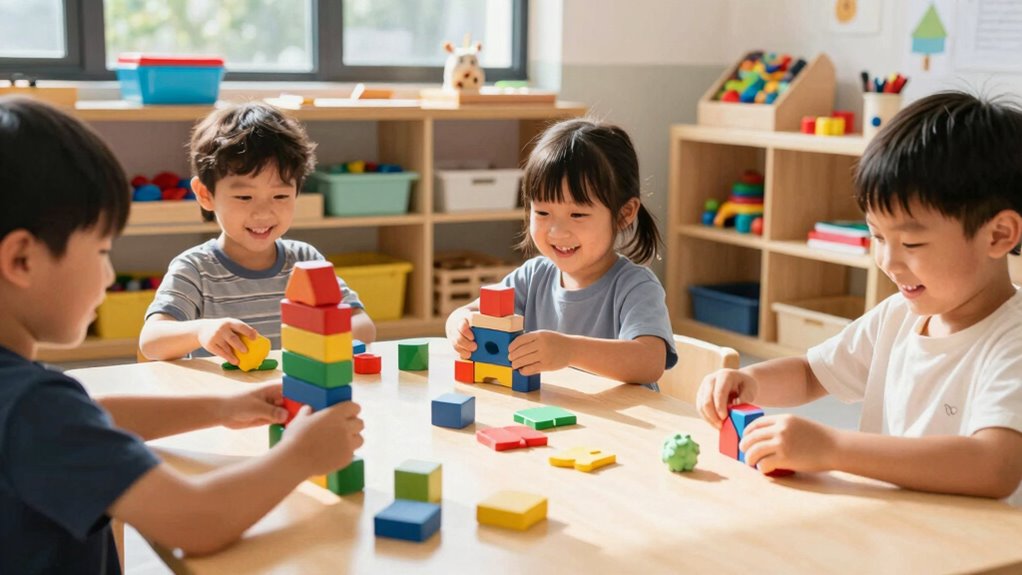
Have you ever watched a young child enthusiastically explore a new toy or activity? It’s a lively scene that highlights how children learn best through hands-on play. When children get involved physically, they’re engaging in sensory exploration, which is essential for their development. Touching, feeling, and manipulating objects help them understand different textures, shapes, and sizes. This kind of exploration sparks curiosity and deepens their understanding of the world around them. It’s not just about fun — it’s about building connections in their brain through active engagement.
Watching children explore toys sparks curiosity and builds brain connections through active, hands-on play.
As your child manipulates toys or materials, they’re also honing their fine motor skills. These skills involve the small muscles in their fingers, hands, and wrists, which are fundamental for everyday tasks like writing, buttoning, and drawing. When children grasp a crayon, pick up small objects, or fit pieces together, they strengthen these muscles. This physical activity is indispensable because it lays the foundation for more complex skills later on. The more opportunities they have to practice these movements, the more precise and coordinated their actions become. That’s why hands-on play is so effective — it combines the development of fine motor skills with sensory exploration, creating a dual benefit for your child’s growth.
You might notice that children learn best when they’re actively involved in what they’re doing. Instead of passive learning through listening or watching, hands-on activities allow them to experiment and discover on their own. For example, building with blocks not only develops their motor control but also encourages problem-solving and spatial awareness. These activities make learning tangible and immediate, which helps children retain information better. Incorporating natural materials into play can further enhance their sensory experiences and connect them with the environment. Additionally, engaging in hands-on play can stimulate brain regions involved in sensory integration, which is crucial for overall cognitive development. Research shows that such activities can also promote neural pathways associated with learning and memory, making these experiences even more valuable.
Encouraging hands-on play doesn’t mean you need complicated or expensive toys. Simple everyday objects—like pasta, clay, or fabric scraps—can serve as excellent tools for sensory exploration and fine motor practice. The key is to provide opportunities for your child to touch, manipulate, and explore freely. When you do, you’re nurturing their natural curiosity and supporting essential developmental milestones. Overall, hands-on play is a powerful, enjoyable way to promote learning, motor development, and sensory growth in young children.
As an affiliate, we earn on qualifying purchases.
Frequently Asked Questions
How Does Hands-On Play Influence Long-Term Academic Success?
Hands-on play considerably boosts your child’s long-term academic success by enhancing cognitive development and critical thinking skills. When they engage actively with materials, they learn to solve problems, make connections, and think creatively. This active involvement helps them retain information better and develop a love for learning. By fostering curiosity and exploration through hands-on activities, you set a strong foundation for their future educational achievements and lifelong learning habits.
Are There Specific Types of Play Better for Different Age Groups?
Ever wonder if specific play types suit different ages? For toddlers, sensory exploration with textured toys boosts fine motor skills. Preschoolers benefit from imaginative play to develop social skills and creativity. For older children, problem-solving activities like puzzles enhance critical thinking. Tailoring play to age guarantees maximum engagement and learning. So, yes—matching play types to age groups optimizes development and keeps children excited about learning!
How Can Parents Encourage Safe Hands-On Exploration at Home?
You can encourage safe hands-on exploration by setting up sensory activities that are age-appropriate, like textured bins or playdough, to boost fine motor skills. Always supervise your child closely to guarantee safety, and choose non-toxic, child-friendly materials. Create a dedicated play space that’s free of hazards, and encourage curiosity by asking questions and exploring alongside them. This way, your child learns confidently through tactile experiences.
What Are Common Challenges in Implementing Hands-On Play?
You might face challenges like ensuring playground safety and managing sensory exploration. Kids can get hurt on unsafe equipment or become overwhelmed by too many stimuli. To overcome these, supervise closely, choose age-appropriate play areas, and set clear boundaries. Encourage safe sensory exploration by providing suitable materials and monitoring reactions. With patience and mindful planning, you can create a balanced environment that promotes learning through hands-on play while prioritizing safety.
How Does Hands-On Play Support Emotional Development in Children?
Did you know that hands-on play can boost emotional awareness in children by 50%? When you encourage tactile activities, kids learn to identify and express feelings better, fostering emotional understanding. Hands-on play also promotes self-regulation, as children practice managing impulses during engaging activities. By supporting these emotional skills through play, you help your child build resilience, empathy, and confidence, setting a strong foundation for healthy relationships and personal growth.
fine motor skill development toys
As an affiliate, we earn on qualifying purchases.
As an affiliate, we earn on qualifying purchases.
Conclusion
So, next time you see a child immersed in messy, hands-on play, remember it’s not just chaos—it’s a gateway to learning. Unlike quiet worksheets or passive screens, their messy experiments and tactile adventures build skills and spark curiosity. It’s the difference between watching a seed sit still and witnessing it sprout into a vibrant plant. Embrace the mess, because in that chaos, your child finds the joy and growth that no textbook can provide.
educational building blocks for children
As an affiliate, we earn on qualifying purchases.
As an affiliate, we earn on qualifying purchases.
As an affiliate, we earn on qualifying purchases.
Cold & flu season Picks
humidifiers
As an affiliate, we earn on qualifying purchases.