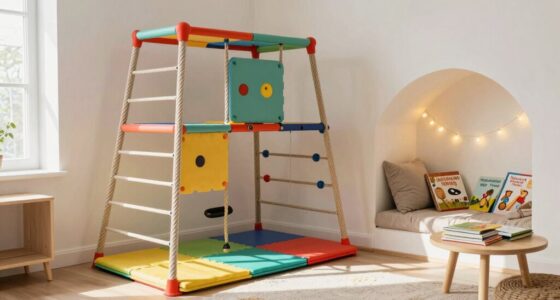
Early childhood play helps you nurture problem-solving skills that kids will use later in life. Through open-ended activities like building or role-playing, children learn to think creatively, experiment, and handle mistakes as part of learning. Social interactions during play teach patience, empathy, and teamwork, essential for future collaboration. Imaginative scenarios boost flexibility and resilience, preparing kids to face complex challenges confidently. Keep following this path to uncover ways play shapes lifelong skills for your child’s success.

Get health and wellness essentials delivered free with Prime
- Fast, free delivery on millions of items
- Prime Video, Amazon Music and more included
- Member-only deals all year
Key Takeaways
- Play promotes critical thinking through exploration, experimentation, and trial-and-error, laying the foundation for problem-solving skills.
- Group play develops social-emotional skills like sharing, negotiating, and resolving conflicts, essential for collaborative problem-solving.
- Imaginative scenarios foster cognitive flexibility, adaptability, and resilience, preparing children for complex challenges.
- Supportive play environments encourage confidence, creativity, and persistence, key traits of effective future problem solvers.
- Outdoor and natural play enhance environmental awareness and resilience, contributing to well-rounded problem-solving abilities.
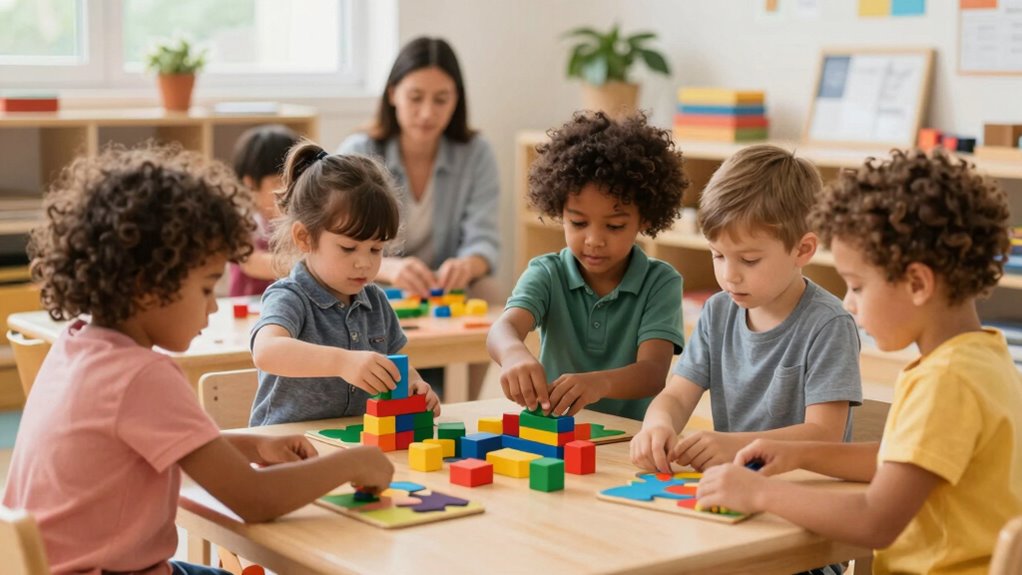
Have you ever wondered how the playful moments of childhood shape the problem-solving skills of the future? It’s fascinating to realize that the games and activities kids engage in aren’t just fun—they’re building blocks for critical thinking and resilience. Play-based learning, in particular, plays an essential role in nurturing these skills. When children explore, experiment, and invent during play, they’re developing the ability to analyze situations, think creatively, and adapt to new challenges. These experiences teach kids to approach problems with curiosity rather than frustration, laying a foundation for effective problem-solving later in life.
Playful childhood experiences build critical thinking, creativity, and resilience for lifelong problem-solving success.
As you watch children play, you notice more than just their immediate enjoyment. They’re also practicing important social-emotional skills. Social emotional development is fundamental because it helps kids understand their own feelings and those of others. When children participate in group play, they learn to negotiate, share, and resolve conflicts. These interactions teach patience and empathy, skills that are indispensable for collaborative problem-solving. The ability to manage emotions, especially when faced with setbacks or disagreements, is what enables children to approach problems calmly and persistently.
In a play-based learning environment, children often face open-ended scenarios that push them to think critically. For example, building a tower with blocks or solving a puzzle requires planning, trial and error, and adjusting strategies. These activities foster a mindset that embraces challenge and encourages perseverance. They learn that mistakes are part of the process, which is a fundamental lesson for future problem-solving. Additionally, play allows children to take risks in a safe space, promoting confidence in their ability to find solutions. Recognizing the importance of play-based learning can lead to more intentional and supportive teaching practices that enhance these developmental benefits.
You might notice that children who engage in rich, imaginative play often develop better cognitive flexibility. When kids pretend to be explorers or scientists, they’re practicing abstract thinking and hypothesis testing, skills that directly translate into academic and real-world problem-solving. Plus, because play is inherently enjoyable, children are more motivated to persist through difficulties, cultivating resilience and a growth mindset. All these experiences contribute to their capacity to analyze complex situations and come up with innovative solutions. Furthermore, understanding the role of play in development helps caregivers and educators create more effective learning environments that support these vital skills.
In essence, play isn’t just a way for children to pass the time—it’s a powerful tool for shaping future problem solvers. Through play-based learning and social-emotional development, children acquire the critical skills they’ll need to navigate the complexities of life with confidence and creativity. By supporting their playful exploration, you’re helping them build a solid foundation for success that lasts well beyond childhood. Additionally, incorporating natural and outdoor elements into play environments can further enhance their overall development by promoting biodiversity and environmental awareness.
open-ended building blocks for kids
As an affiliate, we earn on qualifying purchases.
As an affiliate, we earn on qualifying purchases.
Frequently Asked Questions
How Does Play Influence Brain Development in Early Childhood?
Play influences your child’s brain development by strengthening neural pathways, which are essential for learning and thinking. As your child explores and interacts during play, their cognitive growth accelerates, helping them solve problems and adapt to new situations. Active play stimulates brain regions responsible for creativity, memory, and social skills. By encouraging play, you’re supporting your child’s mental development, laying a strong foundation for future learning and problem-solving abilities.
What Types of Play Activities Best Promote Problem-Solving Skills?
Sure, puzzle games and role playing are the best at promoting problem-solving skills. Ironically, simple activities like puzzles challenge your child’s thinking and develop their logic, while role playing fosters creativity and strategic planning. These activities encourage kids to think critically, adapt to new situations, and solve problems independently. By engaging in these playful tasks, your little one builds essential skills that will serve them well in future challenges.
Are There Specific Play Strategies for Children With Developmental Delays?
You can support children with developmental delays through therapeutic play and adapted activities tailored to their needs. Use engaging, hands-on tasks that promote communication, motor skills, and problem-solving. Incorporate routines and visual cues to make activities accessible. By creating a safe, encouraging environment, you help these children develop confidence and skills that will serve them well in future problem-solving situations, fostering growth at their own pace.
How Can Parents Encourage Creative Play at Home?
You can encourage creative play at home by providing open-ended materials like art supplies, dress-up clothes, and building blocks. Foster Imaginative Exploration by asking open questions and joining in their play. Support Creative Expression by giving them freedom to invent stories and scenarios. Create a safe, encouraging environment where they feel comfortable experimenting and expressing themselves, helping build essential problem-solving skills for the future.
What Role Does Social Play Have in Developing Problem-Solving Abilities?
You might think social play is just fun, but it actually sharpens problem-solving skills. When you engage your child in peer collaboration, they learn to navigate conflicts and negotiate solutions. Ironically, emotional regulation during these interactions helps them stay calm and focused, turning social chaos into opportunities for growth. This dynamic process fosters resilience and critical thinking, laying a solid foundation for tackling future challenges confidently and creatively.
As an affiliate, we earn on qualifying purchases.
Conclusion
By engaging in early childhood play, you lay the foundation for future problem solvers, much like planting seeds that grow into strong, resilient trees. Play nurtures creativity, critical thinking, and social skills—tools essential for tackling life’s challenges. When you support playful learning now, you’re equipping children to navigate complex problems with confidence and ingenuity. Just as a well-tended garden flourishes, so too will your child’s ability to solve problems flourish through the power of play.
As an affiliate, we earn on qualifying purchases.
puzzle and problem-solving toys for preschoolers
As an affiliate, we earn on qualifying purchases.
As an affiliate, we earn on qualifying purchases.
Fall Picks
fall essentials
As an affiliate, we earn on qualifying purchases.