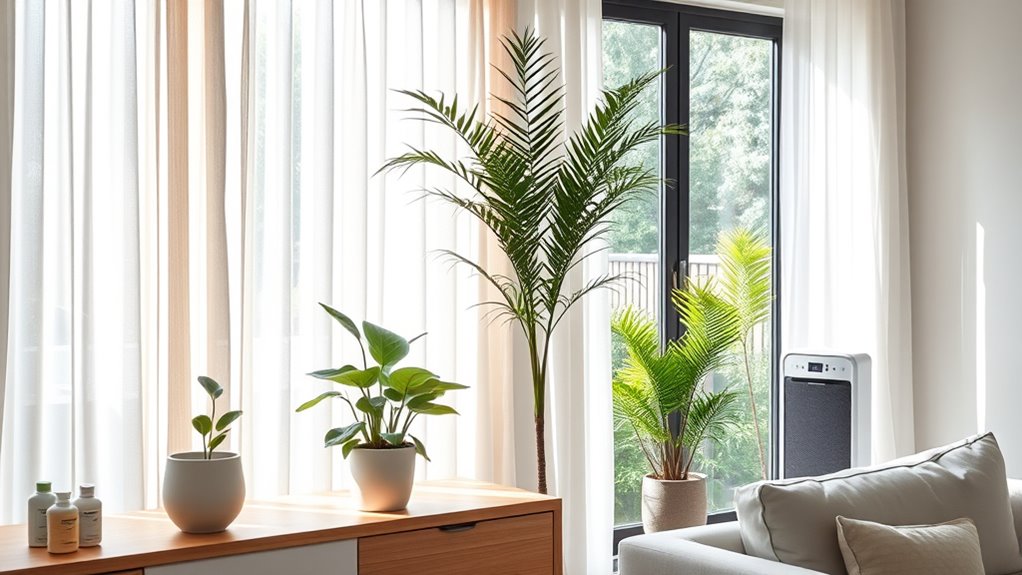

To improve your indoor air quality and reduce harmful chemicals, opt for low-VOC or VOC-free furniture, paints, and cleaning supplies. Guarantee proper ventilation by opening windows or using exhaust fans regularly, and control indoor humidity to prevent mold growth. Using an air purifier with activated carbon filters can help remove chemical vapors and gases effectively. Taking these steps can make your indoor environment safer; keep exploring for more tips to create a healthier home.
Key Takeaways
- Use air purifiers with activated carbon filters to adsorb and reduce chemical vapors and VOCs indoors.
- Choose low-VOC or VOC-free furniture, paints, and cleaning products to minimize chemical emissions.
- Ensure proper ventilation by regularly opening windows or using exhaust fans to circulate fresh air.
- Control indoor humidity levels to prevent mold growth, which can worsen air quality.
- Combine multiple strategies, including air filtration and product choices, for comprehensive chemical reduction at home.

Have you ever wondered how the air inside your home affects your health? It’s easy to overlook, but indoor air quality plays a vital role in your overall well-being. One of the most common concerns is exposure to airborne chemicals, especially from chemical off gassing. This occurs when new furniture, carpets, paint, or household items release volatile organic compounds (VOCs) into the air. These chemicals can cause headaches, dizziness, respiratory issues, or even longer-term health problems if inhaled regularly. Fortunately, understanding how to improve indoor air quality can considerably reduce your exposure and protect your health.
When it comes to filtering out these harmful chemicals, many turn to air purifiers. But how effective are they really? The truth is, air purifier effectiveness varies depending on the model, filtration technology, and your specific needs. HEPA filters are excellent at capturing particulate matter like dust, pollen, and pet dander, but they aren’t designed to remove gases or chemical vapors. To combat chemical off gassing, you need an air purifier equipped with activated carbon filters or other gas-absorption technologies. These specialized filters adsorb VOCs and other airborne chemicals, markedly reducing their concentration in your indoor air. Keep in mind that not all air purifiers are created equal; investing in one with proven gas filtration capabilities guarantees you’re tackling chemical off gassing effectively.
Reducing chemical off gassing starts with choosing low-VOC or VOC-free products whenever possible. Look for furniture, paints, and cleaning supplies labeled as low or zero VOC. Proper ventilation is also essential—open windows regularly or use exhaust fans to allow fresh air to circulate and carry away indoor pollutants. Additionally, controlling humidity levels helps prevent mold growth, which can worsen indoor air quality. Incorporating indoor air quality improvements like air purifiers with activated carbon filters can work alongside these measures, creating a cleaner, healthier environment.
Top picks for "indoor quality reduc"
Open Amazon search results for this keyword.
As an affiliate, we earn on qualifying purchases.
Frequently Asked Questions
How Do Indoor Plants Improve Air Quality?
Indoor plants improve air quality through natural filtration, making your home healthier. They absorb harmful chemicals like benzene and formaldehyde from the air, effectively reducing pollutants. The plant benefits include increased oxygen levels and humidity, which can lessen respiratory issues. By adding plants to your space, you actively boost indoor air quality, creating a cleaner, fresher environment for you and your family.
What Are the Best Air Purifiers for Home Use?
Think of your home as Pandora’s box—air purifiers are your hope. The best options include HEPA filters for fine particles, activated carbon for odors, and UV models for germs. Choose a purifier type suited to your needs, and remember, regular filter maintenance keeps them effective. You’ll breathe easier knowing you’ve selected a device that cleans the air efficiently and keeps your home healthier.
Are There Natural Ways to Remove Indoor Chemicals?
Yes, you can use natural remedies to reduce indoor chemicals. Plants like spider plants, snake plants, and peace lilies help with chemical absorption, improving air quality. Regularly ventilate your home to let in fresh air, and use natural cleaning products to minimize chemical buildup. Also, avoid synthetic air fresheners and opt for natural alternatives like essential oils. These steps support a healthier indoor environment by naturally removing harmful chemicals.
How Often Should I Test My Home’s Air Quality?
Think of your home’s air as a silent guardian—sometimes it needs checking. You should conduct air quality testing and home air monitoring at least once every three to six months, especially if you notice odors, allergies, or symptoms. Regular testing keeps you ahead of harmful chemicals. Staying vigilant helps make certain your indoor environment stays safe and healthy, making every breath you take more reassuring.
Can Cleaning Products Affect Indoor Air Safety?
Cleaning products can greatly affect indoor air safety because they release volatile compounds and chemical emissions into the air. When you use harsh cleaners or disinfectants, these chemicals can linger, potentially causing respiratory issues or allergic reactions. To protect yourself, opt for natural or low-emission cleaning options, ensure proper ventilation during and after cleaning, and regularly air out your home to reduce exposure to harmful chemical emissions.
Conclusion
By taking simple steps to improve your indoor air quality, you’re opening the windows to a healthier home. Think of your space as a garden—regularly tending to it keeps harmful chemicals at bay and lets fresh, clean air flourish. Remember, every small change you make is like planting a seed for better health. So, breathe easy knowing your efforts are creating a sanctuary where wellness can truly thrive.