
To prevent and control waterborne diseases, guarantee your water is properly treated through boiling, chlorination, or filtration. Practice good sanitation by using safe toilets and disposal methods to keep waste away from water sources. Maintain personal hygiene with regular handwashing to reduce germ spread. Community initiatives, like water filters and hygiene education, also play a crucial role. For effective strategies to protect your health, explore more about water safety and disease prevention.
Key Takeaways
- Implement proper water treatment methods like boiling, chlorination, and filtration to eliminate pathogens.
- Promote sanitation practices such as safe waste disposal and use of clean toilets to prevent water contamination.
- Encourage regular handwashing with soap and community education on hygiene to reduce disease spread.
- Maintain clean water sources and surroundings to prevent germ breeding and environmental contamination.
- Support government policies and infrastructure development for sustainable water safety and sanitation improvements.
Waterborne Diseases
Have you ever wondered how contaminated water can pose serious health risks? When water isn’t properly treated or maintained, it becomes a breeding ground for germs that can cause a range of waterborne diseases. To protect yourself and your community, understanding the importance of water treatment and sanitation practices is essential. Water treatment involves processes that remove or inactivate harmful pathogens, ensuring that water is safe to drink. This can include boiling, chlorination, filtration, or using chemical disinfectants. These steps are necessary because they eliminate bacteria, viruses, and parasites that cause illnesses like cholera, dysentery, and typhoid. When you and others prioritize proper water treatment, you remarkably reduce the chances of disease transmission through contaminated water sources. Implementing seasonal checklists for water safety and maintenance can further help prevent outbreaks.
Sanitation practices form the backbone of preventing waterborne diseases. Proper sanitation means managing human waste effectively, preventing it from contaminating water supplies. This involves using safe toilets, disposing of waste correctly, and maintaining clean environments around water sources. If sanitation practices are neglected, waste can seep into groundwater or runoff into lakes and rivers, infecting the water you rely on daily. By implementing good sanitation practices, you help break the cycle of contamination, making water safer for everyone. It’s also essential to keep personal hygiene in check—regular handwashing with soap, especially after using the toilet and before preparing food, further cuts down the risk of spreading germs.
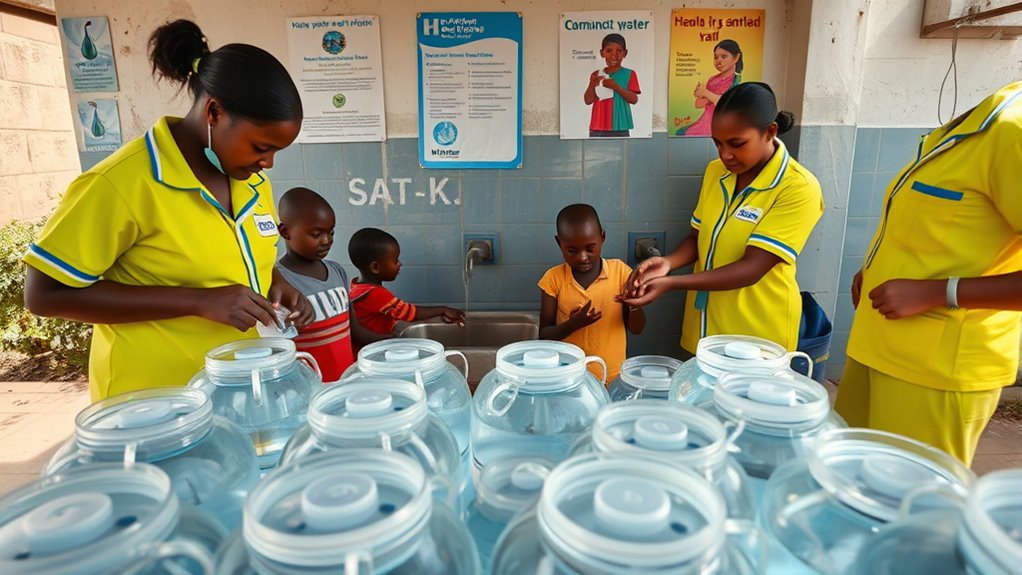
Community efforts are equally important. Encouraging local initiatives for water treatment and sanitation can create a safer environment for all. Installing community water filters, promoting the use of latrines, and educating residents about hygiene practices can drastically decrease the spread of waterborne illnesses. Governments and health organizations often emphasize these measures because they’re cost-effective and sustainable ways to improve public health. Remember, clean water isn’t just about avoiding illness; it’s about ensuring a healthier, more productive society. Your role in advocating for proper sanitation and water treatment can influence policies, improve infrastructure, and foster healthier habits.
water purification boiling kit
As an affiliate, we earn on qualifying purchases.
As an affiliate, we earn on qualifying purchases.
Frequently Asked Questions
How Can Communities Improve Water Sanitation Infrastructure Effectively?
To improve water sanitation infrastructure effectively, you should prioritize community engagement to understand local needs and encourage ownership. Securing adequate infrastructure funding is essential for building and maintaining systems. Collaborate with local authorities, NGOs, and residents to develop sustainable solutions. Educate the community about proper sanitation practices, ensuring long-term use and maintenance. With active participation and proper funding, your community can achieve safer, cleaner water for all residents.
What Are the Latest Vaccines Available for Waterborne Diseases?
You should know that recent vaccine development efforts have led to effective vaccines like the oral cholera vaccine, which is part of immunization programs worldwide. These programs help protect communities from waterborne diseases by increasing vaccine coverage. Staying updated on the latest vaccines guarantees you can advocate for proper immunization, reducing disease spread. Combining vaccination with improved sanitation creates a thorough approach to safeguarding public health against waterborne illnesses.
How Does Climate Change Influence Waterborne Disease Outbreaks?
Climate change is like a storm brewing on the horizon, increasing the climate impact on waterborne disease spread. Rising temperatures and unpredictable rainfall create perfect conditions for pathogens to flourish, contaminating water sources. Warmer waters accelerate bacterial growth, while floods overwhelm sanitation systems, making outbreaks more common and harder to control. You can see how climate impact directly influences the frequency and severity of waterborne disease outbreaks, putting communities at greater risk.
Are There Any Natural Remedies for Waterborne Illnesses?
You can try herbal remedies like ginger or garlic, which have antibacterial and immune-boosting properties. Dietary supplements such as probiotics may help restore gut health affected by waterborne illnesses. However, it is crucial to remember that these natural remedies are not substitutes for medical treatment. Always consult a healthcare professional if you suspect infection, and use herbal remedies and supplements as complementary options alongside proper medical care.
What Role Do Personal Hygiene Practices Play in Prevention?
It’s no coincidence that your personal hygiene practices are vital in preventing waterborne diseases. When you prioritize handwashing efficacy and follow proper techniques, you considerably reduce pathogen transmission. Personal hygiene education empowers you to understand these practices better, making it easier to stay healthy. Regular handwashing, safe sanitation, and clean water habits create a strong barrier against illnesses, proving that your daily routines directly impact your health and community safety.
home water filter system
As an affiliate, we earn on qualifying purchases.
As an affiliate, we earn on qualifying purchases.
Conclusion
Remember, the fight against waterborne diseases isn’t over. Every step you take—boiling water, proper sanitation, and staying informed—can save lives. But what if the next outbreak is just around the corner, hidden in plain sight? Stay vigilant, because the true challenge lies ahead. Your actions today could be the difference between safety and catastrophe tomorrow. Are you prepared to face what’s coming? The future of safe water depends on you.
chlorination tablets for water
As an affiliate, we earn on qualifying purchases.
As an affiliate, we earn on qualifying purchases.
personal handwashing soap
As an affiliate, we earn on qualifying purchases.
As an affiliate, we earn on qualifying purchases.