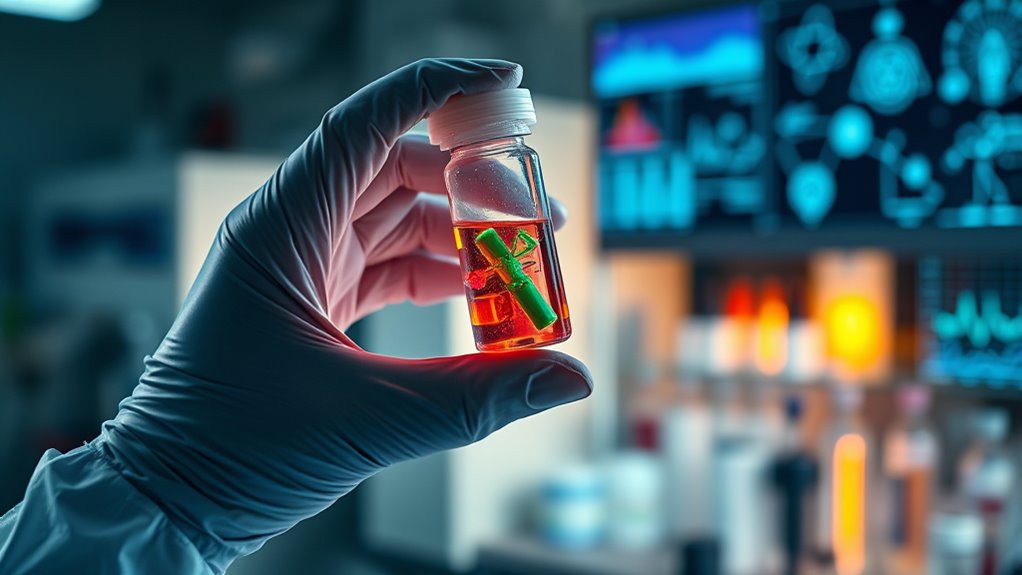

Biomonitoring tracks environmental toxins in your body by measuring chemicals or their metabolites in blood, urine, or tissues. It provides precise, real-time data on your internal chemical levels, revealing actual exposure rather than just environmental estimates. This approach helps identify individual differences in how you process toxins and assesses your overall chemical burden. If you want to understand how this powerful tool can protect your health, keep exploring the details behind biomonitoring techniques.
Listen free for 30 days with Audible
Thousands of audiobooks and originals — cancel anytime.
As an affiliate, we earn on qualifying purchases.
Key Takeaways
- Biomonitoring involves measuring chemicals or their metabolites in biological samples to assess human exposure to environmental toxins.
- It provides direct, real-time data on internal chemical levels, enabling accurate exposure assessment.
- Biomonitoring helps identify populations at higher risk and informs public health guidelines and regulations.
- Combining biomonitoring with genetic data enhances understanding of individual susceptibility to toxins.
- This method supports tracking long-term health impacts and evaluating the effectiveness of exposure mitigation strategies.

Have you ever wondered how scientists track your exposure to environmental chemicals? It’s a fascinating process that combines biology, chemistry, and technology to gather essential information about how toxins enter and affect your body. One of the key methods they use involves identifying genetic markers, which are specific sequences in your DNA that can reveal how your body responds to certain environmental exposures. These markers help researchers understand individual susceptibility and the long-term effects of toxins, making exposure assessment more accurate and personalized. By analyzing genetic markers, scientists can determine whether you have a genetic predisposition to metabolize or retain certain chemicals, providing a clearer picture of potential health risks.
Genetic markers reveal how your body responds to environmental chemicals, aiding personalized exposure assessment and risk prediction.
In biomonitoring, exposure assessment plays a fundamental role. It involves measuring chemicals or their metabolites directly in your biological samples, such as blood, urine, or tissues. This approach offers a real-time snapshot of what’s actually inside your body, rather than relying on environmental measurements alone. For example, if you’ve been exposed to pesticides, biomonitoring can detect specific pesticide residues or their breakdown products in your urine, giving concrete evidence of exposure levels. This data helps scientists establish links between environmental sources of toxins and potential health outcomes, making it easier to identify populations at higher risk and to develop targeted public health interventions.
The process of exposure assessment isn’t just about detecting chemicals; it’s also about understanding how much, how often, and for how long you’ve been exposed. This involves collecting detailed information about your environment, lifestyle, and occupation. Combining these details with biomonitoring results allows for a thorough evaluation of your overall chemical burden. Researchers can then assess whether the detected levels are within safe limits or if they pose potential health hazards. This information is essential for developing guidelines, regulations, and recommendations to protect public health.
Furthermore, advances in genetic markers have enhanced the accuracy of exposure assessment by helping scientists account for individual differences in susceptibility. Some people metabolize toxins faster or slower depending on their genetic makeup, which influences how chemicals impact their health. By integrating genetic data with biomonitoring results, researchers can better predict who might be at greater risk of adverse effects and tailor interventions accordingly. This synergy of genetic markers and exposure assessment makes biomonitoring a powerful tool in understanding and mitigating environmental health risks, empowering you and others with knowledge about what’s in your body and how it might affect your well-being.
As an affiliate, we earn on qualifying purchases.
Frequently Asked Questions
How Accurate Are Biomonitoring Test Results?
Biomonitoring test results are generally accurate, but measurement reliability can vary depending on the specific test and laboratory methods used. While most tests provide reliable data, false positives might occur, leading you to believe you’re exposed when you’re not. To guarantee accuracy, it’s crucial to use validated methods and interpret results cautiously, often in conjunction with other health assessments. Always discuss your results with a healthcare professional for proper understanding.
Can Biomonitoring Detect All Types of Toxins?
Biomonitoring can’t detect all types of toxins due to limitations in current methods and technology. Some emerging toxins might escape detection because they’re present in very low levels or aren’t well understood yet. However, advancements in emerging technologies are improving detection capabilities, allowing for broader toxin identification. You should stay informed about these innovations, as they enhance the accuracy and scope of biomonitoring, helping better protect your health.
How Often Should Biomonitoring Be Performed?
You should schedule sampling frequency and testing intervals based on your exposure risks. For high-risk environments, testing might be monthly or quarterly, while low-risk situations may only require annual checks. Regular biomonitoring helps detect toxins timely and track changes. Stay proactive by consulting health professionals to determine the appropriate testing intervals, ensuring your safety and well-being are consistently monitored and managed effectively.
What Are the Privacy Concerns With Biomonitoring Data?
You should be aware that biomonitoring data privacy concerns revolve around data privacy and consent procedures. Your personal information could be vulnerable if not properly protected, risking misuse or unauthorized access. Guarantee clear consent procedures are in place, and your data is anonymized whenever possible. Being informed about how your biomonitoring data is stored, shared, and used helps safeguard your privacy and maintains your trust in the process.
Are There Health Risks From Biomonitoring Procedures?
You might wonder if biomonitoring poses health risks, but it generally doesn’t harm you physically. Instead, it raises ethical considerations and psychological impacts—such as anxiety or stress from learning about toxin levels. While the procedures are safe, it’s essential to contemplate how this information affects your mental well-being and privacy. Being informed and supported helps you navigate these concerns, ensuring biomonitoring benefits outweigh potential emotional or ethical challenges.
As an affiliate, we earn on qualifying purchases.
Conclusion
As you explore biomonitoring, remember it’s more than just tracking toxins—it’s about uncovering hidden threats lurking within. Each sample you analyze could reveal a piece of a larger puzzle, one that might change how we understand environmental risks. But what if the next discovery is just around the corner? Stay vigilant, because the next breakthrough could be closer than you think, and it might just transform our approach to protecting human health forever.
As an affiliate, we earn on qualifying purchases.
As an affiliate, we earn on qualifying purchases.
Flea & tick season Picks
flea and tick prevention
As an affiliate, we earn on qualifying purchases.