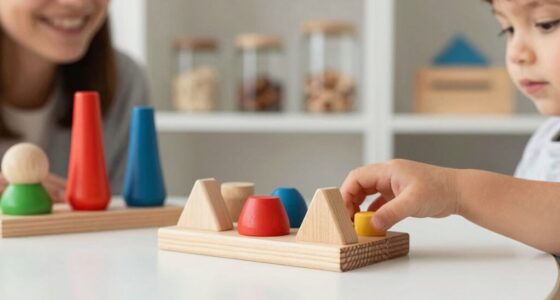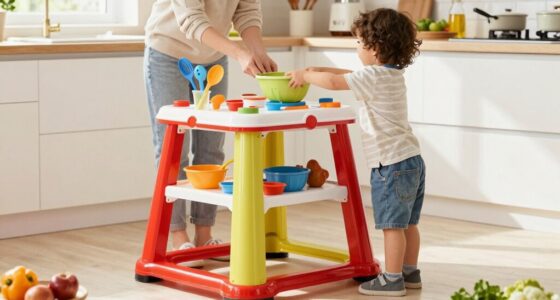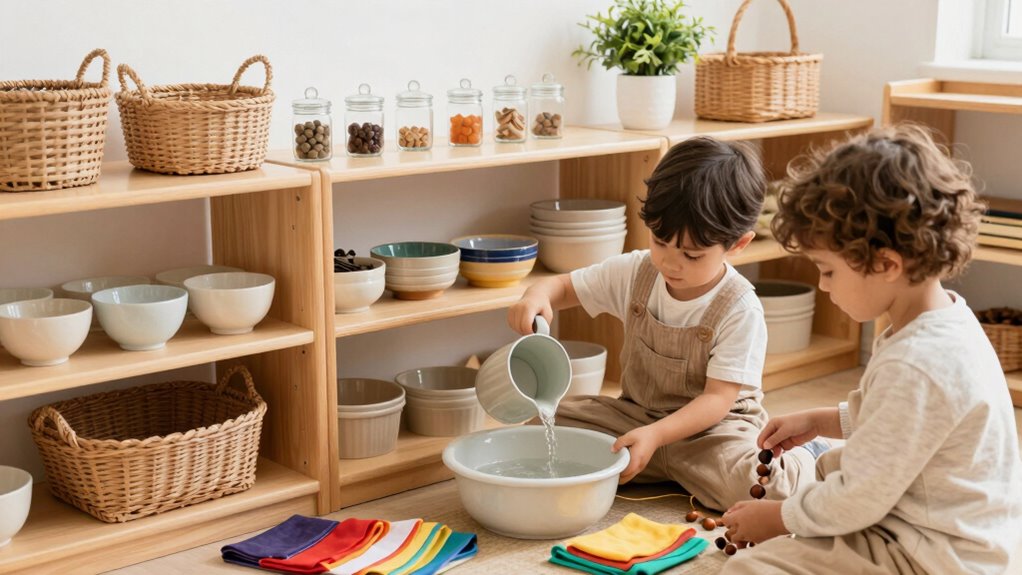

Engaging in real-life activities in Montessori homes helps you nurture your child’s independence, motor skills, and sense of responsibility. When children participate in routines like pouring, sweeping, or setting the table, they build confidence and practical skills that boost self-esteem. These activities encourage focus, patience, and collaboration, strengthening your bond. By including such tasks, you create a foundation for your child’s long-term growth and self-sufficiency—discover how these activities can transform everyday moments.

Get health and wellness essentials delivered free — and shop member deals
- Fast, free delivery on millions of items
- Access to Prime Big Deal Days deals on October 6–7
- Prime Video, Amazon Music and more included
Key Takeaways
- They develop practical skills that foster independence and self-reliance in children.
- They enhance fine motor skills, focus, and coordination through repetitive, meaningful tasks.
- They promote responsibility and a sense of contribution to household routines.
- They strengthen social bonds and communication between children and caregivers.
- They build a strong foundation for lifelong organization, confidence, and self-sufficiency.

Many Montessori homes incorporate real-life activities because they help children develop independence, coordination, and a sense of responsibility. These activities are designed to mirror everyday routines, giving children practical skills they can carry into their daily lives. When you involve your child in tasks like pouring, sweeping, or preparing simple snacks, you’re not just keeping them busy—you’re fostering essential life skills. These routines teach children to be self-reliant and confident, knowing they can contribute meaningfully to their environment.
By engaging in practical activities, your child learns to focus and develop fine motor skills. For example, when they practice pouring water or spooning out grains, they improve hand-eye coordination and control. These small but meaningful actions build patience and perseverance, reinforcing the idea that effort leads to achievement. As they repeat these routines, they become more adept and independent in completing daily tasks, which boosts their self-esteem and sense of competence. Incorporating routine activities helps children internalize the importance of consistency and organization in their daily lives.
Incorporating real-life activities into your home creates a natural environment for children to learn responsibility. When they help set the table, water plants, or fold laundry, they understand that they play a part in maintaining their home. This sense of contribution encourages accountability and respect for shared spaces. It also helps children see the connection between their actions and the outcomes, nurturing a sense of ownership and pride.
Furthermore, these activities are more than just skill-building; they are opportunities for meaningful interaction. As you guide your child through routines, you foster communication and patience. This shared experience helps strengthen your relationship, making learning feel like a collaborative effort rather than a chore. It also models the importance of routines and organization, which are key to developing independence and time management skills.
In essence, practical skills learned through real-life activities are foundational for your child’s development. They learn to navigate their environment confidently, understand routines, and develop a sense of responsibility. These routines are not just about completing tasks—they’re about empowering your child to become self-sufficient and capable. Incorporating practical skills into daily life, such as engaging in routine activities, helps your child build a strong, practical foundation that will serve them well well beyond childhood.
Montessori practical life activity set
As an affiliate, we earn on qualifying purchases.
As an affiliate, we earn on qualifying purchases.
Frequently Asked Questions
How Do I Introduce New Real-Life Activities Safely?
To introduce new real-life activities safely, start by evaluating potential risks and implementing safety precautions like child-proof locks or non-slip mats. Always supervise closely and tailor activities to your child’s age and skill level through activity customization. Explain each step clearly, showing patience and encouragement. Gradually increase complexity, ensuring safety measures are in place, so your child builds confidence while exploring new skills securely.
At What Age Should Children Start Real-Life Activities?
Children can start real-life activities around age 18 months to 2 years, as they begin to develop child autonomy and a desire for practical learning. At this stage, they’re enthusiastic to explore and help with daily tasks. You should observe their interests and readiness, offering simple, safe activities that promote independence. This early engagement fosters confidence, motor skills, and a love for learning through practical, hands-on experiences.
How Can I Adapt Activities for Different Skill Levels?
You can adapt activities for different skill levels through skill differentiation and activity customization. Observe your child’s current abilities, then modify tasks to match their skill set, making activities easier or more challenging. Offer options, break tasks into smaller steps, or add extra elements for advanced learners. By tailoring activities this way, you keep your child engaged, foster independence, and promote growth at their own pace.
What Are Common Mistakes to Avoid With Real-Life Activities?
You should avoid common mistakes like neglecting activity safety and not considering skill differentiation. Guarantee activities are safe by supervising closely and removing hazards. Tailor tasks to your child’s abilities, avoiding one-size-fits-all approaches, to promote confidence and independence. Overly difficult activities can cause frustration, while too simple ones may bore them. Focus on creating a balanced environment where safety is prioritized and skills are appropriately challenged to foster growth.
How Do These Activities Promote Independence?
Imagine your child pouring water into a glass; this simple task builds practical skills and boosts self-sufficiency. These activities promote independence by allowing children to master everyday tasks, fostering confidence in their abilities. As they practice real-life skills like dressing or cooking, they learn responsibility and problem-solving. This hands-on approach empowers them to handle daily challenges, nurturing a sense of autonomy that lasts a lifetime.
child pouring water learning toy
As an affiliate, we earn on qualifying purchases.
As an affiliate, we earn on qualifying purchases.
Conclusion
By embracing real-life activities in your Montessori home, you open the door to endless opportunities for your child’s growth and independence. These activities aren’t just tasks—they’re the threads that weave confidence, skills, and a love for learning into your child’s everyday life. Remember, you’re nurturing more than just a child—you’re cultivating a future filled with possibility. Isn’t that a gift worth giving? Let these moments shape a brighter tomorrow for your little one.
As an affiliate, we earn on qualifying purchases.
Montessori snack prep toys for children
As an affiliate, we earn on qualifying purchases.
As an affiliate, we earn on qualifying purchases.
Cold & flu season Picks
humidifiers
As an affiliate, we earn on qualifying purchases.