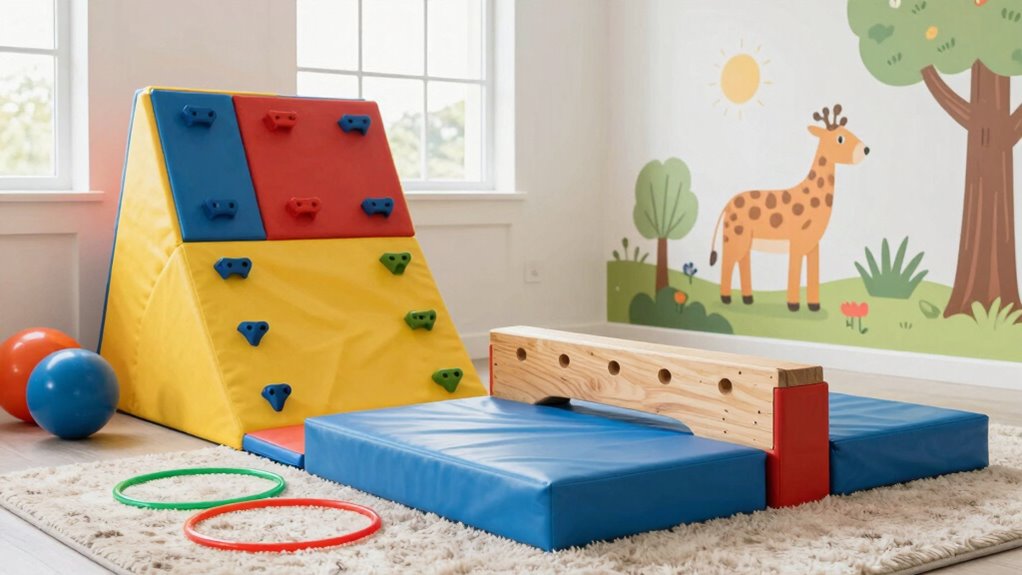

To build a playroom around gross motor play, create designated zones for climbing, balancing, and sensory activities with soft mats and sturdy, age-appropriate equipment. Incorporate fun, interactive wall panels to promote movement and sensory engagement. Use low, stable balance beams with safety mats and add mini climbing structures or tunnels for variety. Keep pathways clear, guarantee good lighting, and regularly check equipment for safety. If you keep exploring, you’ll discover more tips to make it safe and engaging for all children.

Get health and wellness essentials delivered free — and shop member deals
- Fast, free delivery on millions of items
- Access to Prime Big Deal Days deals on October 6–7
- Prime Video, Amazon Music and more included
Key Takeaways
- Designate specific zones for climbing, balancing, and sensory activities with appropriate equipment and safety features.
- Incorporate low, stable balance beams and soft mats to promote safe gross motor skill development.
- Use interactive wall panels and diverse textures to enhance sensory engagement and motor coordination.
- Ensure pathways are clutter-free with non-slip flooring for safe exploration and movement.
- Follow safety standards, regularly inspect equipment, and supervise play to prevent accidents.
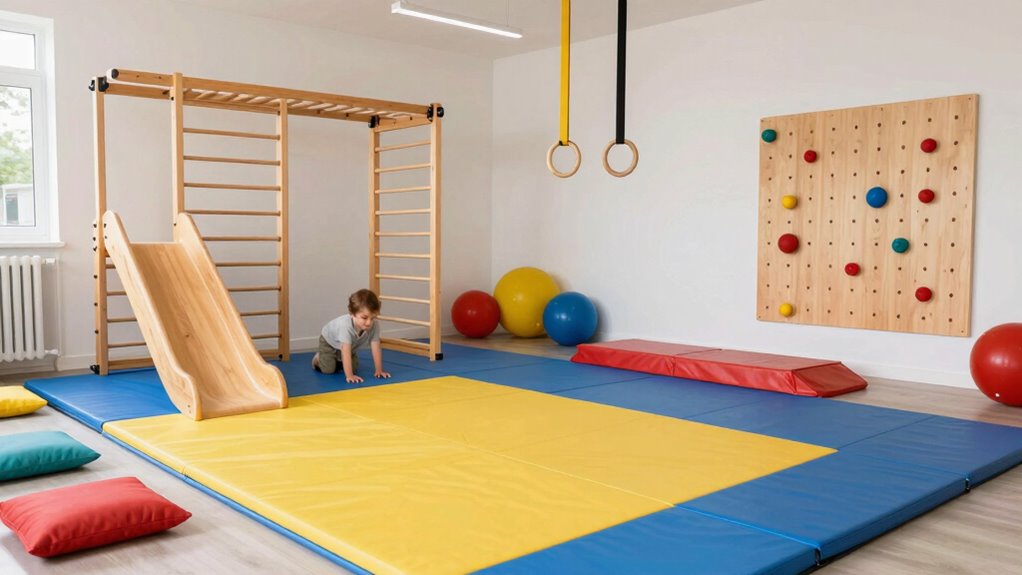
Creating a dedicated space for gross motor play is an excellent way to support your child’s physical development and keep them active. When designing your playroom, consider installing features that encourage movement, strength, and coordination. Interactive wall panels are a fantastic addition because they combine fun with sensory engagement, encouraging your child to reach, stretch, and problem-solve while staying active. These panels come in various shapes and textures, making them suitable for kids of different ages and abilities. They can turn a blank wall into an interactive hub, motivating your child to climb, pull, and manipulate objects, which boosts their motor skills and confidence.
Interactive wall panels promote fun, sensory engagement, and motor skill development through reaching, stretching, and problem-solving activities.
In addition to wall panels, incorporating a balance beam can notably enhance your child’s balance and coordination. However, balance beam safety should always be your top priority. Choose a low, stable beam that’s appropriate for your child’s age and size, and always supervise their activities to prevent falls. Padding the surrounding floor area with soft mats helps cushion any accidental slips, making the environment safer and more inviting. Teach your child how to walk carefully on the beam, emphasizing slow, deliberate steps, and encourage them to practice balancing in a controlled manner. As they become more confident, you can challenge them by raising the beam slightly or adding simple obstacles nearby to promote agility.
The layout of your playroom should facilitate free movement and exploration. Keep pathways clear of clutter and ensure that the space around the balance beam and interactive wall panels is open. You might consider including other gross motor equipment like mini climbing structures, tunnels, or a soft climbing wall, all of which contribute to a well-rounded environment. Safety is key — install sturdy, non-slip flooring and use age-appropriate, sturdy equipment. For added peace of mind, regularly inspect all items for wear and tear, and reinforce safety rules with your child, emphasizing careful play and awareness of surroundings. Additionally, understanding contrast ratio can help when selecting appropriate lighting or visual features to ensure optimal visibility and safety within the space. Incorporating safety standards from reputable sources can further ensure your playroom adheres to recommended practices for child safety.
Creating zones within the playroom can help your child focus on different types of activities. For example, designate one area for climbing and balancing, equipped with mats and beams, and another for sensory play with wall panels, balls, or soft blocks. This organization encourages varied movement and keeps your child engaged. Remember, your involvement matters. Demonstrate how to use the equipment correctly, cheer them on as they try new challenges, and ensure they understand safety rules. Additionally, integrating appropriate lighting can enhance visibility and help your child navigate the space safely. By thoughtfully designing your playroom with these elements, you’re nurturing your child’s physical skills and fostering a space where they can grow, explore, and have fun securely.
kids balance beam with safety padding
As an affiliate, we earn on qualifying purchases.
As an affiliate, we earn on qualifying purchases.
Frequently Asked Questions
What Safety Measures Should I Prioritize for Gross Motor Play Areas?
You should prioritize safety measures like installing sturdy playground equipment that’s age-appropriate and regularly maintained. Use safety flooring, such as rubber mats or foam padding, to cushion falls and reduce injuries. Constant supervision is essential to prevent accidents, and guarantee clear, clutter-free space around equipment. Additionally, check for sharp edges or loose parts, and educate kids on safe play habits to create a secure environment for gross motor activities.
How Much Space Is Ideal for a Gross Motor Playroom?
You’ll want at least 200 square feet for a gross motor playroom—because, apparently, indoor climbing walls and balance beams don’t require much space, right? Think of it as giving your kids room to leap, swing, and balance without turning your house into a gymnastics studio. Larger spaces make safety easier and foster more active, free movement. So, don’t skimp—your future acrobats will thank you!
What Age Range Is Best Suited for a Gross Motor Playroom?
You should design a gross motor playroom for children aged 2 to 8, as they benefit most from active play that supports their growth. Choose playful themes like jungle or space to inspire imagination, and incorporate smart storage solutions to keep toys organized and safe. This age range encourages development of coordination, strength, and balance, making your playroom a perfect space for energetic kids to thrive and explore.
How Can I Make the Playroom Accessible for Children With Disabilities?
You can make the playroom accessible for children with disabilities by incorporating adaptive equipment like ramps, supportive seating, and textured flooring. Use sensory integration techniques, such as weighted blankets or tactile panels, to help children process sensory input comfortably. Make certain doorways are wide enough for wheelchairs, and keep clutter minimal for safety. These adjustments promote inclusive gross motor play, allowing all children to engage confidently and enjoyably.
What Are Cost-Effective Ways to Set up a Gross Motor Play Area?
Think of creating a gross motor play area as building a sturdy bridge on a budget—you need strong, affordable materials. You can use DIY equipment like repurposed pallets for climbing, or old tires for balance beams, which are budget-friendly ideas. Incorporate soft mats and thrifted items for safety and fun. These cost-effective solutions make the space engaging and functional without breaking the bank.
interactive sensory wall panels for children
As an affiliate, we earn on qualifying purchases.
As an affiliate, we earn on qualifying purchases.
Conclusion
Think of your playroom as a lush jungle, teeming with adventure and discovery. Each piece of equipment is a vine or tree, inviting your child to climb, swing, and explore. As the jungle nurtures its creatures, your space nurtures your child’s growth and confidence. With every jump and crawl, they’re forging their own path through this vibrant wilderness. By crafting this playful wilderness, you’re helping your child develop strength and resilience, ready to conquer whatever comes next.
As an affiliate, we earn on qualifying purchases.
mini climbing structures for kids
As an affiliate, we earn on qualifying purchases.
As an affiliate, we earn on qualifying purchases.
Fall Picks
fall essentials
As an affiliate, we earn on qualifying purchases.