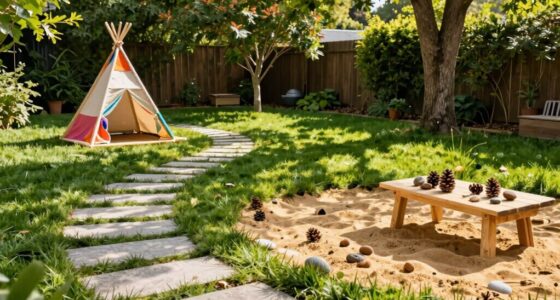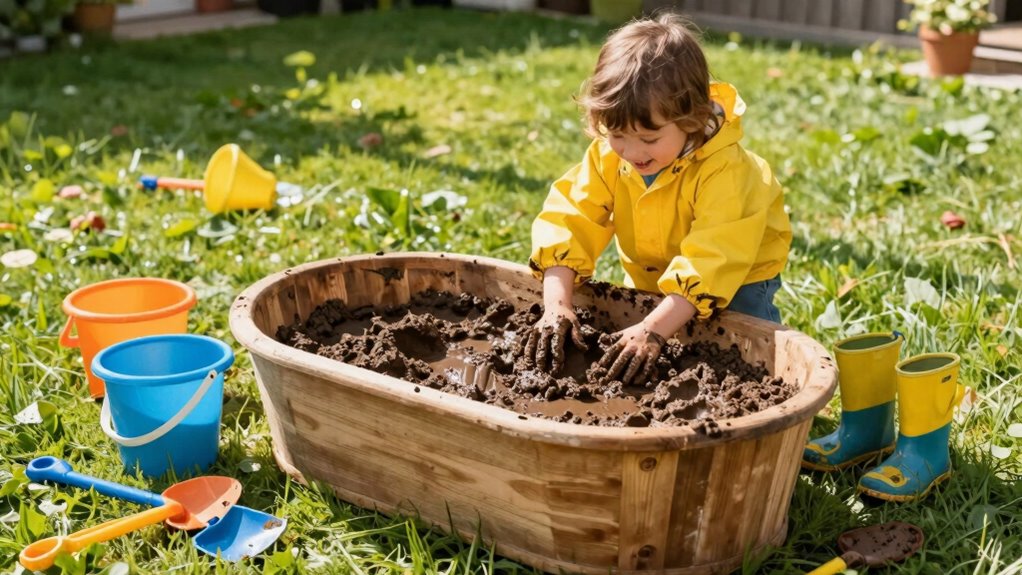

To start a mud play routine at home, choose a safe outdoor spot like a garden corner or a shallow container. Gather simple materials like soil, water, and basic tools, then demonstrate mixing mud and creating small structures to encourage exploration. Incorporate natural elements like leaves and sticks, schedule regular play sessions, and make cleanup easy with nearby water sources. Keep activities varied and fun, and soon you’ll see your child’s sensory skills and creativity flourish. Keep exploring to learn more tips.

Get health and wellness essentials delivered free with Prime
- Fast, free delivery on millions of items
- Prime Video, Amazon Music and more included
- Member-only deals all year
Key Takeaways
- Select a safe, designated outdoor area like a garden corner or shallow container for easy supervision.
- Gather simple materials such as soil, water, tools, and natural objects to encourage exploration.
- Schedule regular mud play sessions, including rainy or dry days, to build routine and familiarity.
- Incorporate natural elements like leaves and sticks to enhance sensory experiences and creativity.
- Establish a cleanup routine with accessible water sources to teach responsibility and complete the activity.
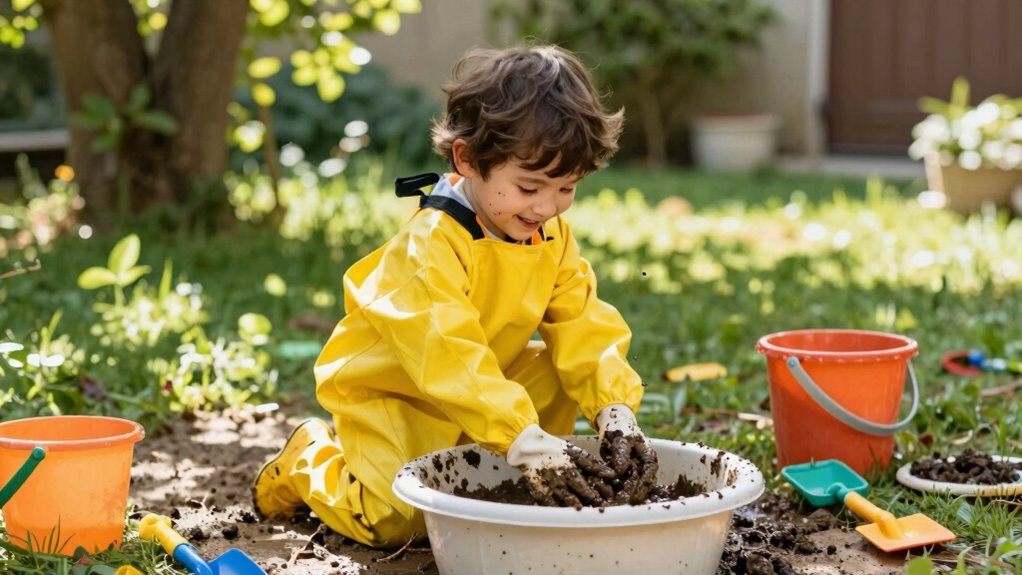
Getting started with a mud play routine at home is a fun and beneficial way to encourage sensory development and creativity in children. Mud play is a natural outdoor activity that helps kids explore textures, temperatures, and consistencies while engaging their senses. To begin, find a safe outdoor spot where your child can dig, scoop, and splash freely. A small garden patch, a dedicated corner of the yard, or even a shallow plastic container filled with soil and water can work well. The key is to create an inviting space that encourages exploration without worry about messes, as mud play naturally involves getting dirty.
Creating a safe outdoor space for mud play sparks children’s exploration, sensory growth, and creativity through messy, fun activities.
Start by introducing simple materials like soil, water, and basic tools such as trowels, buckets, and molds. Demonstrate how to mix mud or build small structures, encouraging your child to experiment. As they manipulate the mud, they’ll develop fine motor skills and enhance their sensory development by feeling the different textures and temperatures. Remember, the goal isn’t perfection but exploration. Let your child touch, squish, and even taste (if safe) the mud to deepen their sensory experience. It’s important to supervise closely to ensure safety, especially to prevent ingestion of mud or contact with eyes. Incorporating natural objects like leaves, sticks, or flowers can further stimulate their senses and promote imaginative play. Engaging in sensory-rich activities like mud play can significantly support a child’s overall development.
Incorporating natural objects like leaves, sticks, or flowers into the mud can also introduce natural materials that enhance sensory input and spark creativity.
Incorporate outdoor activities into your routine by scheduling regular mud play sessions, perhaps after rain or during dry days when the soil is soft and easy to mold. Encourage imaginative play—pretend the mud is cake batter, clay, or even a potion. This kind of play boosts creativity and cognitive development. You can also introduce natural objects like leaves, sticks, or flowers into the mud for added sensory input and creative opportunities. Paying attention to color and texture can further enrich sensory engagement during play. Additionally, understanding the importance of sensory development can help you tailor activities that enhance your child’s growth. Incorporating different sensory experiences into play can help diversify their perceptual skills and keep their interest high.
To keep the experience engaging, vary the activities each time. One day, focus on making mud pies; another day, create sculptures or paint with mud if you add some safe natural pigments. Make cleanup part of the routine by setting up a hose or a bucket of water nearby, turning the cleanup process into another outdoor activity. This helps your child learn about responsibility and the importance of cleaning up after play.
As an affiliate, we earn on qualifying purchases.
Frequently Asked Questions
What Safety Precautions Should I Take During Mud Play?
You should always guarantee the mud has a safe consistency, not too sticky or runny, to prevent slips or choking hazards. Wearing protective gear like gloves and old clothes keeps dirt and bacteria away from your skin. Supervise children closely, and check for any sharp objects or debris in the mud. These precautions help make mud play fun and safe, reducing the risk of injuries or infections.
How Often Should My Child Participate in Mud Play?
You should encourage your child to participate in mud play a few times a week, depending on their interest and weather conditions. Before each session, make certain they wear appropriate outdoor clothing, like waterproof pants and a long-sleeve shirt, to stay comfortable and dry afterward. Set up a mud pit in a safe, designated area, and supervise closely to make sure they enjoy the activity safely and hygienically.
Can Mud Play Be Done Indoors Safely?
Yes, mud play can be done indoors safely if you take precautions. Imagine your child giggling as they squish mud between their fingers—just like outside. To keep it safe, guarantee good indoor ventilation and use non-toxic materials. Cover surfaces with plastic or washable mats, and supervise closely. With these steps, your little one can enjoy the sensory fun of mud play without worries, right in your home.
What Are Eco-Friendly Mud Ingredients?
You can create eco-friendly mud with natural clay and safe, biodegradable ingredients. Use natural clay like bentonite or kaolin, which are eco-friendly and non-toxic. Add natural elements like organic, food-grade cornstarch or flour to thicken the mixture. Avoid synthetic dyes and chemicals, opting instead for natural pigments from plants or fruits if color is desired. This way, your mud remains safe for kids and environmentally conscious.
How Do I Clean up After Mud Play Sessions?
Mud cleanup might seem like a chore, but it’s just part of the fun, right? You’ll want to rinse mud gear thoroughly, using a hose or shower, to remove all residue. For your child’s skin, a quick bath with gentle soap does the trick. Keep a towel handy for quick drying, and don’t forget to wash muddy clothing separately to avoid spreading the mess. Embrace the mess—cleaning up is just part of the adventure!
kids gardening tools and accessories
As an affiliate, we earn on qualifying purchases.
As an affiliate, we earn on qualifying purchases.
Conclusion
Starting a mud play routine at home can be a fun way to bond and explore sensory play. Imagine your child enthusiastically jumping into a homemade mud pit, giggling as they squish and splash. Like Sarah, who began mud play weekly, she noticed her kids became more creative and relaxed. With simple steps and a little preparation, you can turn muddy messes into joyful, educational adventures that foster curiosity and outdoor fun for your family.
As an affiliate, we earn on qualifying purchases.
kids outdoor water and soil play container
As an affiliate, we earn on qualifying purchases.
As an affiliate, we earn on qualifying purchases.
Halloween Picks
halloween
As an affiliate, we earn on qualifying purchases.