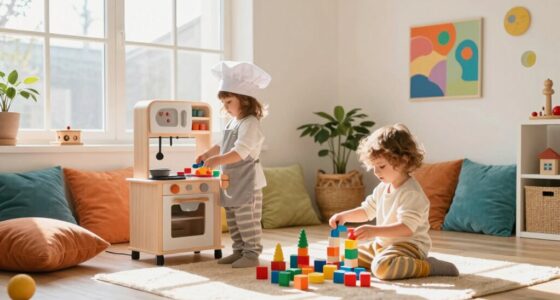
Independent play is more vital than many parents realize because it helps children discover their interests, develop problem-solving skills, and build confidence. It fosters emotional resilience by allowing kids to experience frustration and boredom in safe ways. This type of play also enhances focus, creativity, and adaptability, setting a strong foundation for lifelong independence. If you want to understand how nurturing autonomy benefits your child in unexpected ways, keep exploring these essential insights.
Key Takeaways
- Independent play fosters creativity, imagination, and problem-solving skills vital for cognitive development.
- It builds confidence, resilience, and emotional regulation through self-directed challenges.
- Solo exploration enhances focus, concentration, and self-motivation, supporting academic and personal growth.
- It encourages autonomy, helping children develop decision-making and self-sufficiency skills.
- Independent play prepares children to adapt to change and navigate uncertainty confidently.

Have you ever wondered why encouraging independent play is so important for your child’s development? It turns out, giving your child space to explore on their own offers numerous benefits that often go unnoticed. One of the key advantages is the benefits of solo exploration, which allows children to discover their interests and strengths without constant guidance. When your child engages in independent play, they learn to rely on their own judgment, make decisions, and solve problems. This autonomy nurtures confidence and resilience, laying a strong foundation for future challenges.
Encouraging independent play helps children build confidence, problem-solving skills, and resilience through solo exploration.
Fostering creativity is another critical aspect of independent play. When children are left to their own devices, they’re free to invent scenarios, build structures, or experiment with different ideas. This unstructured time encourages imaginative thinking, helping children develop unique perspectives and innovative solutions. You might notice your child creating elaborate stories or designing complex Lego cities—these activities not only entertain but also sharpen their ability to think outside the box. As they manipulate toys, art supplies, or everyday objects, they learn to see new possibilities, which boosts their creative confidence. Recognizing the importance of unstructured play can help parents provide the right environment for these creative opportunities to flourish.
Allowing your child to play solo also promotes emotional growth. During independent play, they often face moments of frustration or boredom, which are essential for emotional regulation. Overcoming these feelings on their own helps them build patience and perseverance. Plus, independent play offers a much-needed break from adult-led activities and screens, giving children the chance to relax and process their thoughts without external pressures. This quiet time supports better self-awareness and emotional intelligence, crucial skills for social interactions later on. Additionally, engaging in self-guided activities can foster a sense of ownership and pride in their accomplishments, further encouraging emotional resilience. Supporting autonomous activities can also help children develop a stronger sense of independence and self-control, which are vital skills for lifelong growth. Furthermore, understanding the benefits of independent play can motivate parents to create more opportunities for their children to engage in these enriching activities.
Furthermore, independent play encourages your child to develop focus and concentration. When left to explore their interests, they learn to immerse themselves in activities for extended periods. This ability to concentrate benefits their academic performance and overall learning capacity. It also helps them develop a sense of autonomy, understanding that they can entertain themselves and find joy without constant input from others. As they become more comfortable playing alone, they build the foundation for lifelong skills like self-motivation and discipline, which are vital for success in many areas of life.
In addition, engaging in independent play can stimulate the development of cognitive flexibility, which enhances their problem-solving skills and adaptability in various situations. When children are given space to explore freely, they practice cognitive flexibility, learning to shift perspectives and approach challenges with an open mind. This skill is especially valuable in today’s rapidly changing world, where adaptability is key to success. Supporting independent play by offering diverse activities and environments can significantly impact their ability to navigate change and uncertainty with confidence.
In essence, fostering independent play isn’t about letting your child be entirely on their own or avoiding supervision. It’s about creating a safe space where they can independently explore, experiment, and grow. The benefits of solo exploration and fostering creativity are profound, shaping your child into a confident, imaginative, and emotionally resilient individual. By supporting these moments, you’re helping your child develop skills that will serve them well throughout life.

TOMYOU 200 Pieces Building Blocks Kids STEM Toys Educational Discs Sets Interlocking Solid Plastic for Preschool Boys and Girls Aged 3+, Safe Material Creativity
★ Excellent Value: Includes 200 pieces of colorful building blocks, it can be easy to combine into any…
As an affiliate, we earn on qualifying purchases.
As an affiliate, we earn on qualifying purchases.
Frequently Asked Questions
How Can Parents Encourage Independent Play Safely?
You can encourage independent play safely by choosing age-appropriate toys and ensuring your child understands playground safety rules. Supervise their play without hovering, allowing them space to explore and develop confidence. Select a safe, well-maintained playground and check for hazards before letting your child play. Providing a variety of stimulating toys and setting clear boundaries helps promote independent play while keeping your child safe and engaged.
What Are Common Challenges During Independent Play?
You might worry about playground safety or excessive screen time interrupting independent play. Common challenges include children becoming distracted or overwhelmed, making it hard for them to focus. To overcome this, guarantee safe play environments and set boundaries for screen use. Encourage your child to explore, play freely, and problem-solve on their own. This builds confidence and independence, even when faced with distractions or safety concerns.
How Does Independent Play Impact Social Skills Development?
Independent play greatly enhances your child’s social skills by encouraging peer interaction and boosting emotional resilience. When they play alone, they learn to manage emotions, solve problems, and develop patience. These experiences build confidence, making them more comfortable in social settings. As they navigate their own play, they gain the skills needed to connect with others, fostering healthier relationships and stronger social competence over time.
When Should Parents Start Introducing Independent Play?
Think of independent play as planting seeds early on—you should start introducing it when your child is around 6 months old. During this time, they learn to explore safely, so guarantee playground safety and supervise closely. As they grow, encourage sensory exploration with simple toys, letting them develop confidence and curiosity. Gradually, your child will blossom, gaining independence while enjoying their own discovery adventures.
Can Independent Play Replace Parent-Led Activities Entirely?
No, independent play can’t replace parent-led activities entirely, but it complements them well. You should set clear playroom boundaries to guarantee safety and use supervision strategies that foster independence while keeping an eye on your child. Balancing independent play with guided activities helps your child develop confidence, creativity, and social skills. So, integrate both into your routine for a well-rounded approach to your child’s growth.

Liberty Imports 24 PCS Giant Building Blocks Starter Set for Toddlers, Plastic Large Building Blocks for Kids Creative Play, Big Stacking Bricks for Children, Kids (Primary Colors)
Build Big, Dream Bigger: Unleash creativity with twenty-four giant blocks—eight 2×4 and sixteen 2×2's; featuring extra-large, life-size pieces…
As an affiliate, we earn on qualifying purchases.
As an affiliate, we earn on qualifying purchases.
Conclusion
Embracing independent play is like planting seeds in your child’s garden—they grow stronger, wiser, and more resilient with each passing day. When you step back and let them explore on their own, you’re handing them the keys to a world of imagination and self-confidence. Remember, you’re not just watching from the sidelines; you’re giving your little one the wings to soar. Trust in their flight, and watch them flourish beyond what you ever imagined.

TMOL 237-Piece Kids Art Set with Double-Sided Easel, Watercolor, Oil Pastels, Painting Kits for Kids Ages 4-8, Art Supplies for Girls & Boys, Drawing Sets, Gift for Young Artists-Pink
COMPLETE 237-PIECE KIDS ART SET WITH EVERYTHING NEEDED: This ultimate painting kits for kids ages 4-8 comes with…
As an affiliate, we earn on qualifying purchases.
As an affiliate, we earn on qualifying purchases.

LEGO Classic Large Creative Brick Box 10698 Building Set, Toy Storage Solution for Home or Classrooms, Interactive Building Toy for Kids, Boys, and Girls
Engage your kids in pretend play by letting them build their own play toys, such as creating a…
As an affiliate, we earn on qualifying purchases.
As an affiliate, we earn on qualifying purchases.