

During play, step in when your child is overwhelmed, upset, or if safety is at risk to help them manage their feelings and prevent conflicts from escalating. Use calm words and techniques to support emotional growth. However, step back when disagreements are minor, and children can solve problems themselves, fostering independence. Knowing the right balance encourages both emotional development and safety. Keep exploring to find out how to navigate these moments effectively.
Key Takeaways
- Step in when a child is overwhelmed, upset, or at risk of harm to help manage emotions and prevent escalation.
- Step back during typical disagreements over toys or rules to promote independence, problem-solving, and negotiation skills.
- Intervene immediately if the conflict becomes aggressive, unsafe, or emotionally distressing to ensure safety and well-being.
- Recognize signs of emotional distress early to provide timely support and teach emotional regulation techniques.
- Allow children to resolve minor conflicts themselves when they are manageable, fostering patience and empathy.
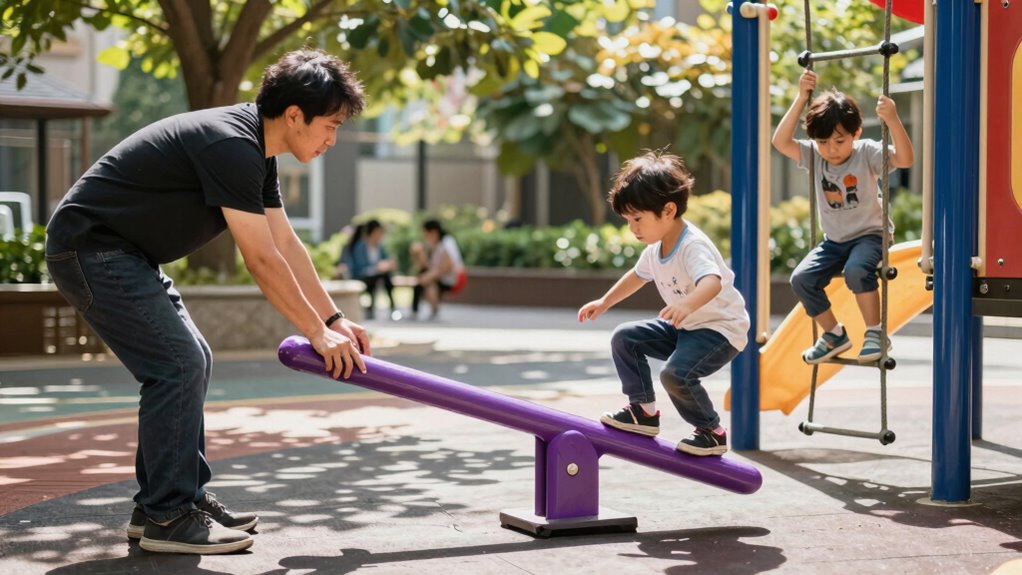
Have you ever wondered when to step in and when to step back during play? It’s a common question for parents and caregivers, especially when trying to foster a healthy, enjoyable environment. Knowing when to intervene can help your child develop vital skills like emotional regulation and conflict resolution. Play is a natural way for kids to learn about themselves and others, but it’s also where they encounter challenges that require your guidance. The key is to observe carefully and recognize the signs that indicate whether your presence is needed or if they can work things out on their own.
Knowing when to step in or back helps children develop emotional skills and independence during play.
When you notice your child becoming overwhelmed, frustrated, or upset, it’s usually time to step in. Emotional regulation is essential here—you want to help them manage their feelings without taking over the situation entirely. A gentle intervention might involve offering comforting words or helping them breathe deeply to calm down. By doing so, you’re teaching them how to handle their emotions, which will serve them well in future social interactions. Stepping in early can prevent conflicts from escalating and help your child feel supported rather than punished or dismissed. Understanding the importance of calibration and adjustment in the environment can further support their development. Additionally, recognizing the appropriate timing for intervention can make a significant difference in nurturing their emotional growth. Being aware of child development stages can also guide you in determining the most effective way to support your child at different ages. Moreover, knowing about the role of adult guidance in play can help you strike the right balance between intervention and independence. Incorporating emotional awareness techniques can further enhance your ability to gauge when to step in or step back.
Conversely, there are moments when you should step back and let your child navigate the situation. Kids often learn conflict resolution by trying things out on their own, even if they make mistakes. If they’re arguing over a toy or disagreeing about rules, your role is to observe and assess whether the conflict is manageable without your immediate involvement. Giving children space to work through disagreements encourages independence and problem-solving skills. Sometimes, stepping back also allows them to develop patience, empathy, and negotiation skills. Of course, if the conflict turns aggressive or unsafe, that’s when you need to intervene to guarantee everyone’s safety.
Trust your instincts and pay attention to the context. If the situation involves emotional distress or potential harm, it’s best to step in promptly. If it’s a minor disagreement or a typical part of play, giving your child the opportunity to resolve it promotes resilience and social competence. Balancing these moments requires mindfulness—know when your intervention will teach a valuable lesson and when it might hinder their growth. By doing so, you’re helping your child learn emotional regulation, conflict resolution, and independence—all essential skills for lifelong social success.

hand2mind See My Feelings Mirror, Play Therapy Toys, Mindfulness for Kids, Emotional Regulation for Kids, Social Emotional Learning Activities, Calm Down Corner Supplies, Calming Corner (Set of 1)
EMOTIONS FOR TODDLERS: Help children learn to label and identify emotions with the See My Feelings Mirror! Make…
As an affiliate, we earn on qualifying purchases.
As an affiliate, we earn on qualifying purchases.
Frequently Asked Questions
How Do I Recognize When My Child Needs More Independence?
You recognize your child needs more independence when you notice they’re confidently handling social cues and seeking emotional support less often. If they start trying new activities, show curiosity, and manage small challenges on their own, it’s a good sign. Pay attention to their cues; if they look for reassurance less frequently and seem comfortable exploring, you can step back and give them space to grow.
What Are Signs of Over-Involvement in Play?
Like a vigilant lighthouse keeper, you might notice signs of over-involvement in play through constant directing or finishing your child’s sentences. Excessive play supervision and overbearing parental involvement can hinder your child’s independence and creativity. If you see them struggling or wanting to explore, step back gently. Remember, sometimes the best support is giving them space to lead their own adventures, fostering confidence and problem-solving skills.
How Can I Encourage Creativity Without Taking Over?
You can encourage creativity by offering open-ended materials and giving your child play autonomy. Instead of controlling every aspect, step back and let them explore freely, which fosters creative freedom. Ask guiding questions to spark ideas rather than directing their play. This approach helps them develop confidence and imagination, while you support their independence. Trust their instincts, and resist the urge to take over—your role is to nurture, not dominate.
When Should I Intervene in Conflicts Between Children?
You should step in during conflicts when peer influence sways kids into emotional chaos, and emotional regulation is clearly lacking. Ironically, the more you intervene, the less they learn to manage their feelings. Instead, guide them to resolve issues themselves, offering support only when emotions run high or peer influence escalates. This way, children build resilience and emotional skills, learning to navigate conflicts independently.
How Do Cultural Differences Influence Play Boundaries?
Cultural norms shape how children approach play boundaries, influencing what’s acceptable or not. You notice that different play styles emerge based on these norms, affecting rules and sharing behaviors. To support inclusive play, observe these cultural influences and respect diverse approaches. When conflicts arise, gently guide children to understand each other’s play styles, encouraging open communication. This helps children develop respect for differences while learning healthy boundaries within their unique cultural context.

Help Your Dragon Resolve Conflict: A Children's Story About Conflict Resolution (My Dragon Books)
As an affiliate, we earn on qualifying purchases.
As an affiliate, we earn on qualifying purchases.
Conclusion
Remember, knowing when to step in or step back is like tending a delicate garden—you provide support when roots are fragile, but allow space for growth when the blooms are ready. Trust your instincts to gauge the right moment, creating a balance that nurtures confidence and independence. With gentle hands and an attentive eye, you’ll find harmony in the dance of play, guiding your loved ones toward joyful, resilient development.

JOYIN 4-Pack Fidget Tubes for Kids, Sensory Tubes, Stress Relief Toy, Speech Therapy, Calming Toys for Children with Autism, Calm Down Corner Classroom Supplies, Easter School Gifts for Toddlers
Engaging Social-Emotional Learning Activities: Discover our vibrant set of fidget tubes designed to foster social and emotional skills…
As an affiliate, we earn on qualifying purchases.
As an affiliate, we earn on qualifying purchases.

Sensory Integration: A Guide for Preschool Teachers
Used Book in Good Condition
As an affiliate, we earn on qualifying purchases.
As an affiliate, we earn on qualifying purchases.