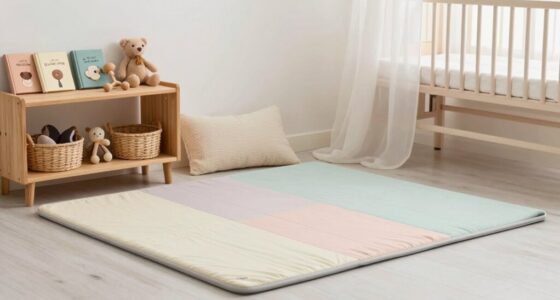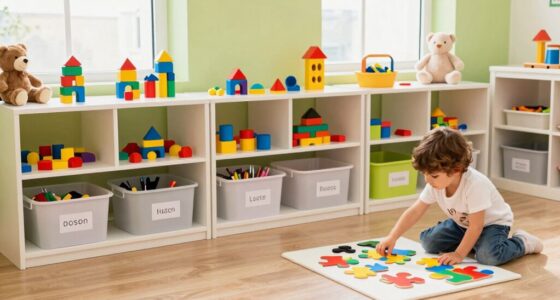

Repetition in preschool toy play helps you support your child’s motor skills, social growth, and emotional regulation. When your child repeats actions like grasping or passing toys, they strengthen their muscles and improve coordination. It also teaches social skills like sharing and taking turns, fostering confidence and patience. Repetition reinforces brain pathways, aiding problem-solving and understanding. Keep exploring how consistent play benefits their overall development and discover more ways to nurture learning through play.

Get health and wellness essentials delivered free — and shop member deals
- Fast, free delivery on millions of items
- Access to Prime Big Deal Days deals on October 6–7
- Prime Video, Amazon Music and more included
Key Takeaways
- Repetition refines motor skills and enhances coordination through repeated physical actions.
- It supports social development by promoting imitation, sharing, and turn-taking during play.
- Repetition reinforces neural pathways, aiding emotional regulation and internalization of skills.
- It deepens understanding of toy features and functions, fostering problem-solving abilities.
- Repeated play provides comfort, confidence, and encourages cognitive and emotional growth.
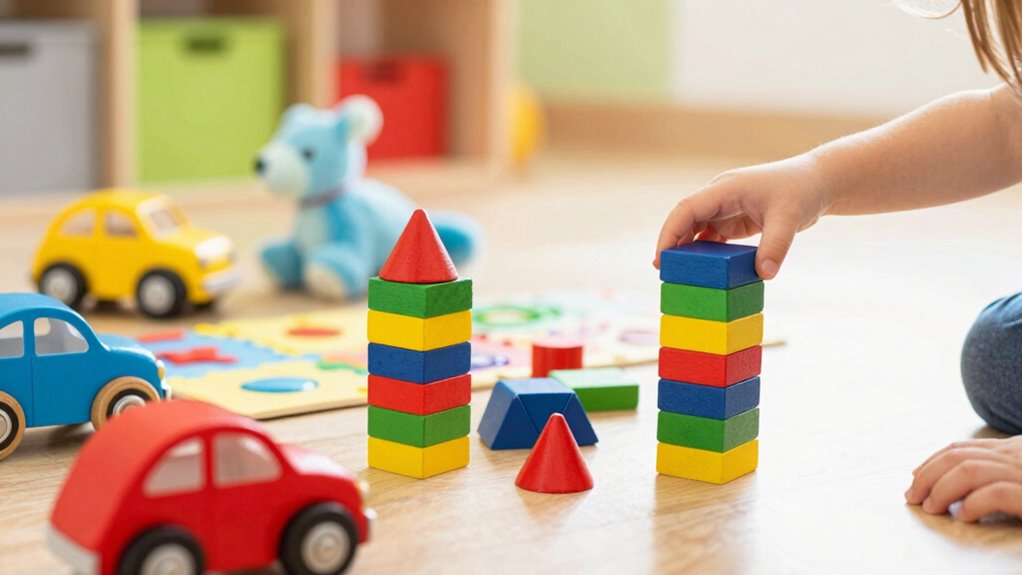
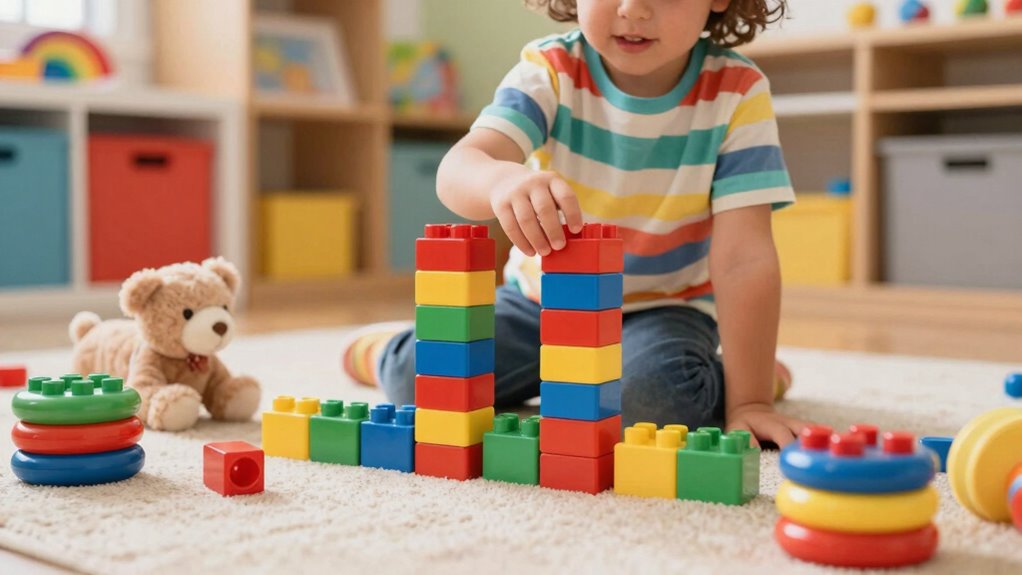
Have you ever wondered why young children often repeat the same actions during toy play? It’s a natural part of their development, serving important purposes that go beyond simple entertainment. When children engage repeatedly with toys, they’re actively supporting their motor skill development. Repetition helps them refine their fine and gross motor abilities, as they grasp, push, pull, and manipulate objects over and over. These repeated movements strengthen muscles, improve coordination, and build confidence in their physical capabilities. As they practice the same actions, they learn better control and precision, which are vital as they grow and take on more complex tasks.
Repetition helps children strengthen motor skills, improve coordination, and build confidence through repeated actions.
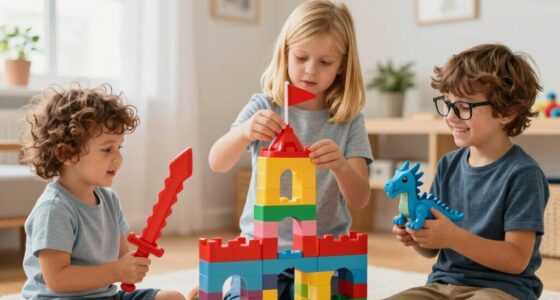
Repetition also plays a crucial role in social interaction. When children repeatedly play with a toy, they often mimic behaviors they see in others or reinforce their understanding of social cues. For example, passing a toy back and forth or taking turns during play helps them learn cooperation and patience. These repeated exchanges create opportunities for social bonding and teach them about sharing, waiting, and respecting others’ turn. By practicing these interactions, children develop essential social skills that will serve them well in wider peer groups and later in life. Additionally, consistent repetition during play can influence their brainwave patterns, supporting relaxation and emotional regulation sound therapy.
During toy play, repetition allows children to deepen their understanding of concepts and improve their cognitive skills. As they repeatedly explore a toy’s features, they discover new ways to use it or understand its purpose. This iterative process helps solidify their knowledge and builds problem-solving abilities. Repetition also reinforces neural pathways, which is crucial for brain development and long-term learning. Additionally, by repeating actions, children gain a sense of mastery and confidence, which motivates them to try new activities and challenge themselves further.
You’ll notice that children often go back to favorite toys or activities because these repetitions give them comfort and a sense of achievement. It’s a way for them to internalize skills, understand their environment, and express themselves. Supporting this process by providing diverse toys and encouraging sharing and turn-taking can help children maximize the benefits of repetition, making their play both fun and developmental. Recognizing that repetition is a natural learning process can help caregivers better support children’s ongoing growth and exploration.
preschool motor skills development toys
As an affiliate, we earn on qualifying purchases.
As an affiliate, we earn on qualifying purchases.
Frequently Asked Questions
How Does Repetition Influence a Child’s Long-Term Developmental Skills?
Repetition helps you build your child’s long-term developmental skills by reinforcing motor development and language acquisition. When they repeat actions, they strengthen neural pathways, improving coordination and fine motor skills. Repeated language exposure boosts vocabulary and communication abilities. You notice their confidence grow as they master new skills through consistent practice. Overall, repetition provides a foundation for your child’s cognitive growth, making learning more effective and enjoyable.
Are There Specific Toys That Promote Beneficial Repetition?
Imagine a child flipping through a storybook, each page turn revealing new adventures—this is where toys like interactive storytelling kits shine. These toys promote beneficial repetition, encouraging sensory exploration and language skills. They invite children to revisit favorite stories or activities, deepening understanding and engagement. By repeating familiar narratives or tasks, kids build confidence and cognitive skills, making these toys essential for fostering development through joyful, purposeful play.
Can Too Much Repetition Lead to Boredom in Preschool Play?
Yes, too much repetition can lead to boredom in preschool play. When children get stuck in monotonous routines or overstimulating cycles, they might lose interest quickly. You should mix up activities to keep their engagement high and prevent fatigue from predictable patterns. Introducing variety helps children stay curious and motivated, making playtime more enjoyable and meaningful without feeling repetitive or dull.
How Do Cultural Differences Affect Repetitive Play Behaviors?
Cultural norms act like a dance, guiding how you and your child engage with repetitive play. Play preferences are shaped by these rhythms, influencing whether your little one finds comfort or curiosity in familiar routines. In some cultures, repetition is a song of tradition, fostering mastery and confidence. In others, it’s a melody of exploration, encouraging innovation. Your child’s repetitive play reflects these cultural beats, weaving their learning into a vibrant tapestry.
What Is the Role of Caregivers in Guiding Repetitive Play?
You guide repetitive play by using caregiver strategies that encourage exploration and learning. Create a rich play environment filled with diverse toys and materials to spark curiosity. Observe your child’s interests, then introduce new ideas or ask open-ended questions to deepen engagement. Your active involvement helps children build confidence, develop skills, and understand their world better through repetitive play, making it a valuable part of their development.
toys for social skills and sharing
As an affiliate, we earn on qualifying purchases.
As an affiliate, we earn on qualifying purchases.
Conclusion
Repetition in preschool toy play isn’t just fun—it’s essential for learning. It helps you develop skills, build confidence, and foster creativity. Did you know that children who engage in repetitive play tend to show a 40% faster improvement in problem-solving abilities? By encouraging this kind of play, you support your child’s growth and understanding. Keep exploring, repeating, and enjoying playtime, because those simple loops are shaping their bright future every day.
repetition learning toys for toddlers
As an affiliate, we earn on qualifying purchases.
As an affiliate, we earn on qualifying purchases.
cognitive development toys for preschoolers
As an affiliate, we earn on qualifying purchases.
As an affiliate, we earn on qualifying purchases.
Fall Picks
fall essentials
As an affiliate, we earn on qualifying purchases.