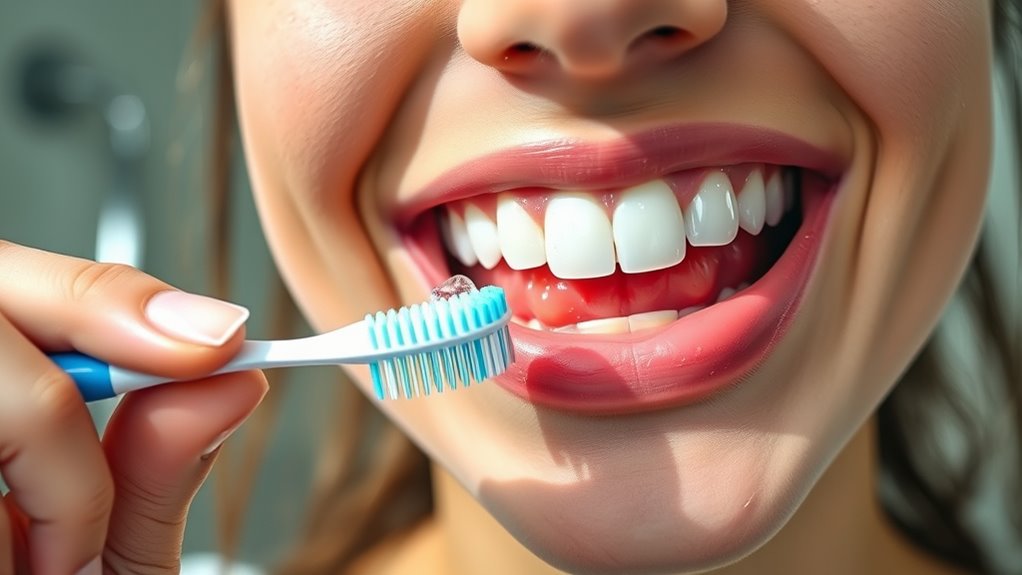

To prevent tooth decay and gum disease, you should maintain a consistent oral hygiene routine that includes brushing at least twice a day, flossing daily, and using mouthwash to reach areas your brush might miss. Regular dental check-ups help catch issues early. Avoid sugary foods and drinks, and stay hydrated to support your oral health. Keep your smile bright and healthy by sticking to these habits—more useful tips await as you continue to care for your teeth.

Get health and wellness essentials delivered free with Prime
- Fast, free delivery on millions of items
- Prime Video, Amazon Music and more included
- Member-only deals all year
Key Takeaways
- Maintain consistent oral hygiene with brushing twice daily, flossing, and using mouthwash to remove plaque and bacteria.
- Use fluoride toothpaste and mouthwash to strengthen enamel and prevent tooth decay.
- Limit sugary and acidic foods and drinks that contribute to cavity formation and gum issues.
- Schedule regular dental check-ups for early detection and professional cleaning of dental problems.
- Practice proper flossing techniques to effectively remove plaque between teeth and below the gumline.
Have you ever wondered why maintaining good dental health is so important? It’s because your mouth is a gateway to your overall well-being. Neglecting it can lead to tooth decay, gum disease, and even more serious health issues. Fortunately, simple habits can make a big difference in preventing these problems, and understanding the benefits of mouthwash and proper flossing techniques can help you stay ahead of dental issues.
Your mouth is a gateway to your overall health—maintain it well for a healthier, brighter smile.
Mouthwash benefits are often overlooked, but they play a essential role in your daily oral hygiene routine. Using mouthwash can help reduce plaque buildup, freshen your breath, and reach areas that brushing and flossing might miss. Look for a mouthwash that contains fluoride, as it strengthens tooth enamel and helps prevent decay. Antimicrobial mouthwashes are also effective in controlling bacteria that cause gum disease. Incorporating mouthwash into your routine isn’t a substitute for brushing and flossing, but it complements these practices by providing an extra layer of protection. When you rinse, you help reduce bacteria, neutralize acids, and keep your mouth feeling fresh longer. Regular cleaning and maintenance of your oral hygiene tools can also prevent bacterial buildup and enhance overall effectiveness.
Flossing techniques are equally crucial for maintaining healthy teeth and gums. Proper flossing removes plaque and food particles from between your teeth and below the gumline, areas that a toothbrush can’t reach effectively. To do it right, take about 18 inches of floss, wind most of it around your middle fingers, and hold it tightly between your thumbs and forefingers. Gently slide the floss between your teeth, curving it around each tooth in a C-shape and moving it up and down. Be gentle to avoid irritating your gums, and don’t forget to floss the back teeth. Regular flossing prevents plaque buildup that leads to cavities and gum inflammation. If you’re unsure about your technique, consult your dentist or hygienist for a demonstration, as proper flossing can be more effective than just snapping the floss in and out.
Incorporating both mouthwash benefits and effective flossing techniques into your daily routine can considerably enhance your dental health. These habits work together to remove plaque, prevent cavities, and keep your gums healthy. Remember, consistency is key—brushing twice a day, flossing daily, and using mouthwash can help you avoid costly dental treatments down the line. Your mouth reflects your overall health, so investing a few minutes each day in proper dental care will pay off with a brighter, healthier smile. Maintaining good dental habits isn’t just about appearance; it’s about safeguarding your health and feeling confident every day. Regular dental maintenance and hygiene practices are vital for long-term oral health.
Products Worth Considering

Philips Sonicare 5950 Rechargeable Electric Toothbrush with 2 Brush Heads, Navy

Oral-B iO Series 5 Rechargeable Electric Toothbrush with Travel Case and 3 Brush Heads, Black

Philips Sonicare DiamondClean 9000 Electric Toothbrush Bundle, HX9912/72
As an affiliate, we earn on qualifying purchases.
Frequently Asked Questions
How Often Should I Visit the Dentist for Check-Ups?
You should visit the dentist for check-ups every six months to maintain good dental hygiene and prevent issues. Regular oral examinations help catch problems early, making treatment easier and more effective. If you have specific concerns or a history of dental problems, your dentist might recommend more frequent visits. Consistent visits make sure your teeth and gums stay healthy, reducing the risk of decay and gum disease while keeping your smile bright.
Can My Diet Really Impact My Oral Health?
Yes, your diet and nutrition directly impact your oral health. Eating sugary foods and drinks feeds bacteria that cause tooth decay and gum disease. Incorporate nutrient-rich foods like fruits, vegetables, and dairy to strengthen your teeth and gums. Along with good oral health habits like brushing and flossing, a balanced diet helps keep your mouth healthy and reduces the risk of dental problems. You control your oral health by making smart dietary choices.
Are There Natural Remedies to Prevent Tooth Decay?
Yes, you can try natural remedies like herbal mouthwashes and oil pulling to help prevent tooth decay. Herbal mouthwashes with ingredients like peppermint or tea tree oil can reduce bacteria and freshen breath. Oil pulling with coconut or sesame oil can help remove plaque and toxins from your mouth. Incorporate these practices into your routine, but remember, they work best alongside good oral hygiene and regular dental visits.
What Are the Signs of Early Gum Disease?
Don’t ignore the writing on the wall—early gum disease shows as bleeding gums, especially during brushing or flossing. You might notice redness, swelling, and bad breath that won’t go away. These are common gingivitis symptoms and early gum signs that signal trouble. If you catch them early, you can stop progress before it turns into more serious issues. Pay attention to your gums; they’re trying to tell you something important.
Is Fluoride Safe for Children’s Dental Health?
Fluoride safety is well-established for children’s dental care when used appropriately. You should guarantee your child uses the right amount of fluoride toothpaste and receives professional fluoride treatments if recommended. This helps strengthen their enamel and prevents decay without risking fluorosis. Don’t worry—when used properly, fluoride is a safe, effective tool in promoting healthy teeth and maintaining good dental health for your child.
Conclusion
Take charge of your dental health by brushing regularly, flossing daily, and visiting your dentist often. Protect your smile from decay, guard your gums from disease, and keep your confidence shining bright. Prioritize your oral health to prevent pain, avoid costly treatments, and enjoy the confidence of a healthy, beautiful smile. Remember, your mouth is a gateway to your overall well-being—so care for it, cherish it, and keep it healthy every day.