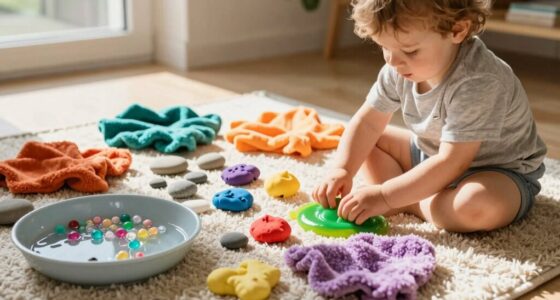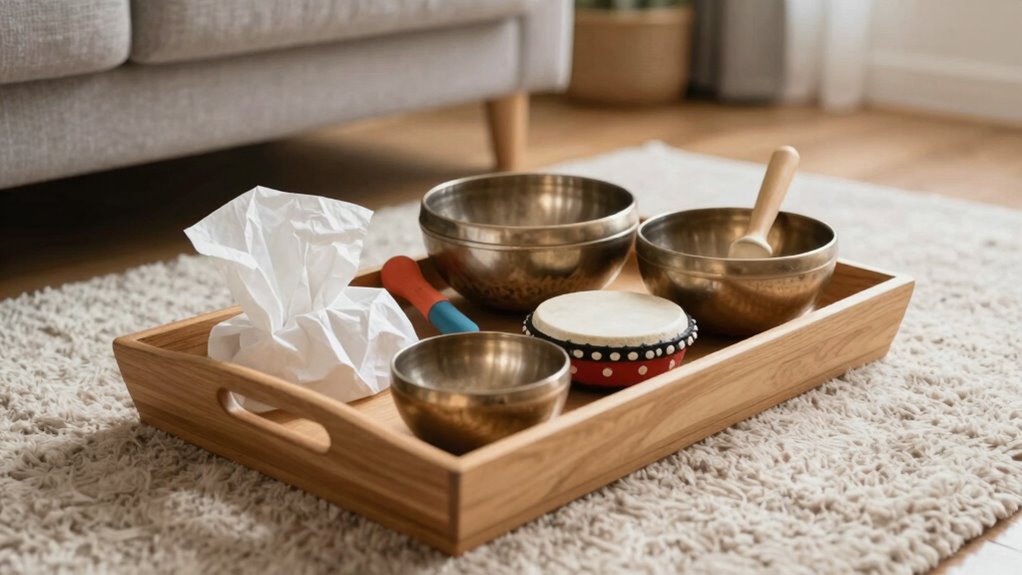

You can create fun sound-based sensory play at home using household items like pots, pans, and utensils to make a homemade drum set, helping your child explore pitch, rhythm, and volume. Encourage them to produce different sounds with shakers made from bottles filled with rice or beans, or clinking spoons and crinkly paper. Play games like matching sounds or hiding objects to boost listening skills. Keep exploring these easy ideas to enhance your child’s auditory development and have fun together.

Get health and wellness essentials delivered free — and shop member deals
- Fast, free delivery on millions of items
- Access to Prime Big Deal Days deals on October 6–7
- Prime Video, Amazon Music and more included
Key Takeaways
- Use household items like pots, pans, and utensils to create homemade drums and explore different sounds.
- Incorporate simple activities like sound matching and object hiding to enhance listening skills.
- Fill bottles with rice or beans to make shakers, promoting varied sound exploration.
- Use everyday items such as crinkly paper and metal spoons for diverse auditory experiences.
- Dedicate short daily sessions to playful sound activities, fostering creativity and sensory development.
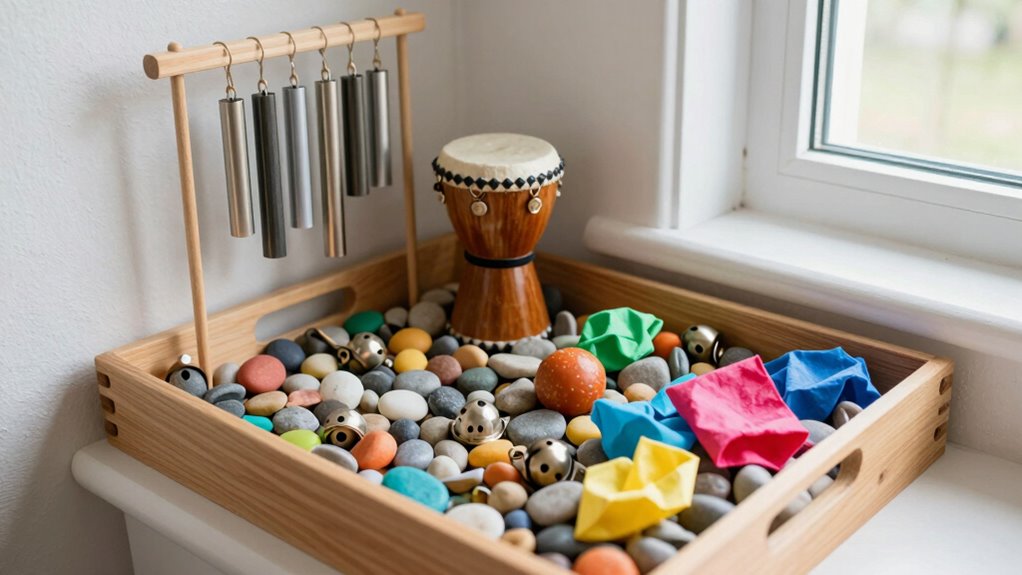
Sound plays a powerful role in sensory development, engaging children’s curiosity and encouraging exploration through auditory experiences. When you introduce simple sound-based activities at home, you open the door to a world of discovery that’s both fun and educational. One effective way to do this is through music exploration, where you encourage your child to listen, sing, and create sounds using everyday household items. For example, you can gather pots, pans, and utensils to make a homemade drum set. As your child taps and explores the different sounds, they develop an understanding of pitch, rhythm, and volume. These activities stimulate their auditory senses and foster an early appreciation for music, all while encouraging physical movement and coordination. Incorporating high-quality audio equipment can enhance the clarity of sounds and make the experience even more immersive.
Engage children with sound play using household items to nurture auditory skills and a love for music.
Auditory games are another fantastic way to boost sensory development. You can play simple games like “sound matching,” where you produce various noises—clapping, stomping, or shaking objects—and ask your child to identify or replicate them. This sharpens their listening skills and enhances their ability to differentiate between sounds. Alternatively, hide a small object in a room and make noise with it, then challenge your child to find the source of the sound. These games make listening active and engaging, helping your child develop focus and auditory discrimination. Including auditory discrimination activities can further improve their ability to distinguish subtle differences in sounds.
You don’t need fancy equipment to create these sound experiences. Use everyday household items—bottles filled with rice or beans for shakers, metal spoons for clinking, or even crinkly paper for rustling sounds. Encourage your child to experiment with these objects, discovering how different actions produce different sounds. You can also introduce singing songs or nursery rhymes, emphasizing rhythm and beat, which enhances musical exploration and auditory memory.
Incorporating these activities into your daily routine is simple and effective. Set aside a few minutes each day for music exploration or auditory games. Keep the environment relaxed and playful so your child feels free to experiment and express themselves through sound. These experiences not only develop their auditory senses but also foster creativity, language skills, and emotional expression. By making sound exploration a regular part of your home, you help your child build a strong sensory foundation that supports overall growth and learning.
As an affiliate, we earn on qualifying purchases.
Frequently Asked Questions
How Can Sound Play Activities Benefit Children With Sensory Processing Disorder?
Sound play activities help children with sensory processing disorder improve auditory discrimination and enhance their ability to distinguish different sounds. When you engage them in musical activities, it encourages musical engagement, which can boost their focus and emotional regulation. These activities also promote sensory integration, helping children better process sounds in their environment. By making sound play fun and interactive, you support their development and comfort in everyday situations.
What Safety Precautions Should Be Taken During Sound-Based Sensory Play?
You should always monitor noise levels during sound-based sensory play to prevent overstimulation or hearing damage. Keep volume at a safe level, especially with loud toys or music. Use headphone safety practices, like adjustable volume limits and breaks, to protect your child’s hearing. Supervise play closely, ensuring they don’t linger on noisy activities too long. These precautions help create a safe, enjoyable sensory experience for your child.
Are There Age-Appropriate Sound Toys for Very Young Children?
Yes, there are age-appropriate sound toy recommendations for very young children. You should choose toys that are safe, easy to grasp, and produce gentle, soothing sounds. Incorporate sensory play techniques like shaking, pressing, or squeezing to enhance their experience. These toys help develop their auditory skills and fine motor skills. Always supervise playtime to guarantee safety, and opt for toys made from non-toxic materials suitable for infants and toddlers.
How Can Parents Encourage Language Development Through Sound Play?
Did you know that early sound exploration can boost language skills? You can encourage language development through sound play by narrating what your child hears, modeling new words, and engaging in auditory stimulation activities. Use simple instruments or household objects to create varied sounds, helping your child connect words with sounds. This active participation fosters vocabulary growth and strengthens communication skills, making learning fun and natural during everyday interactions.
Can Sound-Based Activities Help With Children’s Emotional Regulation?
Yes, sound-based activities can help children with emotional regulation. Through music therapy, kids learn to express and manage emotions by engaging with calming sounds and rhythms. Activities that promote auditory discrimination, like distinguishing different sounds, also develop their awareness and self-control. When you incorporate these activities into play, you support your child’s ability to recognize feelings, soothe themselves, and build resilience through engaging, sensory-rich experiences.
children's musical instrument set
As an affiliate, we earn on qualifying purchases.
As an affiliate, we earn on qualifying purchases.
Conclusion
Sound-based sensory play sparks curiosity and enhances auditory development in children. Engaging in simple activities at home can boost their cognitive skills and foster a love for learning. Did you know that early sensory experiences can improve neural connections, leading to better language skills? By incorporating these playful ideas, you’re not only creating fun moments but also supporting your child’s growth. Keep exploring different sounds—you’re shaping a curious, attentive mind right from home.
homemade shaker bottles for kids
As an affiliate, we earn on qualifying purchases.
As an affiliate, we earn on qualifying purchases.
As an affiliate, we earn on qualifying purchases.
Fall Picks
fall essentials
As an affiliate, we earn on qualifying purchases.