
TL;DR

Get health and wellness essentials delivered free — and shop member deals
- Fast, free delivery on millions of items
- Access to Prime Big Deal Days deals on October 6–7
- Prime Video, Amazon Music and more included
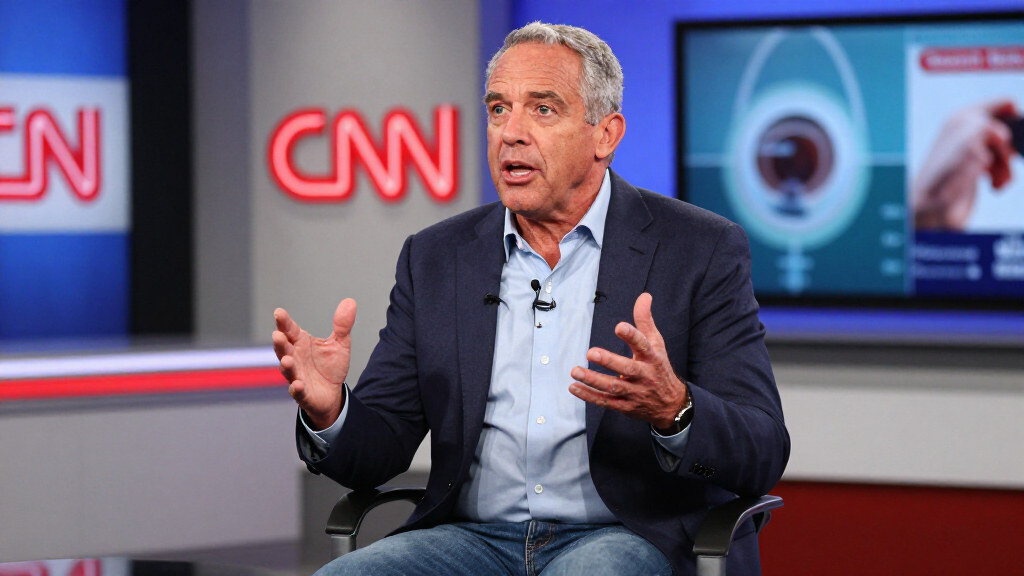
Robert F. Kennedy Jr. accused Dr. Anthony Fauci of mishandling the COVID-19 response and spread false claims about vaccines and other diseases during a CNN interview. The event highlights ongoing divisions over public health policies and misinformation.
In a heated interview on CNN’s “State of the Union,” Robert F. Kennedy Jr. accused Dr. Anthony Fauci of mismanaging the US COVID-19 response and promoted several debunked claims about vaccines, COVID-19, and other diseases. This marks a significant escalation in Kennedy’s public criticism of mainstream health authorities, raising concerns about the spread of misinformation amid ongoing public health debates.
During the interview, Kennedy blamed Fauci and the federal government for the perceived failures of the pandemic response, asserting that the lockdowns caused more harm than good. He dismissed the role of President Donald Trump in the initial handling, claiming the lockdowns were the primary damage, despite oversight by state and local officials responding to overwhelmed hospitals. Dr. Ashish Jha, former White House COVID-19 coordinator, responded by condemning Kennedy’s claims as factually false and emphasizing that accountability lies with political leaders, not scientists.
Kennedy also revived controversial assertions about vaccines, claiming that the MMR vaccine is ineffective for many and that waning immunity contributes to outbreaks. He linked low vaccination rates to recent measles surges, including a major outbreak in South Carolina with nearly 1,000 cases. Health officials have attributed the resurgence to vaccine hesitancy fueled by misinformation, which Kennedy has promoted repeatedly.
Additionally, Kennedy alleged that gain-of-function research is responsible for COVID-19 and other diseases like RSV, citing past experiments with bird flu viruses. He also claimed that studies link prenatal Tylenol exposure to autism, a claim that lacks consensus among scientists and health authorities.
Impact of Kennedy’s Claims on Public Health Discourse
Kennedy’s statements, if widely believed, could undermine trust in vaccines and public health measures, potentially leading to lower vaccination rates and increased disease outbreaks. His influence as a political figure with a platform amplifies concerns about the spread of misinformation, which can hinder efforts to control preventable diseases and respond effectively to health crises.
vaccination misinformation awareness books
As an affiliate, we earn on qualifying purchases.
As an affiliate, we earn on qualifying purchases.
Recent Public Disputes Over COVID-19 and Vaccines
Kennedy’s criticism of Fauci follows a series of public confrontations, including a congressional hearing where Fauci invoked the Fifth Amendment multiple times amid Republican questioning. Kennedy’s skepticism about vaccines and government health policies aligns with a broader movement that questions mainstream science, impacting public perception and policy debates. The US is experiencing its worst measles resurgence in over three decades, with low vaccination coverage identified as a key factor.
“Accountability has to be with our political leaders. The claims Kennedy made about vaccines and the pandemic response are factually not true.”
— Dr. Ashish Jha
As an affiliate, we earn on qualifying purchases.
Unverified Claims and Potential Misinformation Spread
While Kennedy’s claims about vaccine efficacy, gain-of-function research, and COVID-19 origins are widely disputed and considered false by experts, it remains unclear how much influence his statements will have on public opinion or policy. The full impact of his CNN appearance on public trust and vaccination rates is still developing.
As an affiliate, we earn on qualifying purchases.
Monitoring Public Response and Official Reactions
Health authorities and fact-checkers are likely to continue addressing Kennedy’s claims to counter misinformation. Political and public health leaders may also respond with statements reaffirming scientific consensus. The next steps include observing vaccination trends and public discourse following this high-profile interview, alongside ongoing investigations into vaccine misinformation’s impact on public health.
autism prenatal Tylenol research books
As an affiliate, we earn on qualifying purchases.
As an affiliate, we earn on qualifying purchases.
Key Questions
What specific claims did RFK Jr. make about vaccines?
Kennedy claimed that the MMR vaccine effectiveness wanes for some individuals and linked low vaccination rates to recent measles outbreaks. He also suggested that vaccine-induced immunity is not lifelong for many people, which contradicts scientific consensus.
Did Kennedy provide evidence for his claims?
Kennedy cited studies and theories, but experts and health authorities have dismissed many of his assertions as misinformation or debunked claims. His statements lack support from the scientific community.
How did health officials respond to Kennedy’s claims?
Dr. Ashish Jha and other health officials strongly refuted Kennedy’s assertions, emphasizing that public health decisions are based on scientific evidence and that misinformation can harm efforts to control preventable diseases.
What is the significance of this controversy?
This controversy underscores ongoing divisions over public health authority and highlights how misinformation can influence public perceptions, potentially impacting vaccination rates and disease control efforts.
What are the next steps for public health officials?
Officials are expected to continue fact-checking Kennedy’s claims, promote accurate information, and monitor vaccination trends and disease outbreaks in response to misinformation spreading from high-profile figures.
Source: Google Trends
Fall Picks
fall essentials
As an affiliate, we earn on qualifying purchases.