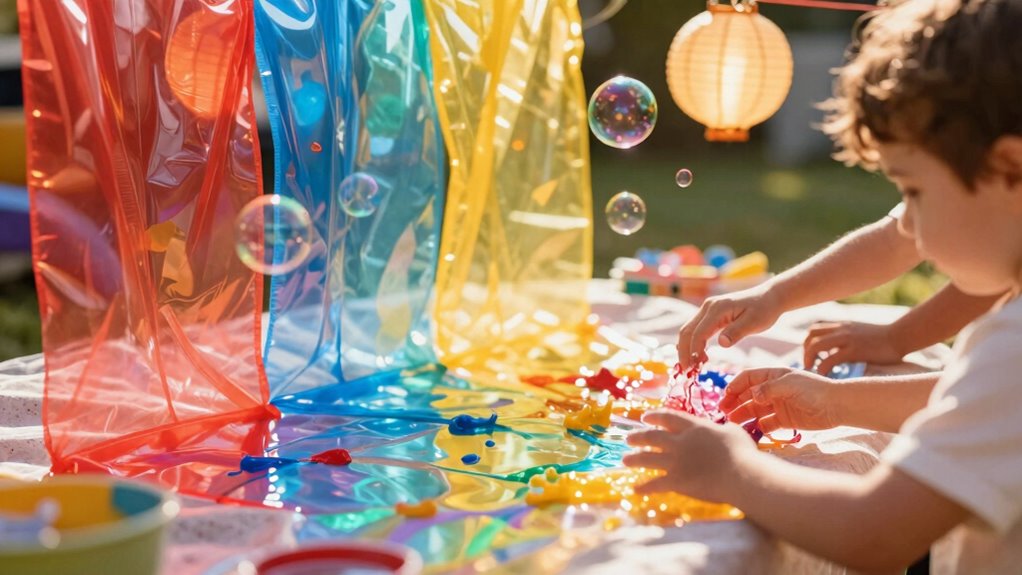

To use light and color in sensory play, you can incorporate mirrors, shiny surfaces, or water to create reflections and movement that captivate children. Experiment with colored materials like cellophane, gels, or water to mix hues and explore transparency. Changing angles or overlapping colors helps kids understand light behavior and color blending. Bright contrasts and playful setups boost visual discrimination and curiosity. Keep exploring these ideas to discover even more exciting ways to stimulate their senses and learning.
Key Takeaways
- Incorporate mirrors, shiny surfaces, or water trays to create engaging light reflections and promote exploration.
- Use colored transparent materials like cellophane or gels over light sources to demonstrate hue blending.
- Experiment with angles and surfaces to explore reflection, refraction, and contrast in visual effects.
- Combine tactile activities with color mixing using water, slime, or paint to enhance sensory and color understanding.
- Use contrasting colors and patterns to develop visual discrimination and perception skills through light and color play.
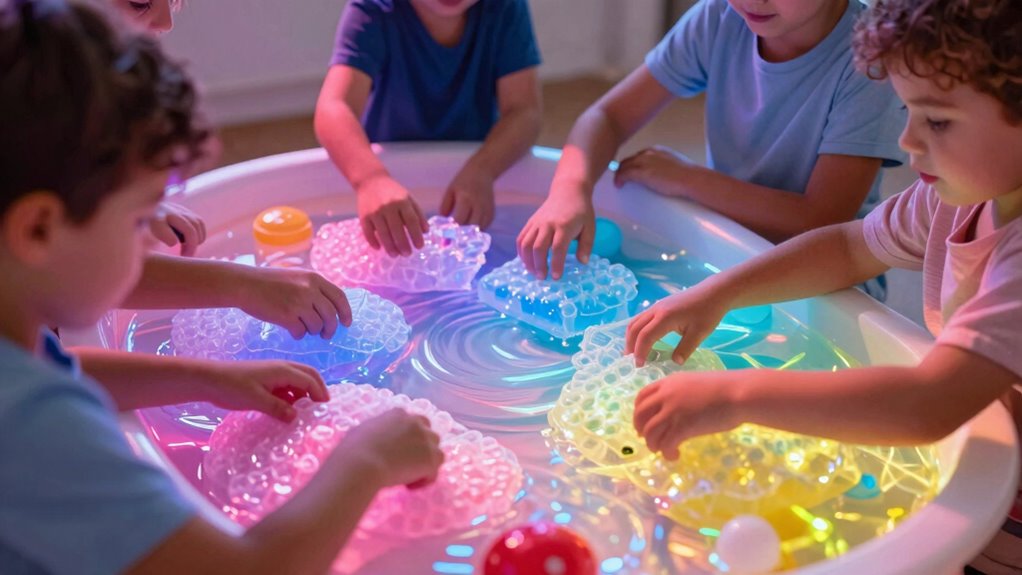
Light and color are powerful tools that can transform sensory play into an engaging and calming experience for children. When you introduce light reflections, you create mesmerizing visual effects that draw children’s attention and encourage exploration. Use mirrors, shiny surfaces, or even water to bounce light around the space. As children observe how light reflects off different surfaces, they develop a better understanding of how light behaves, fostering curiosity and sensory awareness. You might set up a tray of water with floating objects or a shiny metallic sheet to enhance these reflections. Watching the way light dances and bounces can be enthralling, helping children focus and relax. Incorporating light reflections can also serve as a foundational activity that helps children grasp basic physical concepts such as reflection and refraction. Exploring these concepts through hands-on activities supports visual discrimination, which is essential for cognitive development. Additionally, engaging with light reflections encourages children to experiment with different angles and surfaces, enhancing their problem-solving skills and understanding of physical properties. Creating opportunities to observe how altering angles changes the reflections further deepens their comprehension of optics and light behavior. Understanding the role of contrast in visual perception can further enhance children’s ability to distinguish different reflections and patterns, making sensory play even more enriching. Incorporating these activities into sensory play allows children to develop attention span and concentration skills in a natural, playful manner.
Color blending is another effective way to make sensory play more dynamic and engaging. When you mix different colors of light or transparent materials, children see how colors combine and change, stimulating their visual senses and encouraging experimentation. For example, using colored cellophane or transparent gels over light sources allows you to blend hues easily. As children manipulate these materials, they observe how red and blue might produce purple, or how overlapping colors create new shades. This process not only sparks creativity but also helps them understand concepts like color mixing and transparency. You can also incorporate colored water, slime, or paint to demonstrate color blending in a tactile way.
As an affiliate, we earn on qualifying purchases.
Frequently Asked Questions
Can Light and Color Sensory Play Be Safe for All Children?
Yes, light and color sensory play can be safe for all children when you take proper precautions. You can incorporate light therapy and color therapy safely by choosing age-appropriate equipment, monitoring exposure times, and avoiding overly bright or flashing lights. Always supervise children closely, especially during light therapy activities, and consult with a healthcare professional if you’re unsure. With careful planning, this play promotes sensory development safely.
What Age Is Appropriate for Light and Color Sensory Activities?
You can introduce light and color sensory activities as early as infancy, when tiny hands are enthusiastic explorers. Young children absorb the magic of color theory through simple light sources like flashlights or colored filters, revealing vibrant worlds. As their curiosity grows, so does their understanding of color, making these activities perfect for toddlers and preschoolers. These experiences ignite wonder, nurturing their visual development and creative imagination.
How Can I Prevent Overstimulation During Sensory Play?
To prevent overstimulation during sensory play, you should incorporate calming techniques like soft music, gentle lighting, or a quiet space. Watch for signs of sensory overload, such as fussiness or withdrawal, and be ready to pause the activity. Limit the duration of play sessions and offer breaks. By creating a calm environment and paying close attention, you help your child enjoy sensory exploration without becoming overwhelmed.
Are There Any Allergies Related to Colored Lights or Materials?
You might want to take allergy considerations and material safety into account when using colored lights or materials in sensory play. Some children could have sensitivities to certain dyes, plastics, or synthetic fabrics, which may cause minor skin or respiratory discomfort. Always choose hypoallergenic, non-toxic materials, and test new items on a small skin patch first. Being mindful of allergies ensures a safe, enjoyable experience for everyone involved.
How Do I Clean and Maintain Sensory Light Equipment?
You should regularly clean and maintain your sensory light equipment to guarantee safety and longevity. Follow cleaning routines that involve unplugging devices first, then wiping surfaces with a soft, damp cloth and mild soap. Avoid harsh chemicals that could damage the equipment. Check for any signs of wear or damage, and replace parts as needed. Proper maintenance not only keeps the equipment safe but also enhances its performance during sensory play.
colored transparent gel for sensory play
As an affiliate, we earn on qualifying purchases.
As an affiliate, we earn on qualifying purchases.
Conclusion
By playing with light and color, you turn ordinary moments into a vivid tapestry of exploration. Think of your sensory space as a painter’s palette, where every hue and shimmer invites your little one to discover new worlds. When you harness the magic of light, you reveal a universe of wonder, transforming simple play into a radiant adventure. So, let your creativity shine bright—because in this colorful dance, everyone’s senses will thank you.
As an affiliate, we earn on qualifying purchases.
mirrored sensory toys for children
As an affiliate, we earn on qualifying purchases.
As an affiliate, we earn on qualifying purchases.