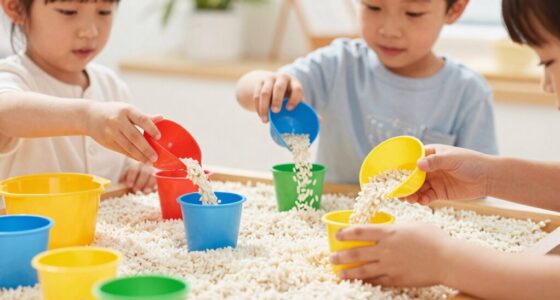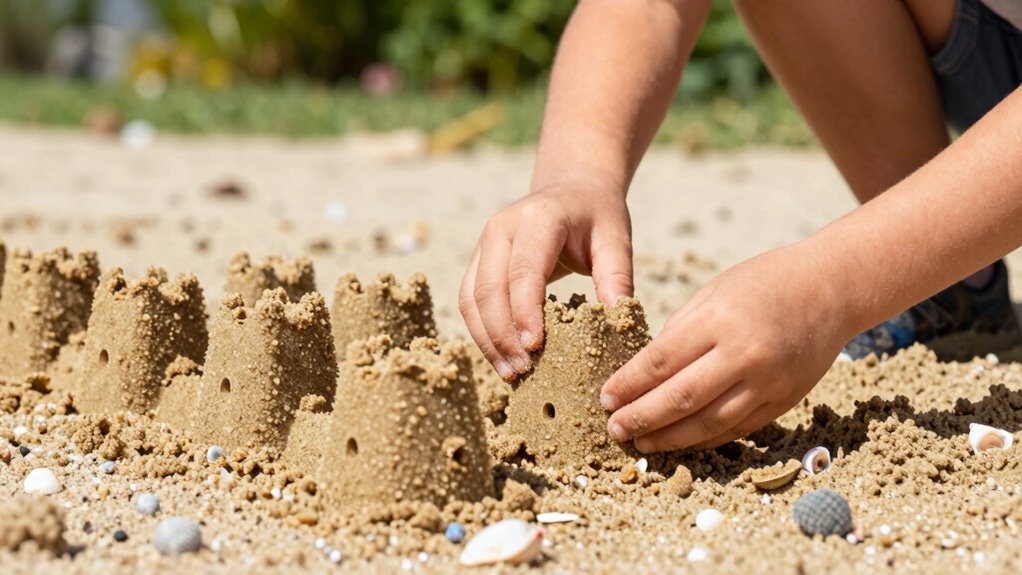

Sand play boosts your child’s creativity by encouraging open-ended exploration, building, and pattern-making. It also fosters early scientific thinking by introducing cause-and-effect relationships through experimenting with water and sand. As they manipulate materials, your child develops problem-solving skills and understanding of physical properties. Collaborative activities enhance social skills and teamwork, all while nurturing curiosity. If you’re curious about how it all works, you’ll find more insights on supporting your child’s development below.

Get health and wellness essentials delivered free — and shop member deals
- Fast, free delivery on millions of items
- Access to Prime Big Deal Days deals on October 6–7
- Prime Video, Amazon Music and more included
Key Takeaways
- Sand play encourages open-ended exploration, fostering imagination and creative problem-solving skills.
- Manipulating sand introduces early scientific concepts like cause-and-effect and material properties.
- Building and shaping structures stimulate innovative thinking and understanding of spatial relationships.
- Experimenting with sand and water promotes curiosity and foundational scientific reasoning.
- Collaborative activities in sand play enhance communication skills essential for scientific inquiry and creativity.
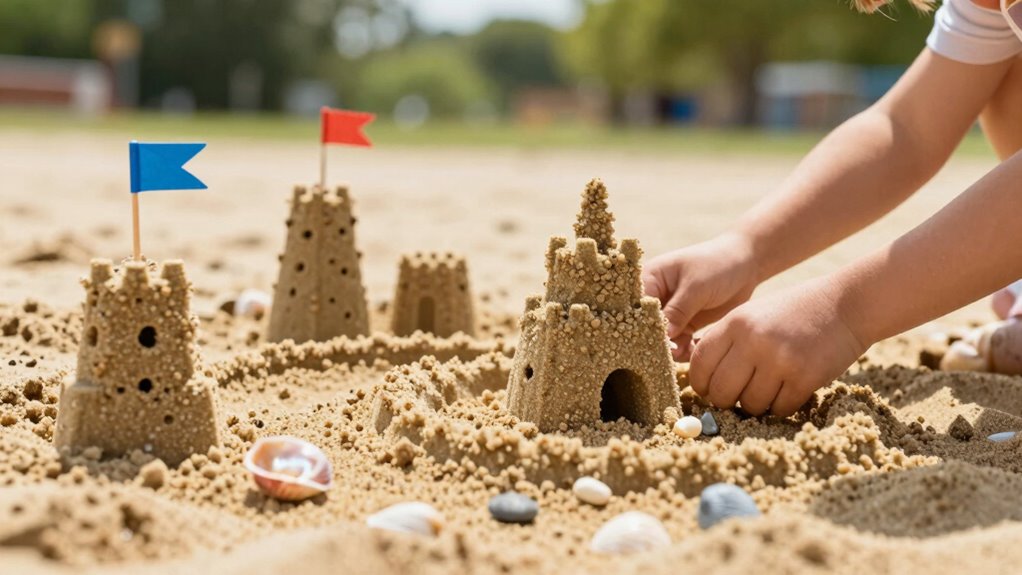
Sand play is more than just a fun activity; it actively encourages children’s creativity and early scientific thinking. As you watch a child mold, pour, and dig in the sand, you see how this simple activity stimulates their sensory development. The tactile experience of feeling the different textures of sand helps them refine their sense of touch, which is foundational for understanding the world around them. When kids pick up handfuls of sand, manipulate it with their fingers, or build structures, they’re honing their fine motor skills. These small movements strengthen hand-eye coordination and finger dexterity, which are essential for later skills like writing and drawing.
Engaging in sand play invites children to experiment freely. They might build a castle, carve out tunnels, or create patterns, sparking their imagination. This open-ended nature encourages them to think creatively, as they decide what to build and how to shape their environment. They learn through trial and error, testing ideas and observing outcomes, which introduces basic scientific concepts such as cause and effect. For example, they might notice how adding water makes the sand stick together or how different shapes hold up better than others. These observations lay the groundwork for early scientific reasoning, fostering curiosity about physical properties and natural phenomena. Understanding these properties is fundamental to developing a scientific mindset early on.
As your child manipulates the sand, they also develop problem-solving skills. They might try to fix a collapsing tower or figure out how to make a smoother surface. These challenges require planning and spatial awareness, which further enhances their cognitive development. Additionally, sand play often involves social interaction, where children share tools, collaborate on projects, or negotiate ideas. This social aspect enhances communication skills and introduces concepts of teamwork and cooperation, essential parts of scientific inquiry and creative processes. Furthermore, understanding how the properties of sand and water interact can deepen their grasp of material properties and the basics of scientific exploration. This hands-on exploration supports their understanding of the scientific method and how experiments can lead to new discoveries. Recognizing how different materials behave under various conditions supports their early exploration of scientific principles.
As an affiliate, we earn on qualifying purchases.
Frequently Asked Questions
How Does Sand Play Improve Fine Motor Skills?
Sand play improves your child’s fine motor skills by enhancing sensory development and hand-eye coordination. As they dig, mold, and manipulate sand, they strengthen their small muscles and improve their grip. This hands-on activity encourages precise movements, which are essential for writing and other tasks. By engaging in sand play regularly, your child develops better control over their movements, setting a strong foundation for future learning and coordination skills.
Can Sand Play Be Adapted for Children With Special Needs?
Yes, you can adapt sand play for children with special needs by focusing on sensory integration and using adaptive tools. Incorporate textured or scented sand to enhance sensory input, and provide tools like scoops or molds designed for easy grip. These adjustments help children explore their senses comfortably, promote fine motor skills, and encourage creativity. Tailoring activities guarantees inclusive play that supports their developmental needs effectively.
What Are the Best Types of Sand for Educational Play?
Think of the perfect educational sand as a silky, fine-textured riverbed—smooth and inviting. The best types are those with a fine, consistent sand texture, free of sharp edges or impurities. This allows children to explore with sensory benefits that calm and stimulate their senses. Non-toxic, natural sand like play-grade sand or silica sand offers safe, engaging tactile experiences, encouraging creativity and early scientific discovery through safe, versatile play.
How Can Parents Encourage Scientific Inquiry During Sand Play?
You can encourage scientific inquiry during sand play by asking open-ended questions that spark curiosity, like “What do you think will happen if we add water?” or “Why does the sand feel different when it’s wet?” Incorporate imaginative storytelling to make experiments fun, and focus on sensory exploration to help your child observe changes and patterns. This approach nurtures their innate curiosity and helps develop early scientific thinking skills.
Are There Safety Concerns With Certain Types of Sand?
Sure, some types of sand might seem harmless, but beware of sand safety hazards. Certain sands contain hazardous materials or tiny particles that can irritate or harm your child’s skin and lungs. Always opt for non-toxic, child-safe sand specifically made for play. Don’t let hazardous materials turn your sandbox into a secret science experiment with unintended dangerous consequences. Safety first, because fun shouldn’t come with hidden hazards!
children's sensory sand and water table
As an affiliate, we earn on qualifying purchases.
As an affiliate, we earn on qualifying purchases.
Conclusion
You might be surprised to learn that children who engage in sand play show a 30% increase in creative problem-solving skills. By exploring textures, shapes, and building structures, you’re helping develop their imagination and early scientific thinking. Sand play isn’t just fun—it’s a powerful tool to boost your child’s cognitive growth. So, next time they dig, build, or pour, remember you’re nurturing their curiosity and creativity for a lifetime of learning.
early science experiment kit for kids
As an affiliate, we earn on qualifying purchases.
As an affiliate, we earn on qualifying purchases.
kids building and pattern-making sand toys
As an affiliate, we earn on qualifying purchases.
As an affiliate, we earn on qualifying purchases.
Fall Picks
fall essentials
As an affiliate, we earn on qualifying purchases.