
Snoring happens when relaxed throat muscles and tissue vibrations partially block your airway during sleep, creating noise. Factors like sleeping on your back, having a narrow airway, or excess tissue can worsen it. Lifestyle habits such as drinking alcohol, smoking, or being overweight also play a role. Simple fixes like changing sleep positions or using special pillows may help, but understanding the causes can lead to more effective solutions—keep exploring to find out how you can reduce or stop snoring altogether.

Get health and wellness essentials delivered free — and shop member deals
- Fast, free delivery on millions of items
- Access to Prime Big Deal Days deals on October 6–7
- Prime Video, Amazon Music and more included
Key Takeaways
- Snoring results from partial airway blockage causing tissue vibrations during sleep, often worsened by relaxed muscles and sleep position.
- Sleeping on the back increases airway collapse, while side sleeping and elevated pillows help keep airways open.
- Lifestyle habits like alcohol, smoking, and poor hydration relax or irritate airway tissues, intensifying snoring.
- Medical conditions such as sleep apnea contribute to snoring, requiring proper diagnosis and treatments like CPAP or surgery.
- Non-medical aids (nasal strips, mouthguards) and lifestyle changes (weight management, quitting smoking) effectively reduce snoring.
As an affiliate, we earn on qualifying purchases.
What Causes Snoring and How It Develops

Snoring occurs when airflow through your mouth and nose is partially blocked during sleep, causing the tissues in your throat to vibrate. This disruption often aligns with changes in your sleep cycle, especially during lighter sleep stages when muscle tone decreases. As your muscles relax, your airway narrows, affecting your breathing patterns. When breathing becomes more labored or irregular, the airflow creates vibrations that produce snoring sounds. These vibrations happen because your tissues are fluttering against each other due to the constricted airway. Over time, repeated interruptions in breathing patterns can worsen snoring. Understanding how your sleep cycle influences muscle relaxation and airway openness helps explain why snoring occurs and how it develops during restful sleep. Additionally, recent advancements in AI-powered solutions may offer innovative approaches to address sleep-related issues. Maintaining healthy sleep habits can also significantly improve your overall sleep quality and potentially reduce snoring.
adjustable sleep pillow for snoring
As an affiliate, we earn on qualifying purchases.
As an affiliate, we earn on qualifying purchases.
How Sleep Position and Anatomy Affect Snoring

Your sleep position can markedly influence snoring, with sleeping on your back making airway collapse more likely. Anatomical features like a thick neck or a narrow airway also increase the chances of snoring. Understanding how these factors interact can help you find ways to reduce or prevent snoring. Additionally, implementing risk management strategies can help address underlying issues related to sleep disturbances. For example, body positioning can be adjusted to promote better airflow and minimize snoring. Incorporating multi-functional gear in your sleep environment, such as adjustable pillows, can further enhance comfort and reduce snoring. Using essential oils like eucalyptus oil may also help alleviate congestion that contributes to snoring. Furthermore, utilizing accessibility features can assist individuals with specific needs to create a more conducive sleep environment.
Impact of Sleep Posture
The way you sleep can substantially influence whether you snore, as your posture affects the openness of your airways. Poor sleep comfort or unsuitable bed arrangements can cause you to sleep in positions that worsen airway blockage. For example, sleeping on your back may cause your tongue and soft palate to collapse to the back of your throat, increasing snoring. Adjusting your bed setup—such as using pillows that elevate your head—can help keep airways open. Incorporating top car protection features like a padded mattress can enhance overall sleep quality, further aiding in reducing snoring. Additionally, using lightweight foundations can also help improve skin texture, making you feel more refreshed. Side sleeping is often more effective at reducing snoring because it prevents airway obstruction caused by gravity. In fact, sleep posture can play a crucial role in minimizing snoring episodes. Your sleep posture directly impacts airflow, so experimenting with different positions and ensuring proper sleep comfort can make a significant difference in minimizing snoring episodes. Additionally, understanding ethics in genetic testing can provide insights into potential underlying health issues contributing to snoring.
Anatomical Factors Influencing Snoring
Anatomical differences in your airway and surrounding structures play a significant role in snoring, especially when combined with certain sleep positions. Narrow nasal passages can restrict airflow, causing vibrations that produce noise. If your nasal passages are blocked or congested, you’re more likely to snore. Additionally, tongue positioning during sleep matters; a relaxed tongue can fall back and partially block the airway, increasing snoring risk. Your jaw alignment and throat tissue also influence airflow, with larger or more relaxed tissues contributing to obstructions. Certain positions, like sleeping on your back, can worsen these issues by allowing the tongue and soft tissues to collapse backward. Understanding these anatomical factors helps you identify potential causes and consider targeted solutions for reducing snoring. Moreover, high refresh rates can enhance your overall comfort and quality of sleep by minimizing disturbances.
As an affiliate, we earn on qualifying purchases.
How Lifestyle Habits Contribute to Snoring

Lifestyle habits play a crucial role in whether or not you snore, as certain behaviors can relax your airway muscles or increase nasal congestion. Making diet modifications, like reducing alcohol and heavy meals before bed, can prevent airway relaxation that causes snoring. Incorporating relaxation techniques, such as deep breathing exercises or meditation, helps you relax your muscles and reduce stress that might worsen snoring. Additionally, understanding heat buffering can help when choosing your sleep environment, ensuring you maintain a comfortable temperature that promotes better airflow. Smoking irritates nasal passages and throat tissues, increasing congestion and airway resistance. Maintaining a healthy weight also minimizes fatty deposits around your neck, which can block airflow. Furthermore, using eco-friendly products in your bedroom can reduce irritants that may exacerbate snoring. By adjusting your habits—cutting back on alcohol, practicing relaxation methods, quitting smoking, and managing weight—you can markedly decrease snoring and improve your sleep quality. Additionally, mind-body healing practices can enhance your overall well-being, further supporting healthier sleep patterns. To further support your sleep quality, consider integrating regular physical activity into your routine, which can improve your overall respiratory function. Furthermore, exploring molecular-scale innovations in therapeutic devices may offer new solutions for snoring-related issues.
As an affiliate, we earn on qualifying purchases.
Medical Conditions That Can Cause Snoring

While changing habits can reduce snoring, underlying medical conditions often play an important role. Sleep apnea is a major condition linked to loud snoring and disrupted sleep. It causes your airway to repeatedly block or collapse, leading to breathing pauses. If you notice excessive daytime sleepiness or choking during sleep, medical intervention is essential. Nasal congestion is another common issue that can cause snoring by blocking airflow through your nose, forcing you to breathe through your mouth. Balancing support and boundaries in addressing these medical conditions often requires consulting a healthcare professional who may recommend treatments like CPAP, medications, or surgery. Additionally, testing accuracy in diagnosing these conditions can significantly influence treatment effectiveness. Exploring new frontiers in digital content and research can also provide valuable insights into managing underlying issues, which can considerably improve your sleep quality and reduce snoring. Moreover, maintaining a balanced diet can help reduce inflammation and improve overall respiratory health. Engaging in aquatic exercises can also support respiratory function and enhance overall health, potentially contributing to reduced snoring.
Factors That Can Worsen Your Snoring

Factors That Can Worsen Your Snoring
Certain factors can substantially worsen your snoring, making it more frequent or louder. These include habits or conditions that increase airway inflammation or trigger dietary issues.
- Consuming alcohol before bed relaxes your throat muscles, worsening airway collapse. Additionally, attention to detail in your evening routine can help identify specific habits that contribute to snoring.
- Eating heavy or spicy meals late at night can inflame airways, increasing snoring intensity.
- Smoking irritates your airways, causing inflammation that blocks airflow.
- Allergic reactions or environmental irritants lead to airway inflammation, deepening snoring sounds. Additionally, proper aftercare is crucial for preventing irritation that can contribute to airway issues.
Proven Methods to Reduce or Stop Snoring
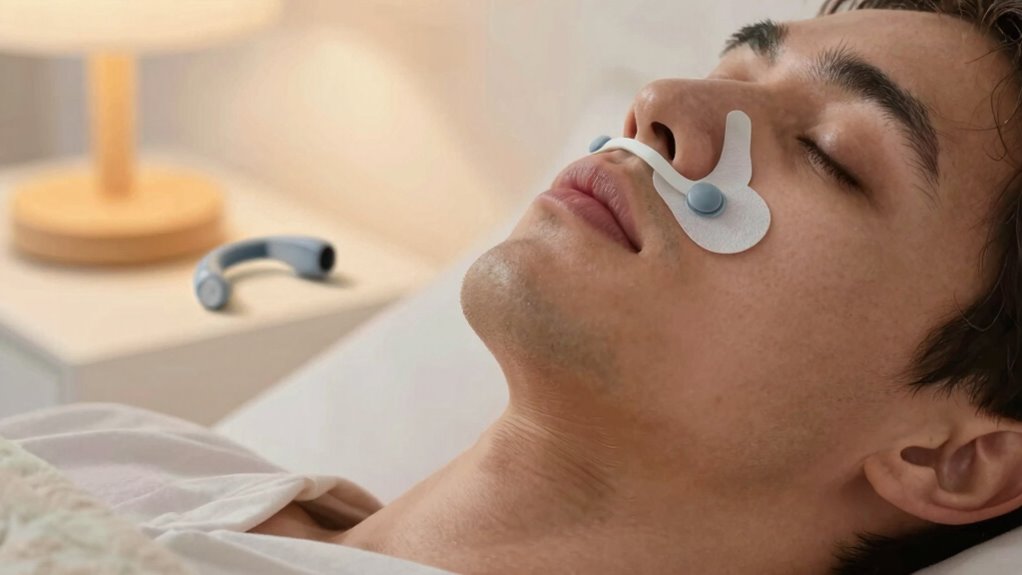
You can often reduce or stop snoring by changing your sleep position, like sleeping on your side instead of your back. Making simple lifestyle habits, such as quitting smoking or losing weight, can also make a big difference. If these methods aren’t enough, medical treatments are available to help you breathe easier and sleep more soundly.
Sleep Position Adjustments
Adjusting your sleep position can considerably reduce or even stop snoring. Your sleep position influences how air flows through your airways, and small changes can make a big difference. Here are proven methods to help:
- Sleep on your side instead of your back to prevent your tongue and soft tissues from blocking your airway.
- Use a pillow elevation to keep your head slightly raised, opening your airways more effectively.
- Avoid sleeping on your stomach, which can strain your neck and worsen snoring.
- Try a specialized pillow designed to support proper sleep position, reducing airway obstruction.
Lifestyle Habit Changes
Making simple lifestyle changes can considerably decrease snoring episodes. Start with diet modifications by reducing alcohol intake and avoiding heavy meals before bed, as these can relax your throat muscles and worsen snoring. Incorporate regular exercise routines to help maintain a healthy weight, which can decrease fatty deposits around your neck that obstruct airflow. Quitting smoking also improves your airway health and reduces inflammation. Staying consistent with these habits not only supports weight management but also enhances your overall sleep quality. Additionally, staying hydrated can prevent mucus buildup that narrows airways. These small but effective adjustments can make a significant difference in reducing snoring, leading to quieter nights and better rest for both you and your partner.
Medical Treatment Options
Medical treatments for snoring offer proven solutions that can considerably improve sleep quality. You might explore alternative therapies like nasal strips or mouthguards, which can open airways naturally. If these aren’t enough, surgical interventions such as uvulopalatopharyngoplasty or radiofrequency ablation can provide lasting relief. Here are some options that could change your nights:
- Nasal devices—boost airflow and reduce vibration.
- Oral appliances— reposition your jaw for better breathing.
- Alternative therapies—relax your throat muscles or clear nasal passages.
- Surgical interventions—target the root cause for a permanent fix.
When to Seek Medical Advice for Persistent Snoring

Persistent snoring isn’t something you should ignore, especially if it happens regularly or worsens over time. If your snoring persists despite good sleep hygiene and stress management, it’s time to see a healthcare professional. Frequent snoring can signal underlying issues like sleep apnea, which can impact your health. Seek medical advice if you experience daytime fatigue, choking sounds during sleep, or pauses in breathing. A doctor can evaluate your symptoms, possibly recommend a sleep study, and determine if treatment is needed. Don’t delay if your partner’s sleep is disrupted or if your snoring is affecting your quality of life. Addressing persistent snoring early can prevent more serious health problems and improve your overall sleep quality.
Frequently Asked Questions
Can Diet Changes Reduce Snoring Effectively?
Yes, diet modifications can help reduce snoring by promoting better overall health and reducing excess weight, which often contributes to airway obstruction. Cutting back on alcohol and heavy meals before bed can improve your sleep quality. Additionally, maintaining good sleep posture, like sleeping on your side, keeps airways open. Combining diet changes with improved sleep posture can markedly lessen snoring episodes and enhance your restful sleep.
Are There Specific Exercises to Prevent Snoring?
Yes, there are specific exercises to prevent snoring. You can try breathing exercises to improve airflow and reduce throat relaxation during sleep. Throat strengthening exercises, like repeatedly saying vowels or swallowing, help tighten muscles and minimize vibrations that cause snoring. Incorporate these exercises into your daily routine, and over time, they can substantially decrease your snoring by promoting better muscle tone and airflow control during sleep.
How Does Age Influence Snoring Severity?
As you age, snoring often worsens because aging muscles weaken, making your throat more prone to collapsing during sleep. This muscle loss leads to airway narrowing, which increases vibrations and noise. You might notice louder or more frequent snoring over time. To manage this, consider exercises that strengthen throat muscles, maintain a healthy weight, and sleep on your side to help keep your airway open and reduce snoring severity.
Is Snoring Linked to Sleep Apnea Risk?
Yes, your snoring could be a red flag for sleep apnea risk. Imagine trying to breathe through a clogged nasal passage while sleeping in a less-than-ideal position—your body struggles, causing snoring and potentially dangerous pauses in breathing. Sleep position and nasal congestion greatly influence this risk. If your snoring is loud and persistent, it’s time to consult a doctor, as untreated sleep apnea can lead to serious health issues.
Do Alcohol and Smoking Impact Snoring Long-Term?
Yes, alcohol and smoking can impact your long-term snoring. Alcohol relaxation relaxes your throat muscles, increasing airway obstruction, which worsens snoring over time. Smoking irritates and inflames your airway, narrowing it and making snoring more persistent. Both habits contribute to ongoing airway issues, so reducing or quitting them can help decrease your snoring severity and improve overall sleep quality.
Conclusion
Understanding what causes your snoring and the factors that worsen it puts you in the driver’s seat. By making simple changes, like adjusting your sleep position or improving lifestyle habits, you can see real results. Don’t wait until it’s too late—address persistent snoring before it becomes a bigger issue. Remember, sometimes you’ve got to face the music and take action, or you might end up barking up the wrong tree altogether.
Fall Picks
fall essentials
As an affiliate, we earn on qualifying purchases.